John Hermannsson
Paintings and poems from letters to family and friends, 2005–2026
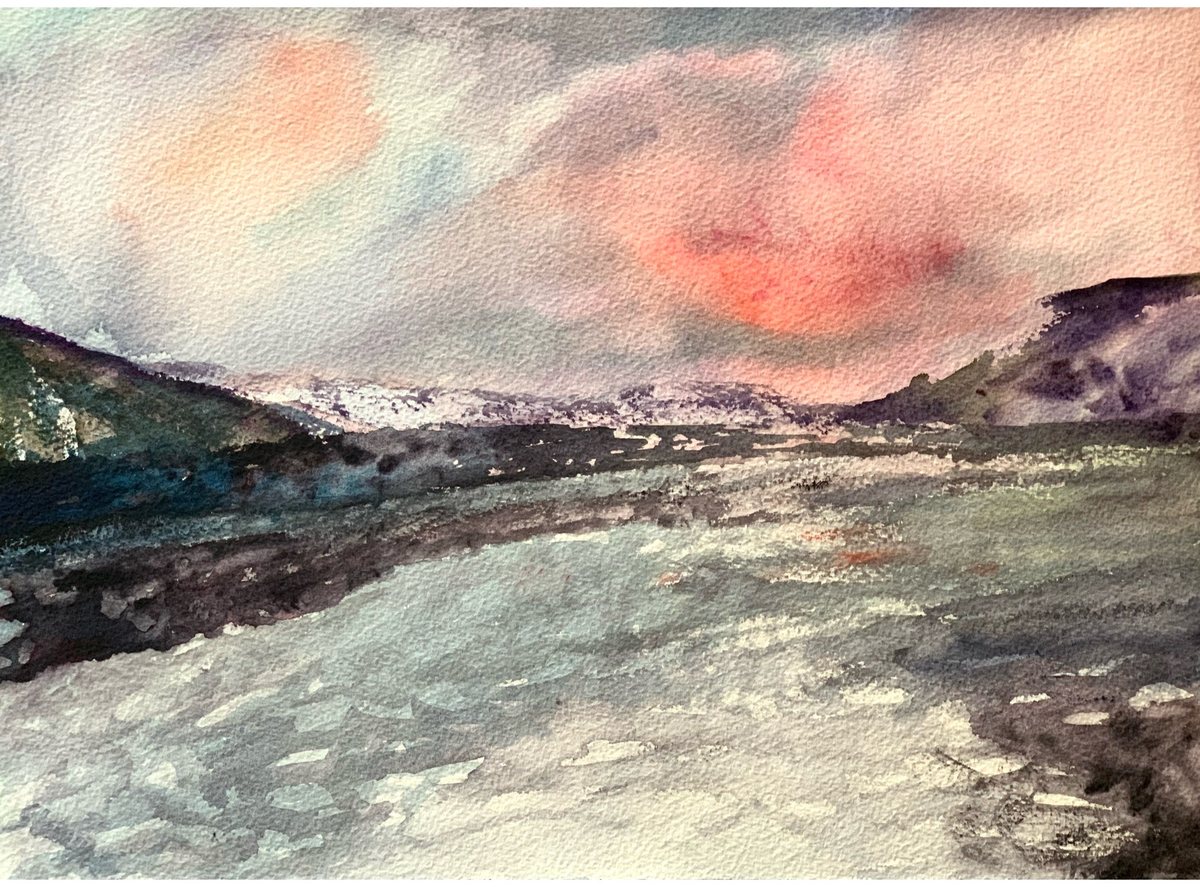
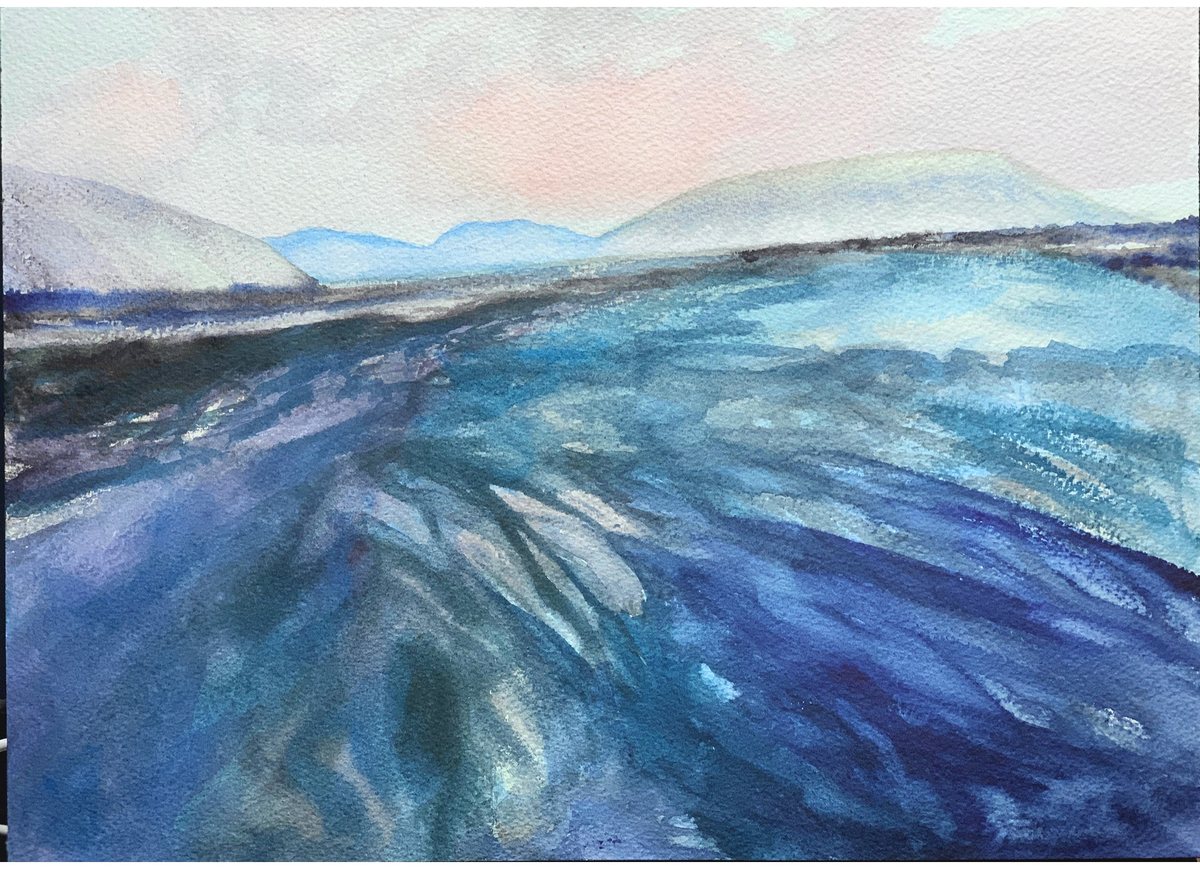
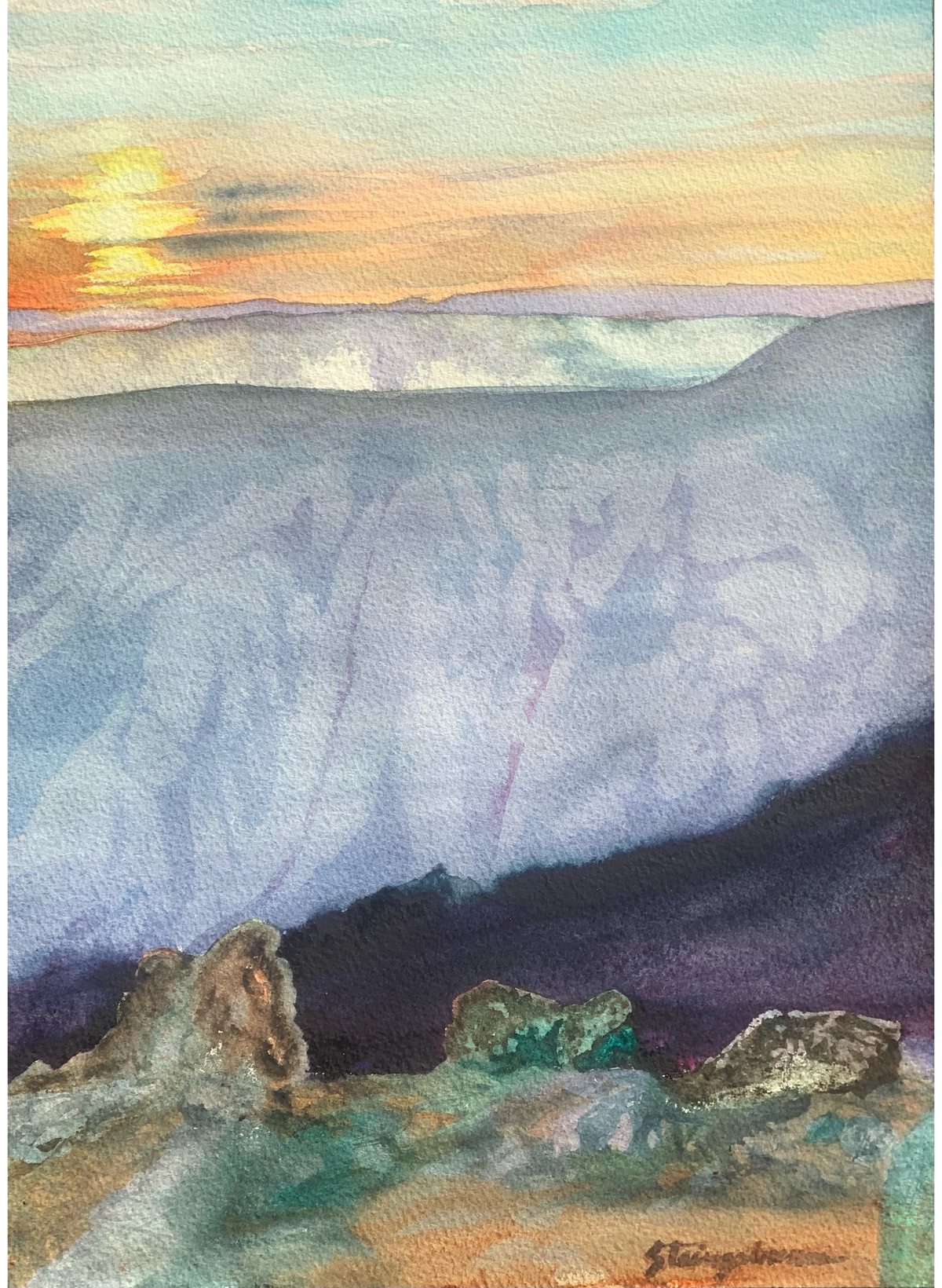
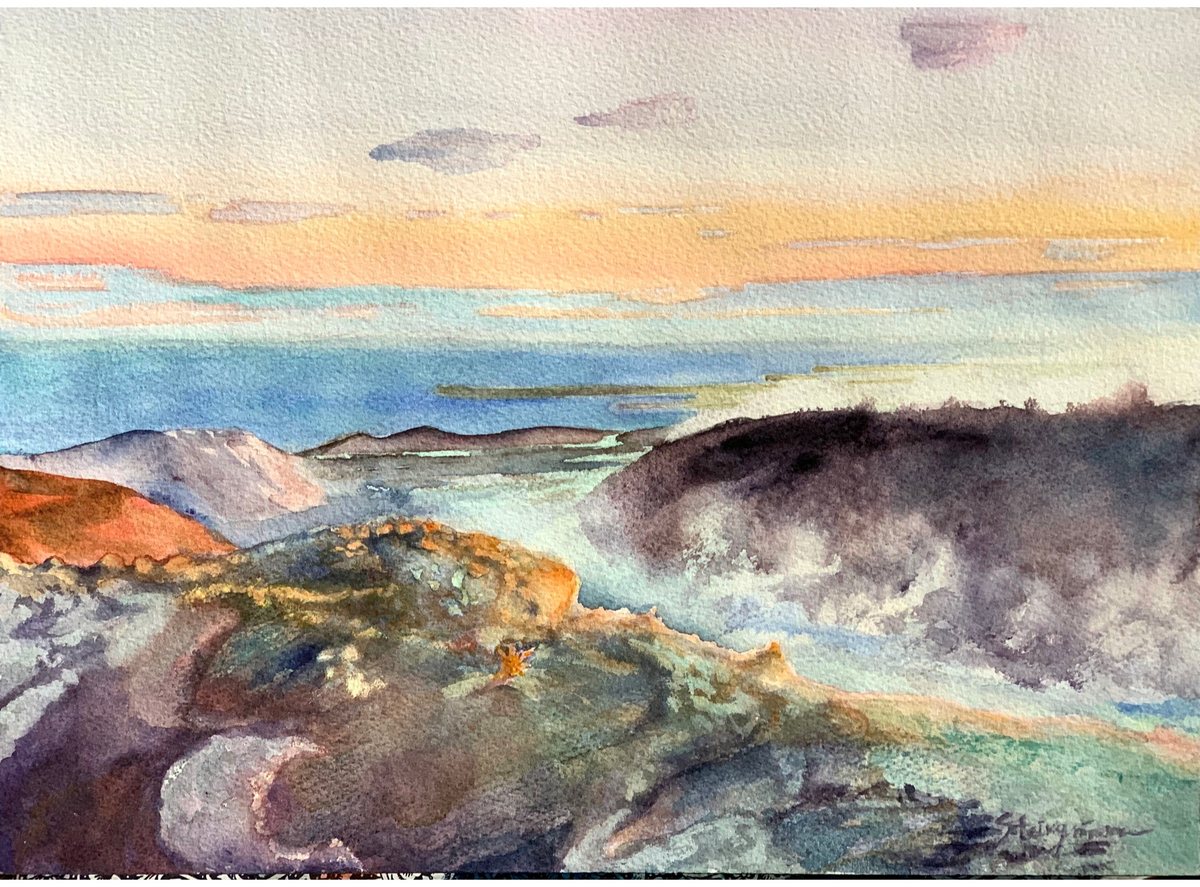
For more than twenty years John Hermannsson has sent his paintings to family and friends the way other people send postcards: attached to an email, usually with a few lines about where he was and what he saw, and often with a poem.
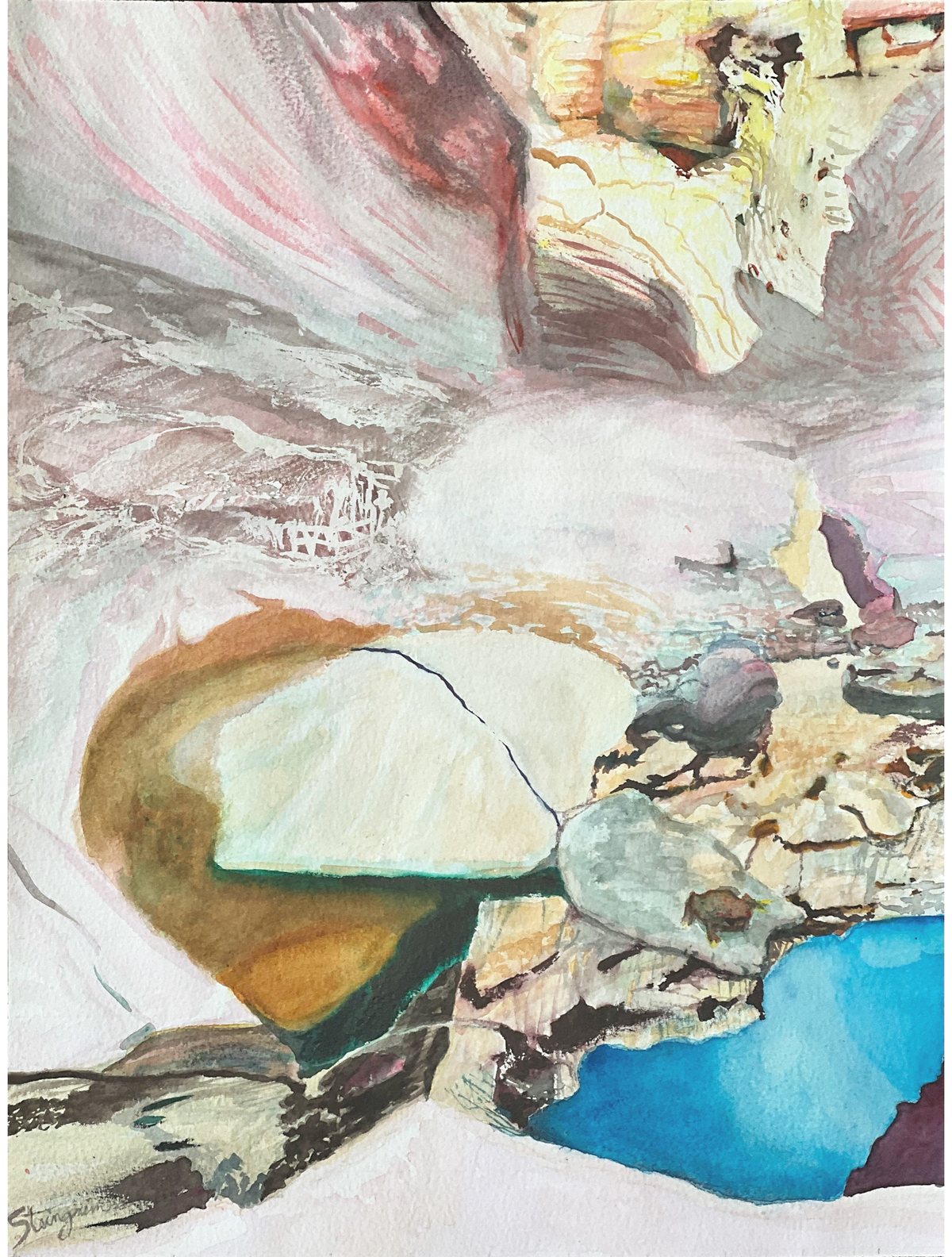
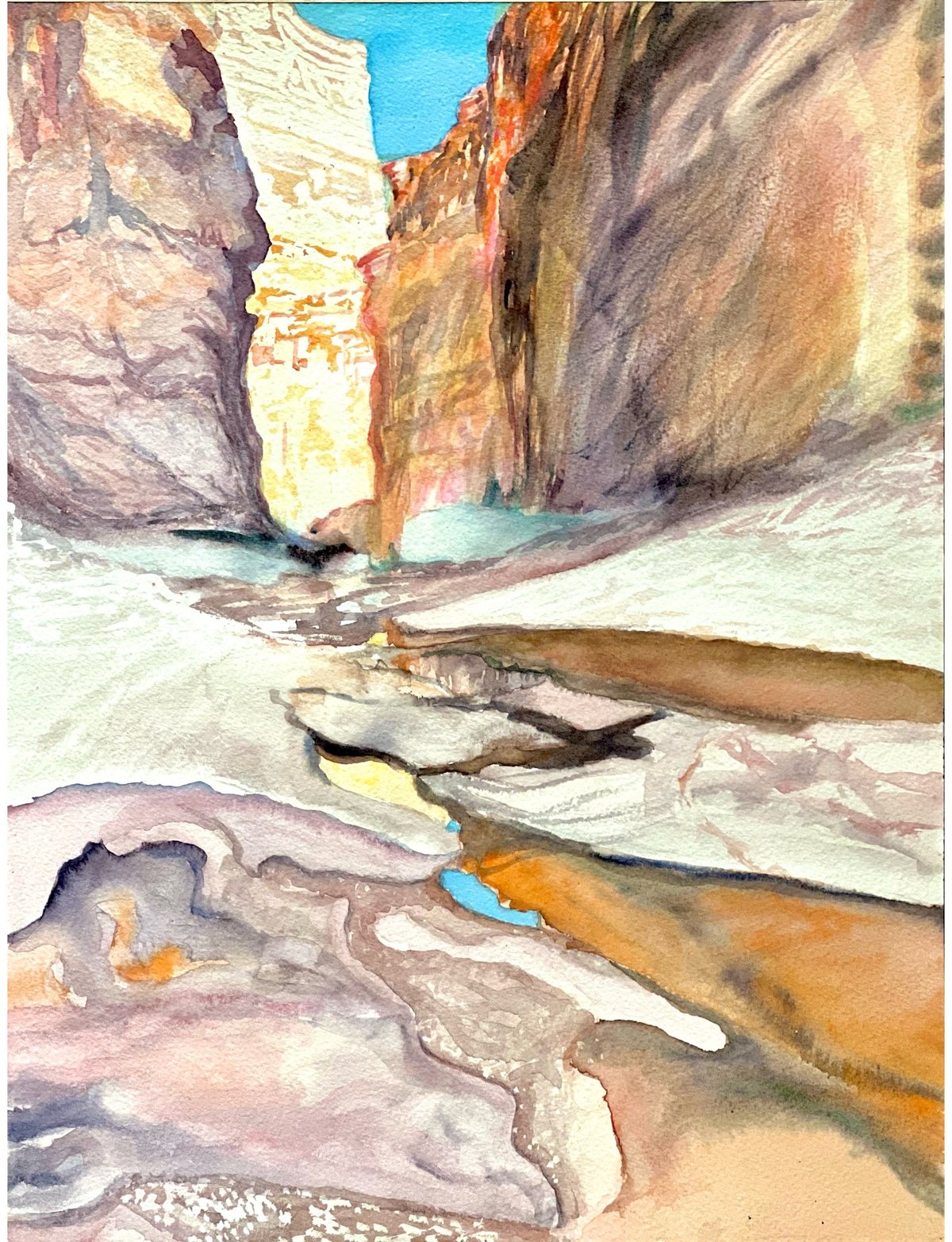
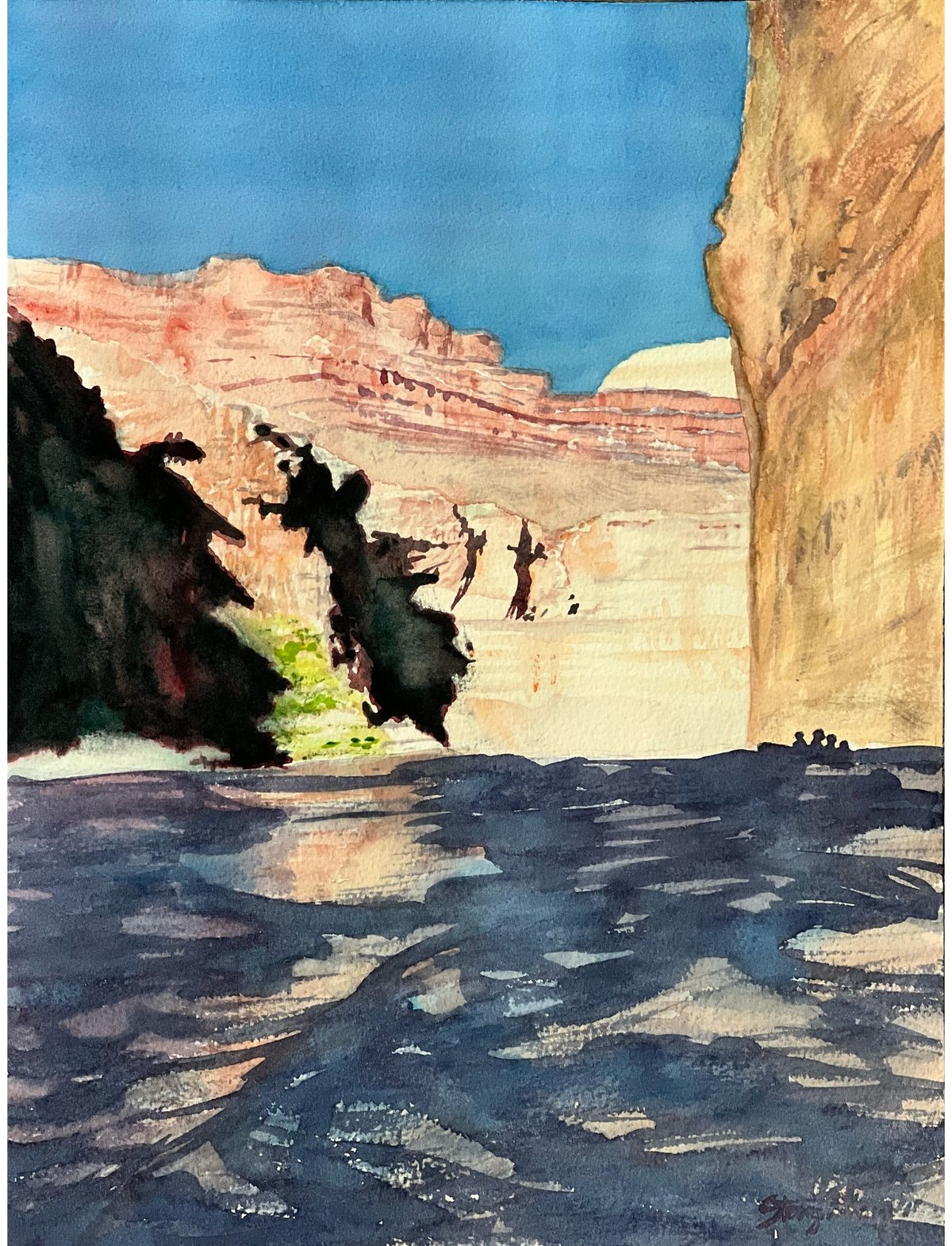
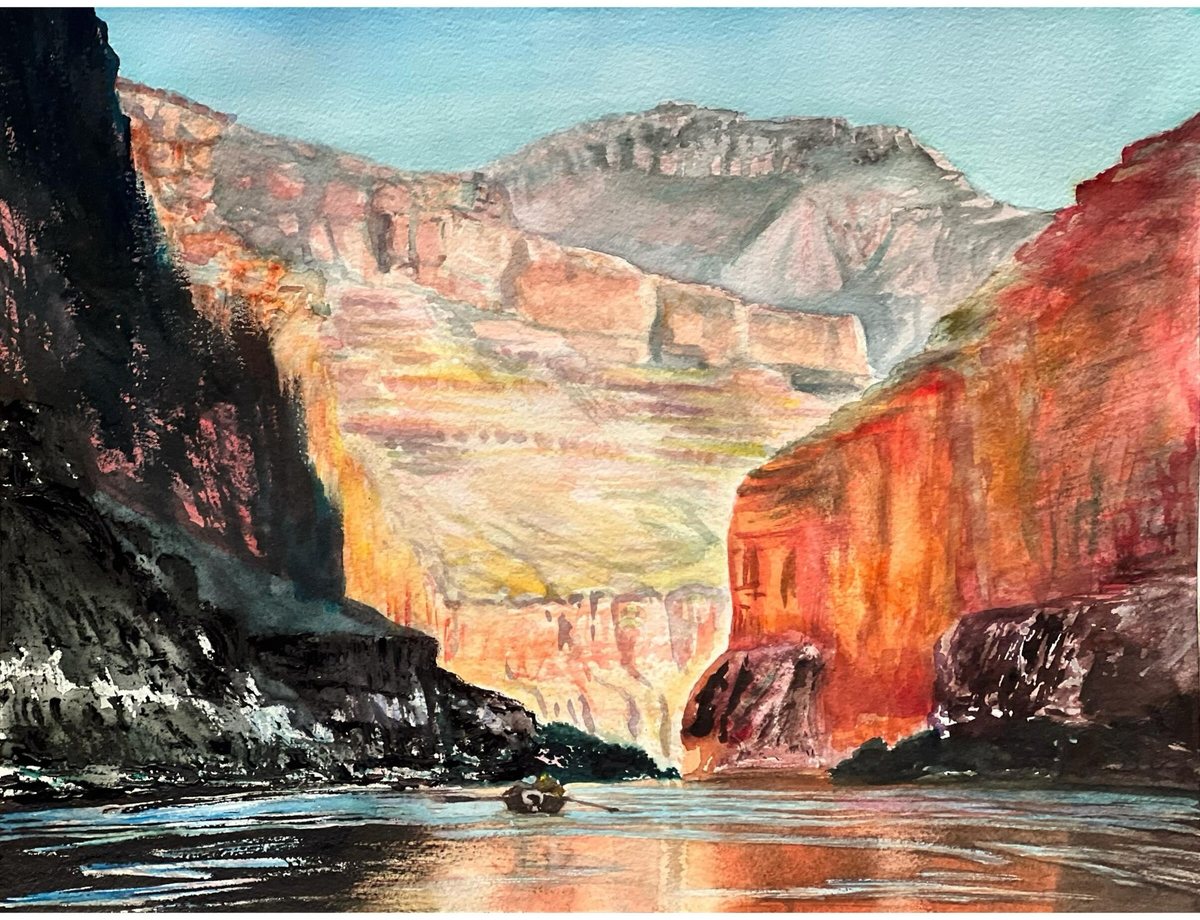
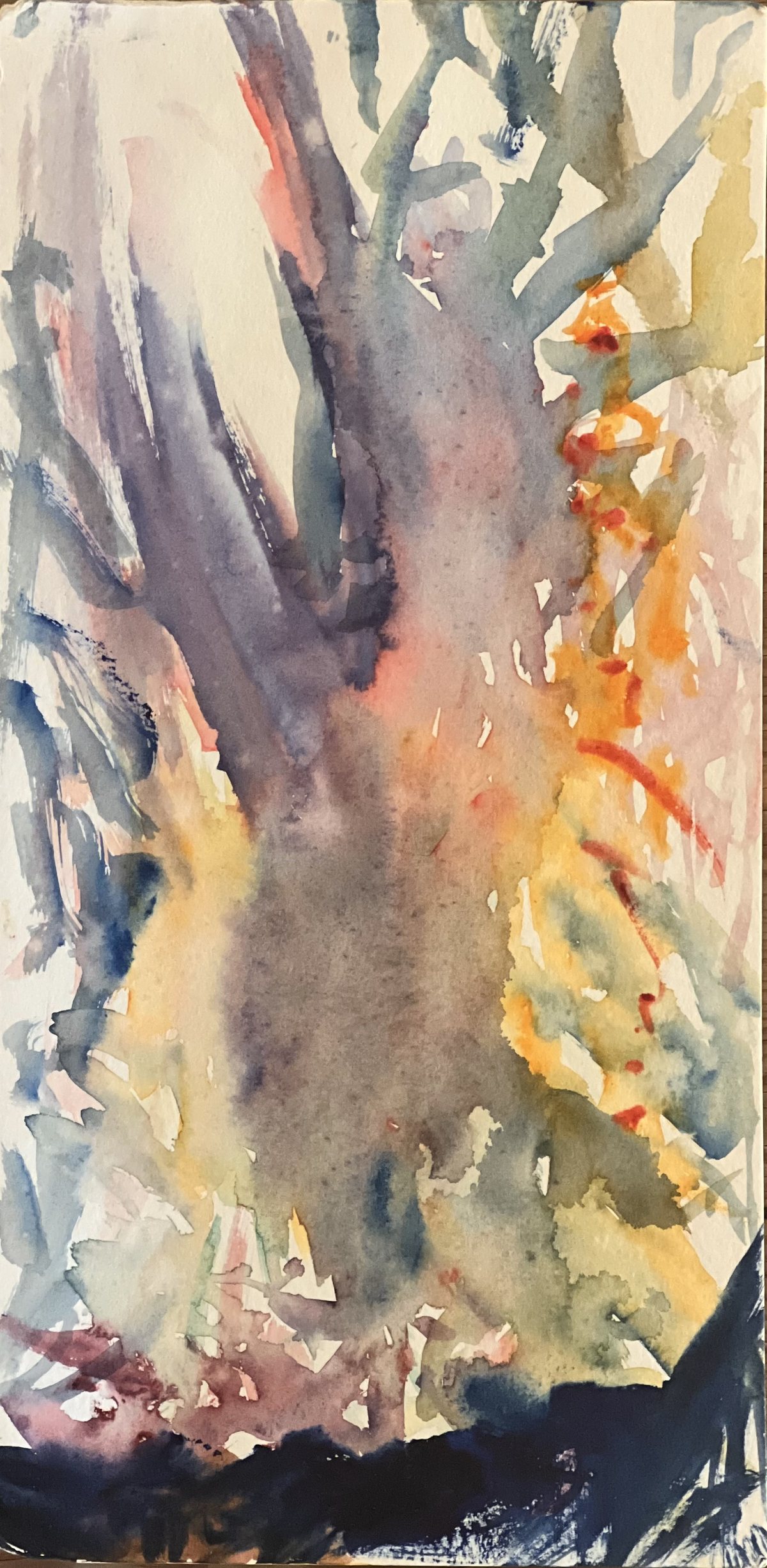
This book gathers them. The Grand Canyon Suite was painted from a seventeen-day dory trip down the Colorado River; the Fagradalsfjall Volcano series from hikes to the eruption in Iceland. Then come travel sketches, flowers, portraits and birthday cards, a few Icelandic pieces, and a closing section of work in other media.
The poems and notes are his, as he wrote them in those emails. A few letters quoted other poets instead (Robert Frost, D. H. Lawrence, William Blake), and they are credited where they appear.
· · ·
94 works · 34 poems
I
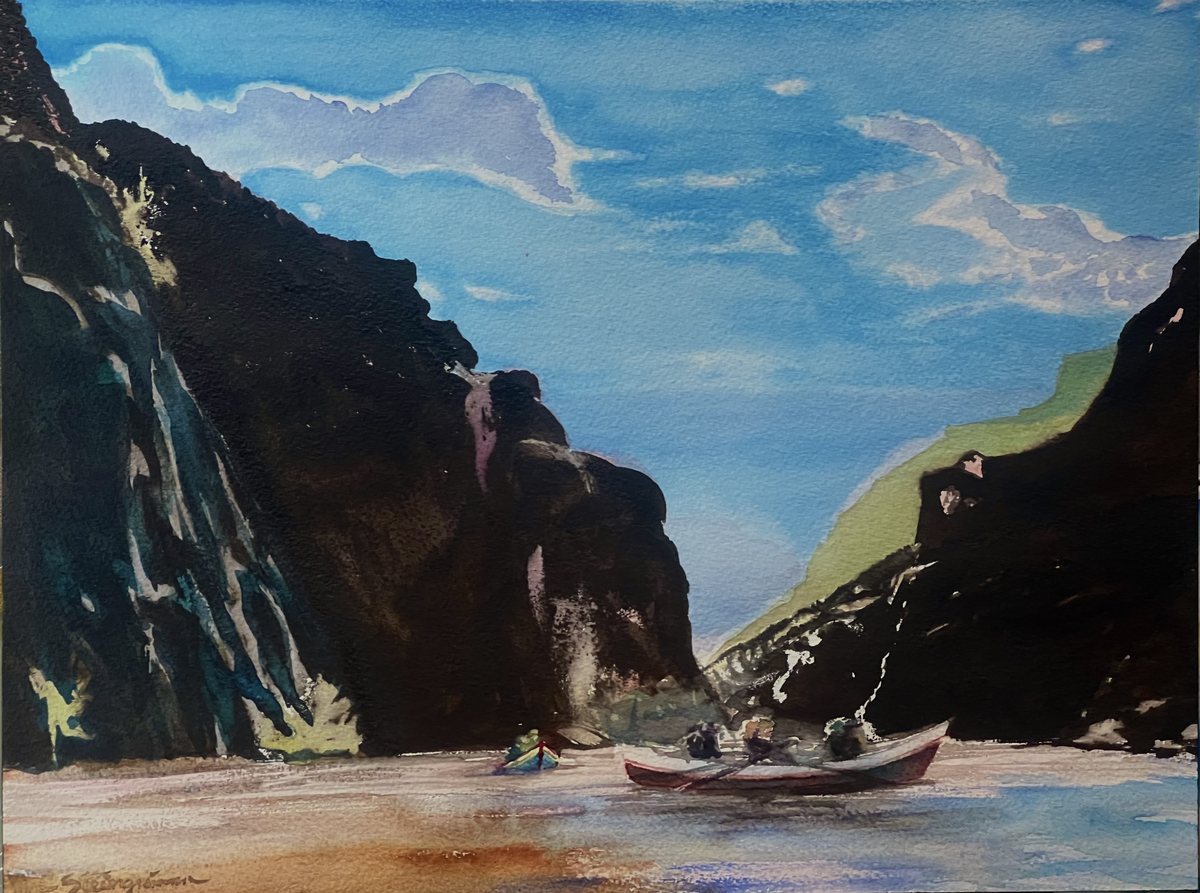
In October 2022 an armada of five dories and three supply rafts shoved off from Lees Ferry for seventeen days on the Colorado River. These paintings follow the river down, mile by mile, in the order they were sent.
29 works

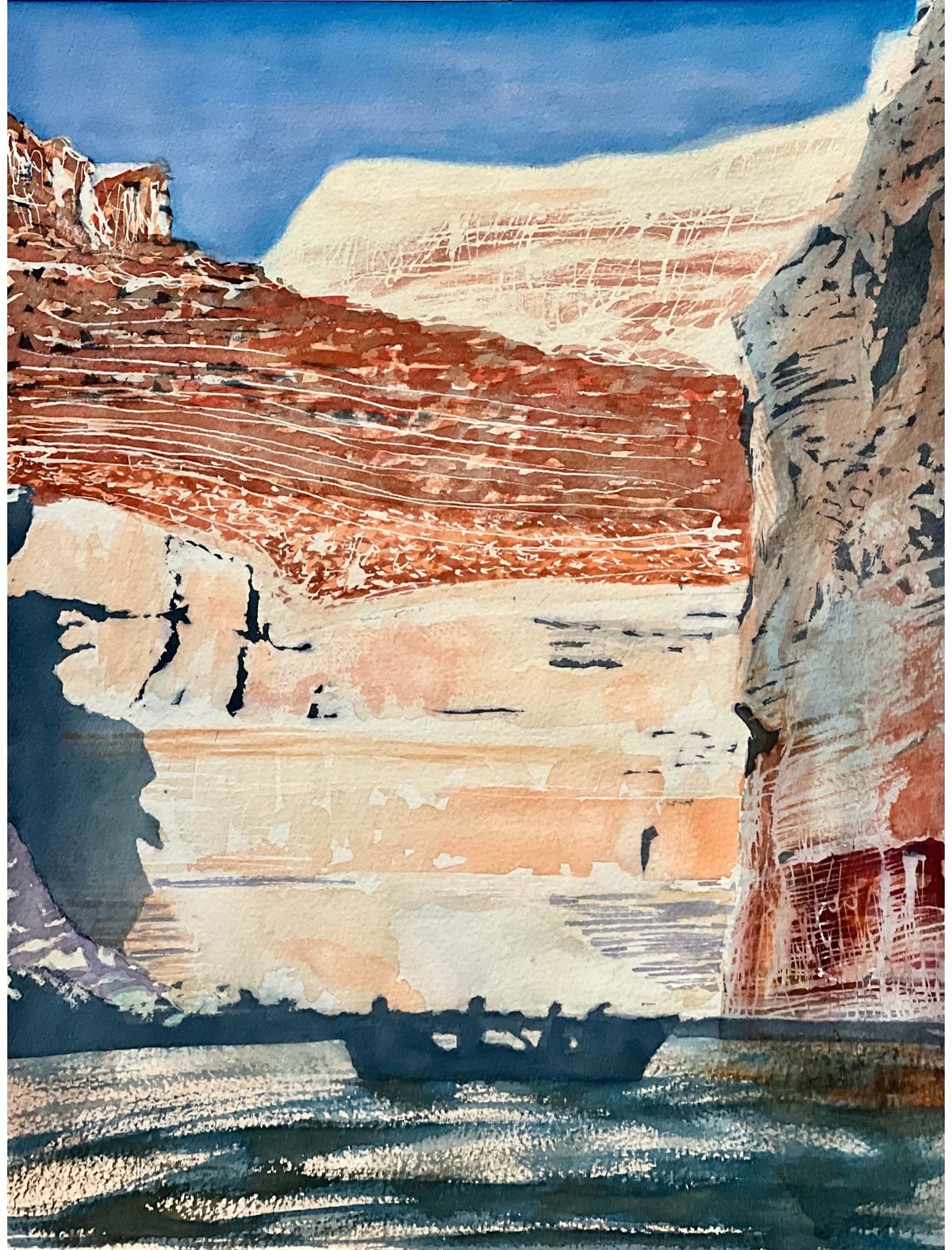
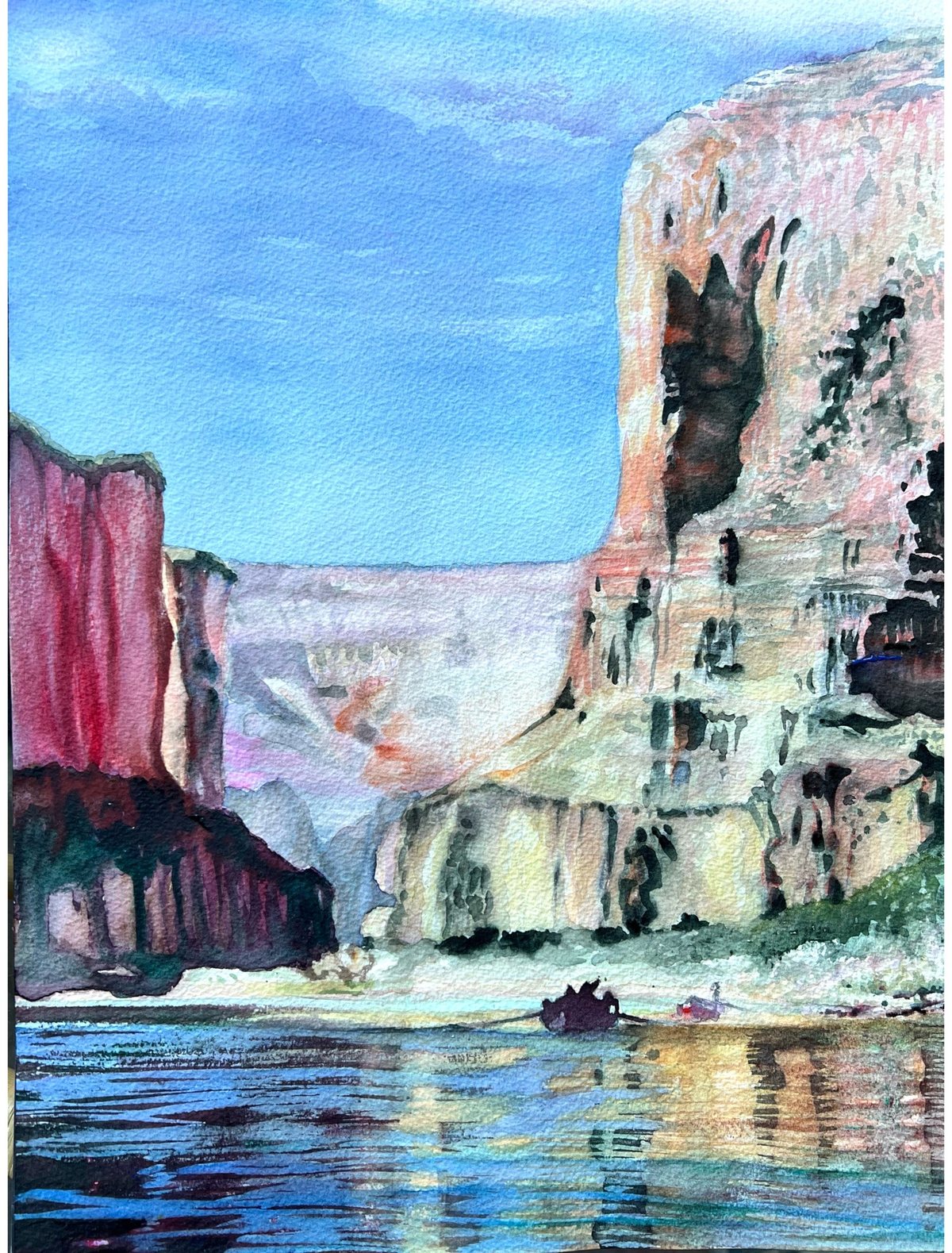
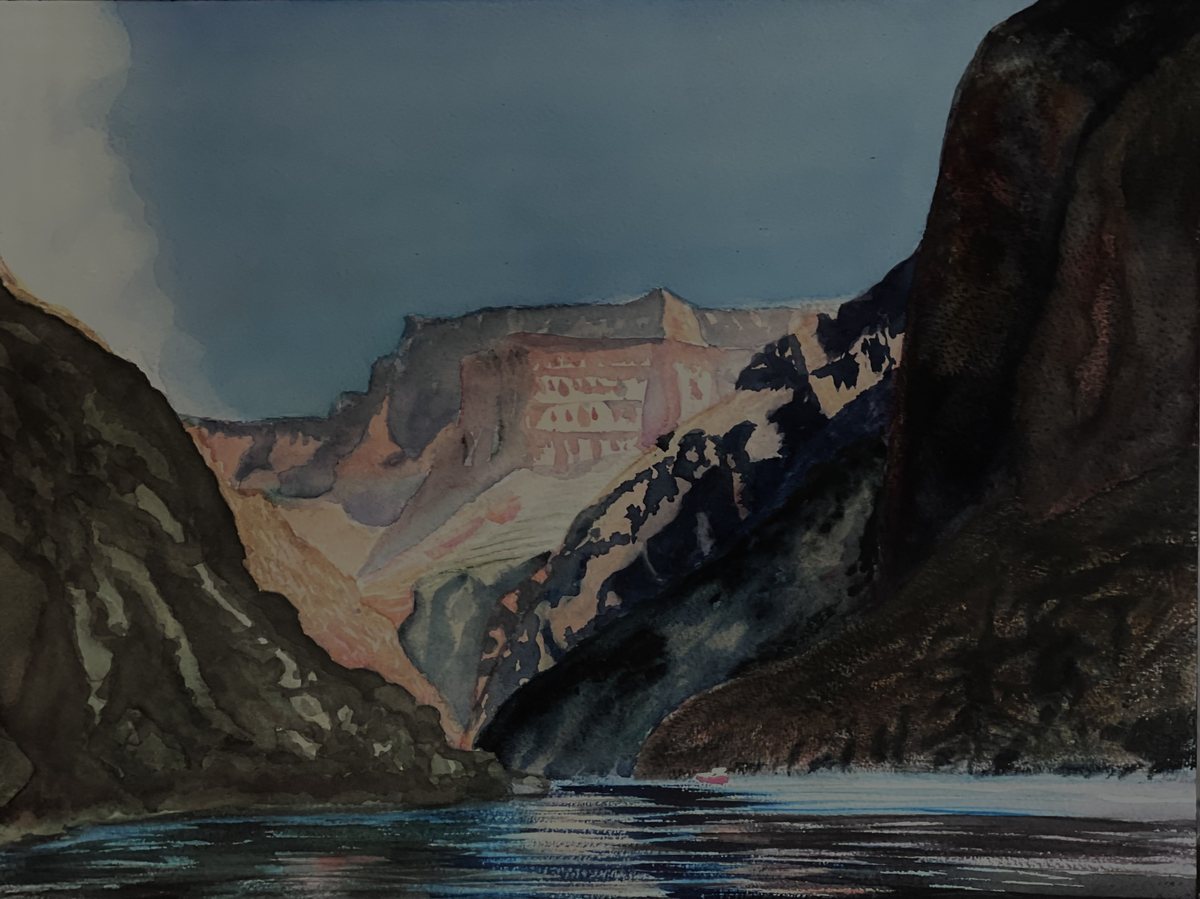
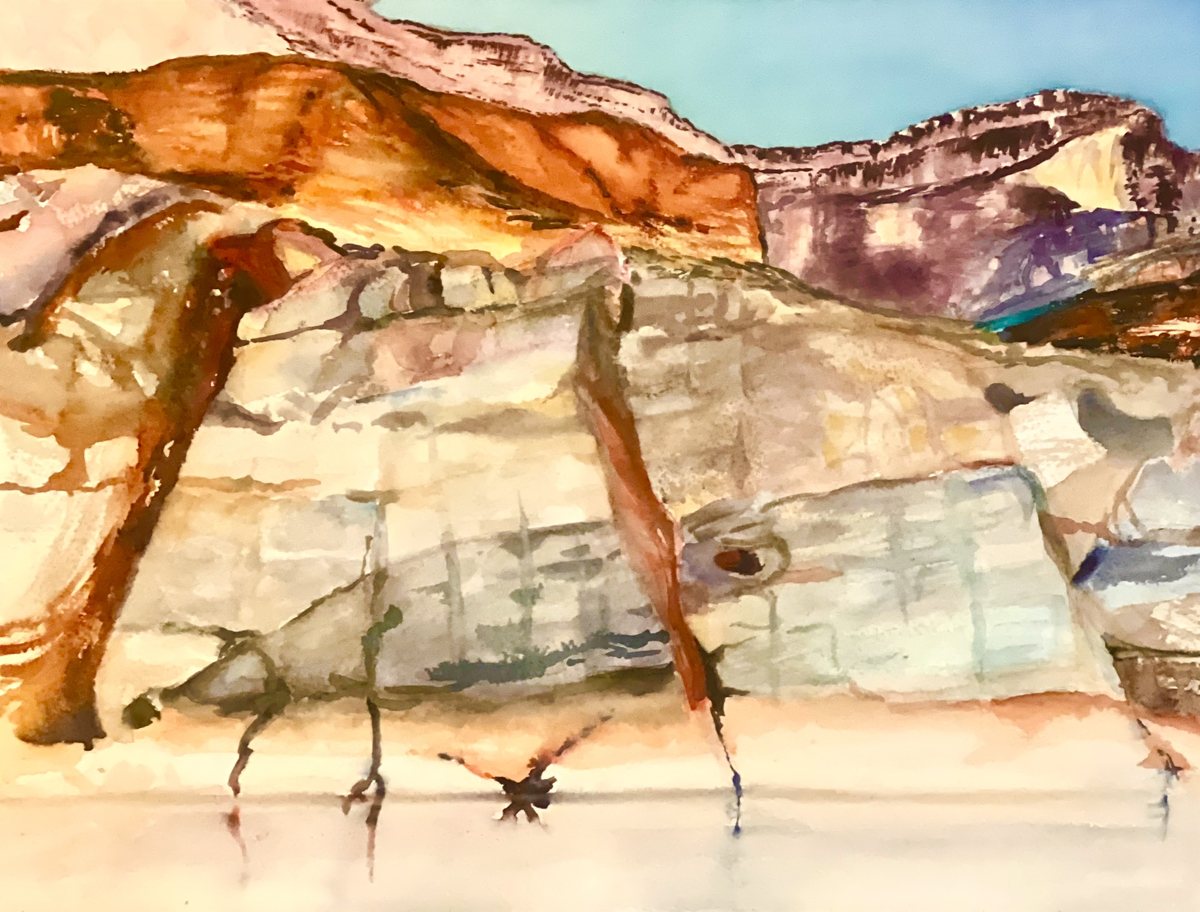
On the ninth day in a dory rowing down the Colorado River from Lees Ferry, the fossil remains of complex multicellular organisms were behind me as I entered the Precambrian formations of 600 million years ago. It was October 21, 2022, almost 10am, and one hundred fifty-three years since John Wesley Powell’s expedition passed this way ‘Down The Great Unknown’. The morning light was reflective and serene, and this spot felt like a good place for me to begin a Grand Canyon Suite of paintings. Let the journey begin!
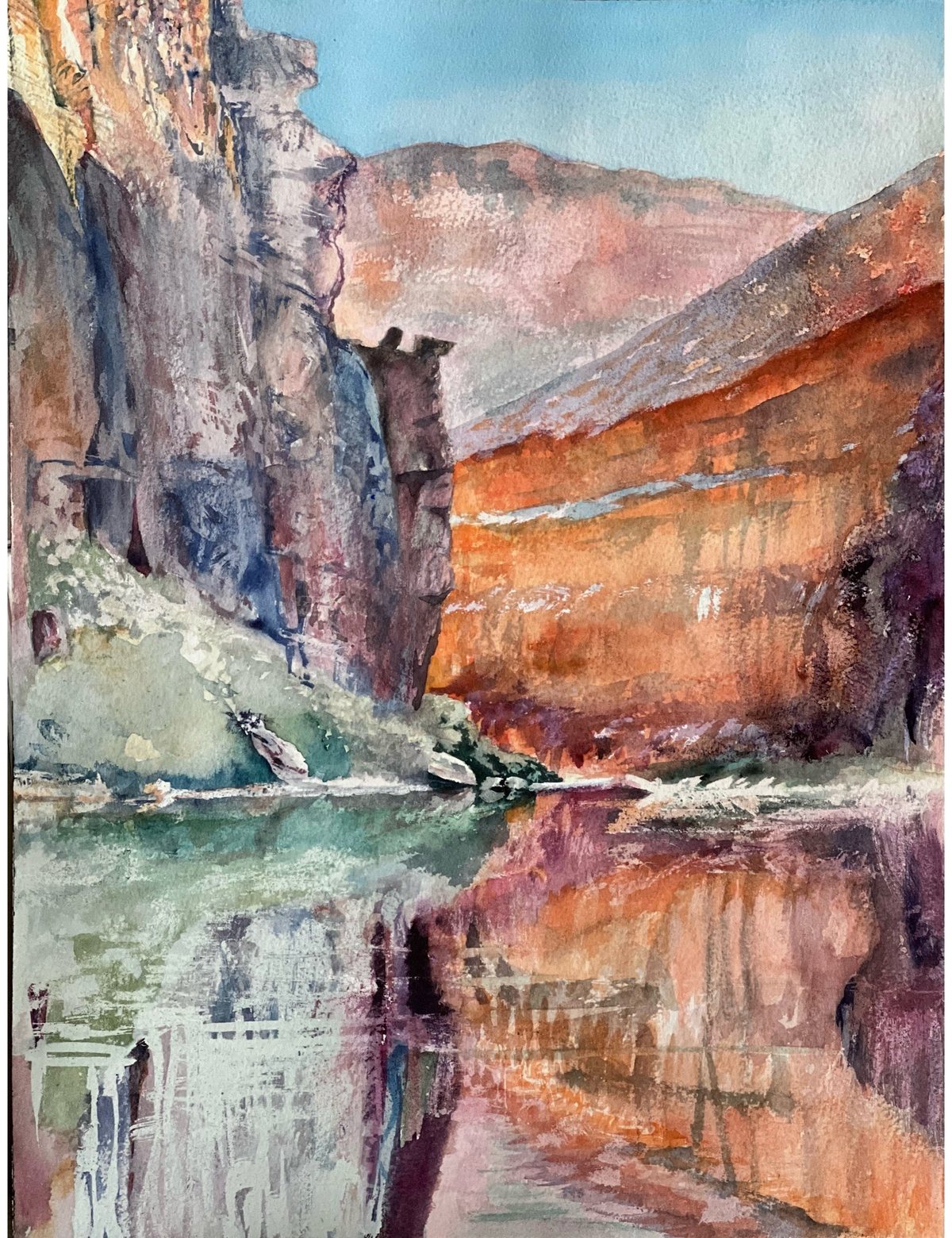
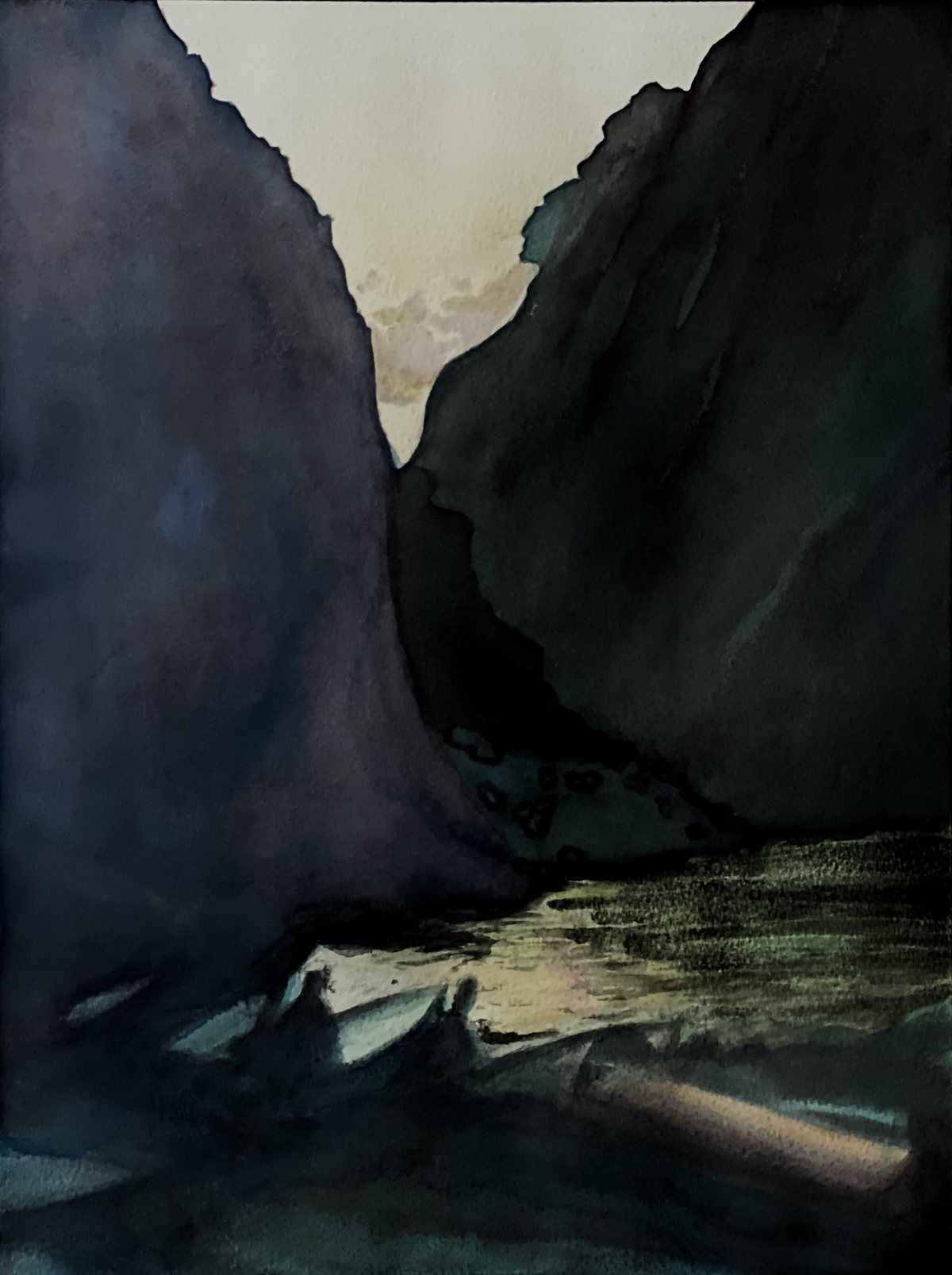
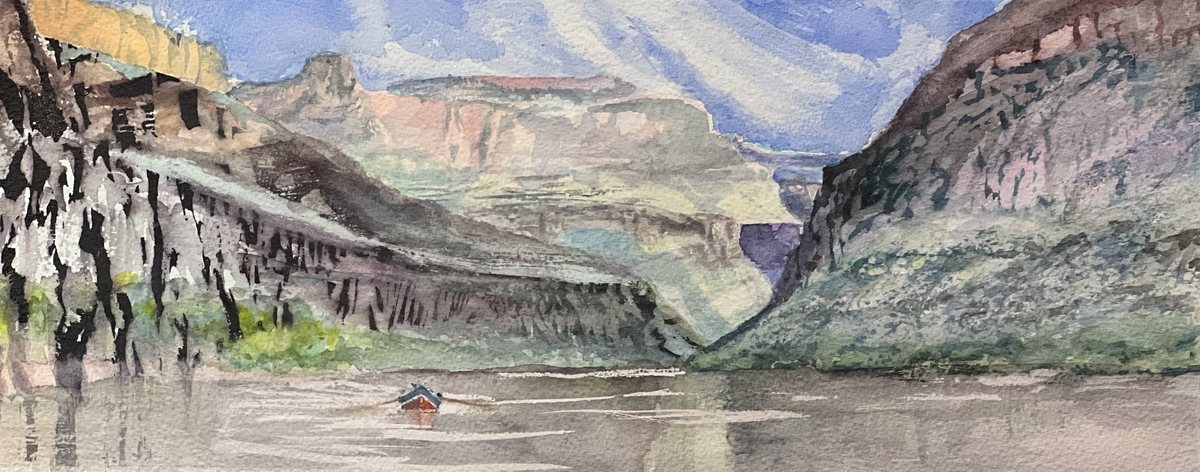
On a calm and sunny morning on October 12, 2022, an armada of five dories and three supply rafts shoved off from Lee’s Ferry, on the Colorado River, beginning a 17-day river trip that launched me on a grand journey through space and light. Four hours of rowing brought us 16 miles down river. It was only 3:30 in the afternoon, but the cliffs were already casting their shadows across the water. It was time to go ashore and make camp. The place was called ‘Hot Na Na’.

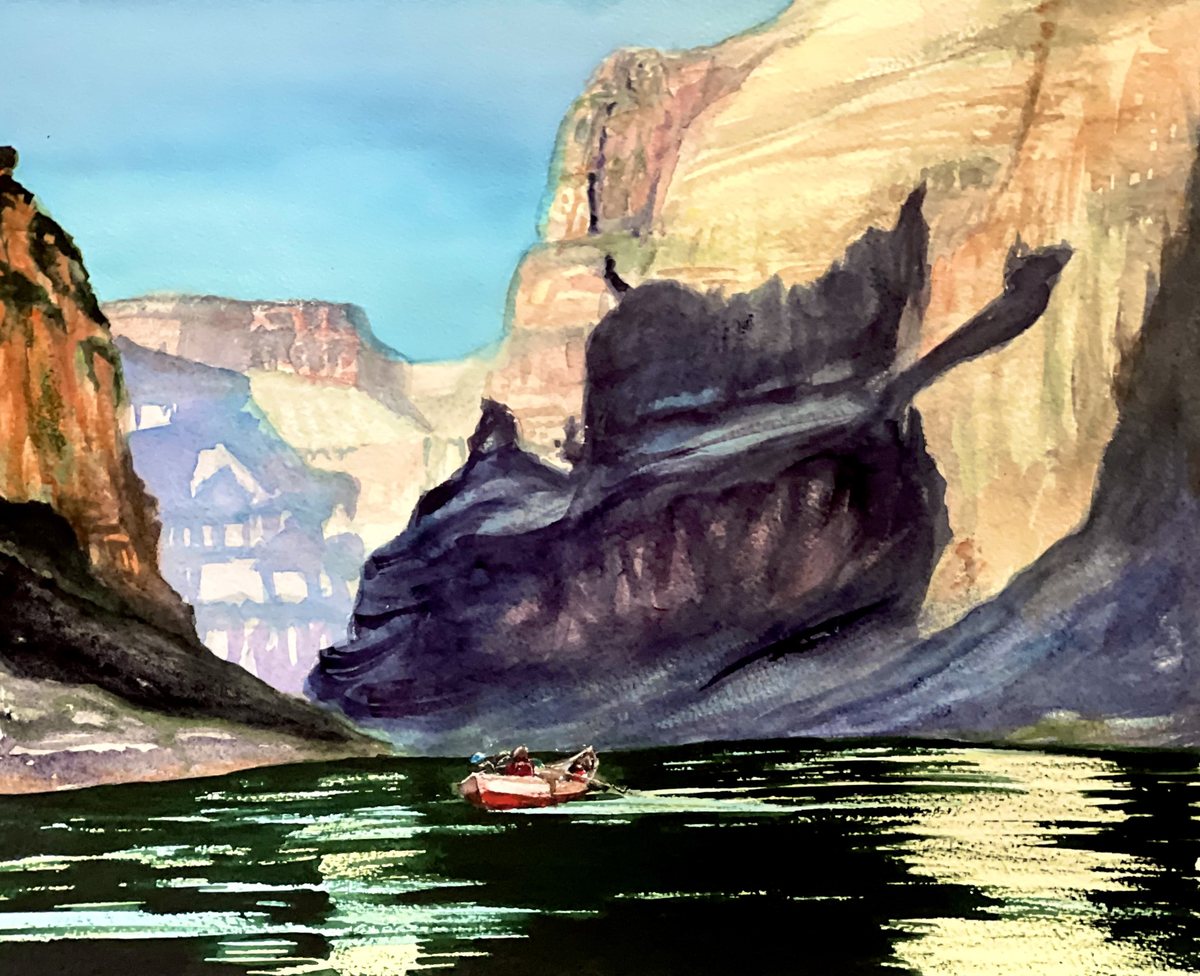
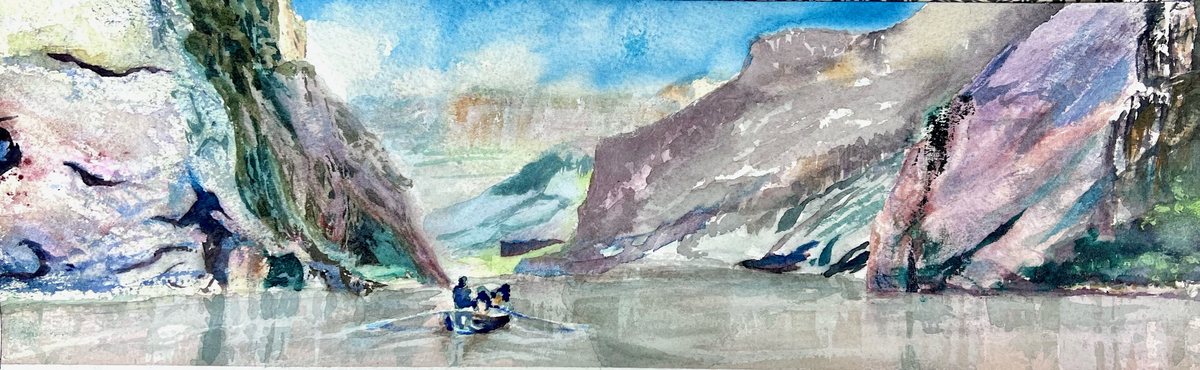
Well after the break of dawn, fantastical shadows cling to cliffs. The dory silently slips past stone faced guardians of the realm like a shadow bearing souls into the underworld, the dory drifts deeper into the canyon with the current. Two days on the river has me in wonder what two weeks more might possibly be like.

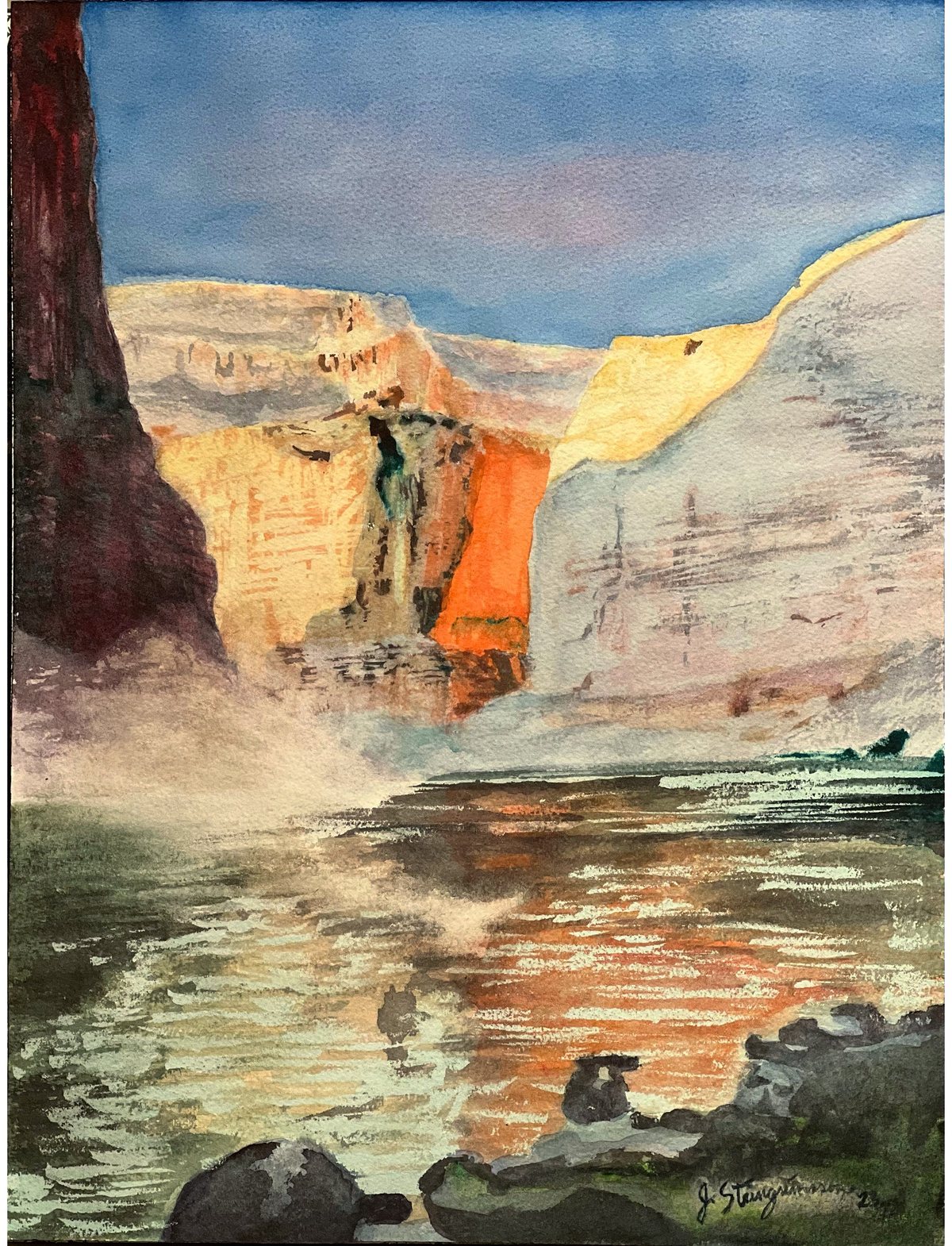
On day four, after shoving off from Lee’s Ferry on the Colorado River, I rose at 6:30am to the sound of air blown through a conch that reverberated off of surrounding cliffs like an elk’s mating call, which meant it was time for coffee. Being neither a coffee drinker nor an elk, I lingered to watch the sunrise that was creeping down cliffs and reflecting off of earth-toned striated rock to create a dazzling display of red-oranges and golden yellows in a mist.

Perhaps it is a river that flows bythe banks of tomorrow around the bendof yesterday that beckons us to flybeyond the cliffs like eagles soaring lendsa wing of hope to people drifting downa river in a boat. A kingfisher'sRat-tat-tat strafes our spot, oars back aroundboat eating sneakers brawling usherscorrecting course, we go with time past snagsand sweepers after yesterday's currents.The great blue herons bid us well but lagbehind and watch our boat parade like parents.We anchor for lunch and praise the day aheadnot thinking what to do before we're dead.
j.b.hermannsson

A staircase leads to walls with faces redwith rocks and fallen column boulders, comethis way, the canyon calls to us, I’m ledto wander to where water flows down frombetween tall red-rock cliffs, we squeeze inwards.
from “Canyon Frog”

A staircase leads to walls with faces redwith rocks and fallen column boulders, comethis way, the canyon calls to us. I’m ledto wandering to where water flows downbetween tall red-rock cliffs we squeeze inwardsto dimming light in water falling fleckswhen by a pool of water there’s a breeze.A frog appears and eyes us with some vex-ation. It crouches but we don’t go nearlest we disturb the frog that jumps too soon.Disastrous would be our fate for hereall may be good on this fair day in June.But is anyone wondering who willkiss this frog prince while we are standing still.
j.b.hermannsson mmxxiii.vii.xxv (July 25, 2023)

From deep within it’s cool cavern of stonea silent shimmering reflection poolswithin from shadows into light and honesthe source of life among slabs’ scattered boonof treasures carved and broken which remainof some lover’s quarrels just the same.
j.b.hermannsson mmxxiv.i.xxvi (January 26, 2024)
I’m back onto the ‘Grand Canyon Suite Series’ with many miles of canyon yet to go. This painting will conclude our first side canyon exploration before we jump back into our dory and head into straight into our first serious rapid on the Colorado River.

The river cuts deep no need to rowOverlapping the dark with light reflect-Ing on the waves the ghostly shadows growAn Odyssey that drifts on whatever’s next.
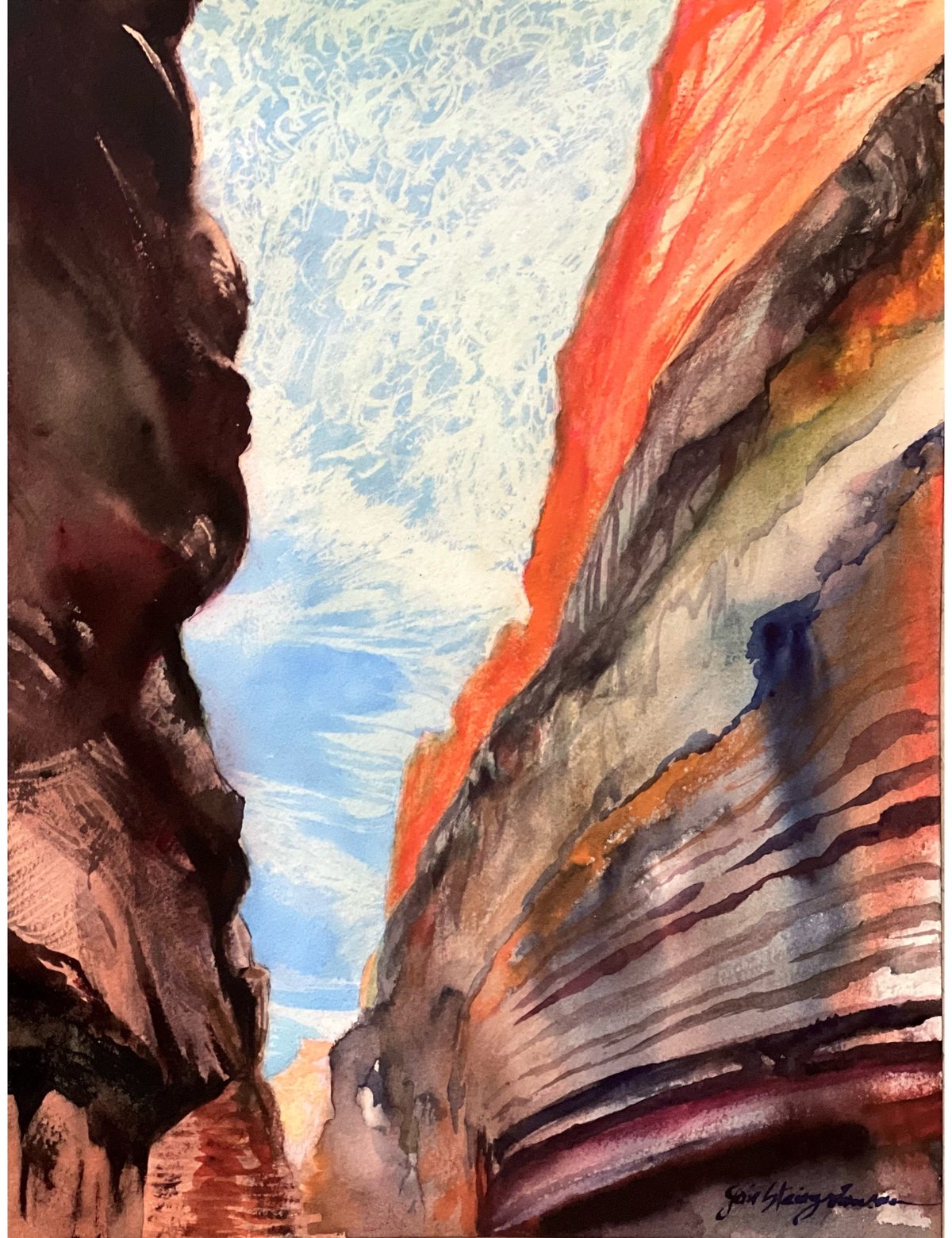
As we continue down river, we go deeper into the rock strata with cliffs rising higher above us. There is less sunlight reaching us with each passing day. Afternoon shadows appear large on the cliffs.

I’ll sing to you to this soft luteand shew you all aliveThe world when every particleof dust breathes forth its joy.
William Blake
Names of places and slot canyons in the Grand Canyon are often obvious but occasionally mysterious names such as ‘To Hajisho’ appear on the river map. Nevertheless, I feel the name is right for this painting at that place and time.

shadows on stone dripping sipping waterand crunching of rock chips under my footI stand silent momentarily therethen crunch my way back in the river’s rut.
-jh
Our dory trip put an emphasis on hiking and exploring the tributary canyons of the Grand Canyon because each one is unique. Our second hike is into Saddle Canyon.

Among Giants I walk towering highAround me afternoon shadows close ranksI follow the narrowing silent skyAnd to an alter of some sorts say thanks.
Our float trip must go on! My next painting on our journey down the Colorado river through the Grand Canyon is from a tributary canyon called Saddle Canyon.
Between shadowy canyon walls we floatAround a bend to where the river widens andSunlight on cliffs like sirens calling boatsTo gardens of earthly delights on sand.
For those of you who may be looking for some place to escape to for two or three weeks, I highly recommend a float trip down the Colorado River through the Grand Canyon. It’s out of this world.
The attached painting is of an area along the river named ‘Dinosaur’, however this can be misleading because no dinosaur fossils appear in the canyon area. All the rock formations in the Grand Canyon were formed before the time of the dinosaurs, which is why I am tipping my hat to Hieronymus Bosch and calling it the ‘Garden of Earthly Delights’.

Like eyes of spiders watching the riverThe granaries high on the cliff’s face wit--nessed the Ancients’ civilization storeIts seed for millennia now they sit.
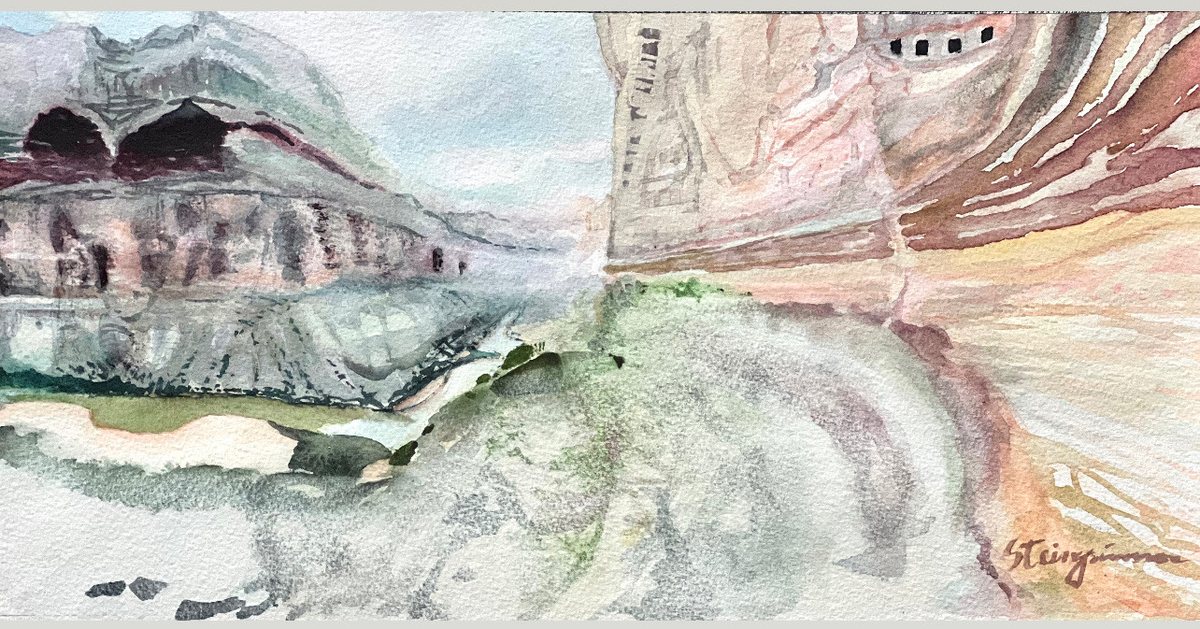
It’s a short two mile drift down river in a dory from Dinosaur to Nankoweap, the site of an old Indian settlement. Only a few traces of stone foundations remain of the dwellings (located in the center of the painting) with granaries high in the cliff for the storage of grains (upper right). Their crops would have been planted at the mouth of the tributary Nankoweap Canyon (lower left) where an alluvial delta forms from soil that is washed down canyon seasonally. A mile long hike up the cliff on a narrow trail with acute switch-backs brings us to the granaries (upper right).
There remains an unsolved mystery as to why the Indian settlements in the Grand Canyon were suddenly abandoned in the mid-thirteenth century. Some speculate that it may have been due to a sudden change in the weather. Nevertheless, the Indians didn’t leave gradually, but suddenly because they left behind a treasure trove of artifacts including tools and pottery that would have typically travelled with them.

Clouds strip cliffs of color revealing nakedmuscle hard rock glistening in rainlight strikes and parts the clouds restoring color to the camouflage hereto maintain.
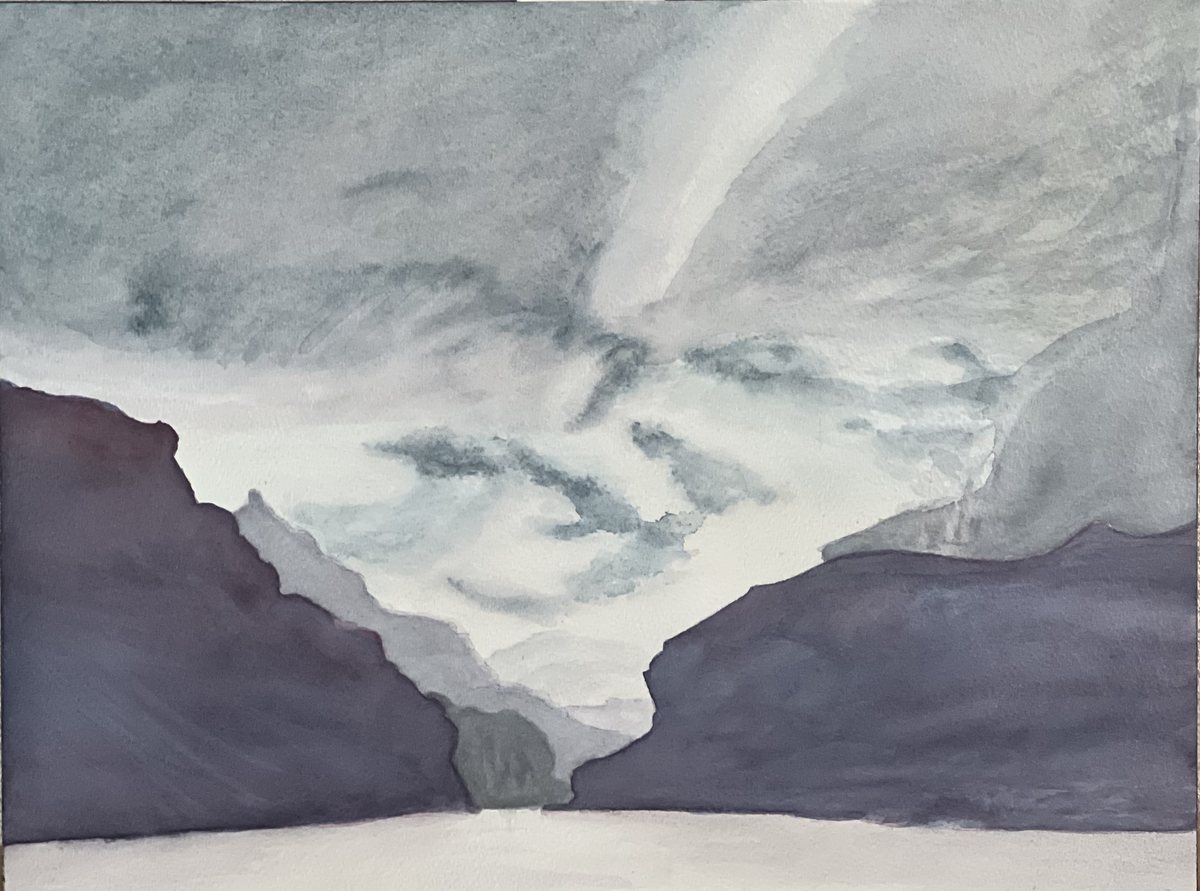
After five days of drifting, we have come 66 miles down river. It’s our first overcast and rainy day, but that’s not to say that even overcast days in the Grand Canyon aren’t epic. This painting shows the sky at around 12 noon. We are just downstream from where the Little Colorado empties into the Colorado River, which instantly changed our water clarity from clear to muddy due to the enormous volume of sediment brought into the river by the Little Colorado.
We pass through a gateway of dark massive cliffs cast in muted grays beneath a turbulent sky with some hint of a brighter day beyond.

Night grows from cracks up canyon walls and day--light climbs clinging to rim rock dancing onwater before the mistress of night laysher pale white light upon a dark stillness.
The days have started to get noticeably shorter at an increasing rate because we are around one mile down camping in a steep v-shaped canyon where sunlight arrives late and leaves early. Major Powell recorded his observations in this area of the canyon on his first trip through, on August 14, 1869, as follows:
“The gorge is black and narrow below, red and gray and flaring above, with crags and angular projections on the walls. Down in these grand gloomy depths we glide, ever listening, ever watching.”
It was similar for us as it was for the Powell Expedition, gloomy depths that are grand.

In the right light a castle can be seenCarved by erosion from the canyon’s rim--rock but before retiring the queenWill call the night before her light will dim.
We are continuing to float through the v-shaped canyon, but besides the grand gloominess of it all, which Major Powell reported in 1869, we are also noticing some unique and spectacular rock formations in the canyon walls, which Major Powell does not mention in his report. At this point in their journey, his expedition had lost boats and supplies and the men were on the verge of mutiny. Their gloomy condition may have influenced Major Powell’s reporting to the extent that beautiful features of the canyon were overlooked, such as the mid-afternoon view from 83-mile Rapids that is captured in my attached painting.

Could faces on the canyon wall of rockBe looking at us wondering if weAre looking back at them while we take stockOf UFO’s wherever they may be.
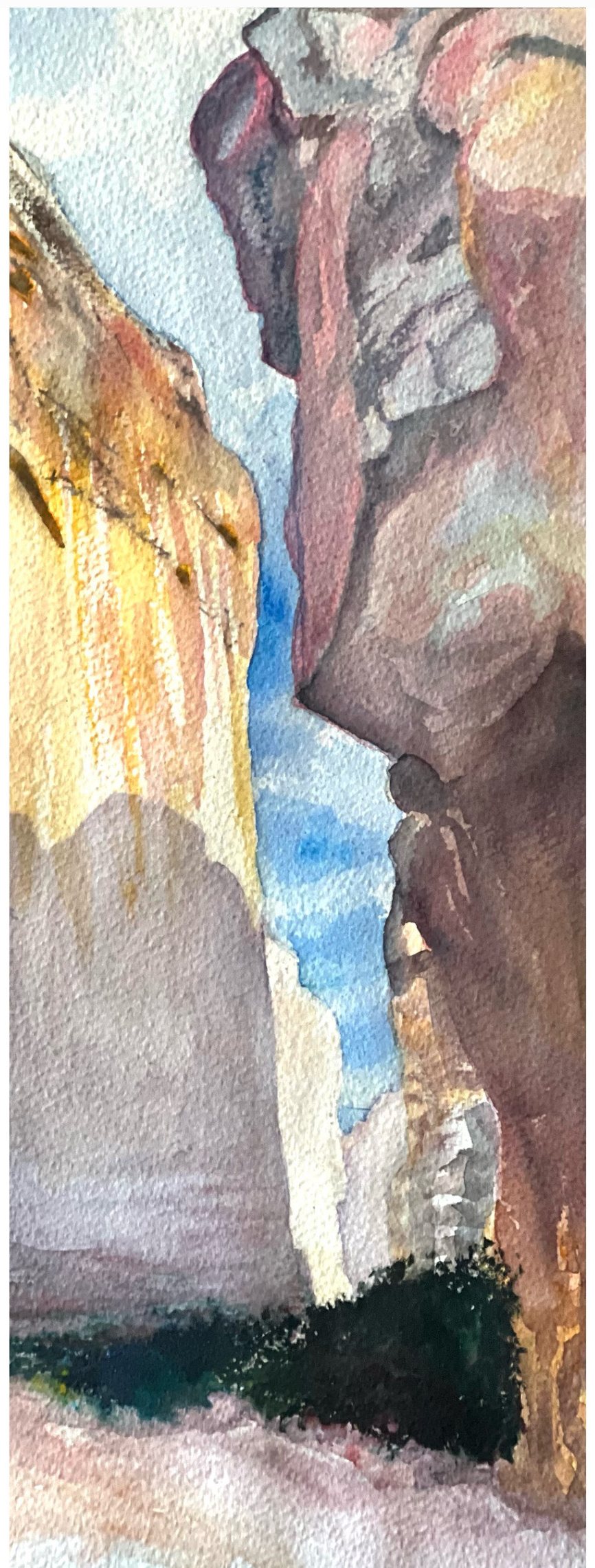
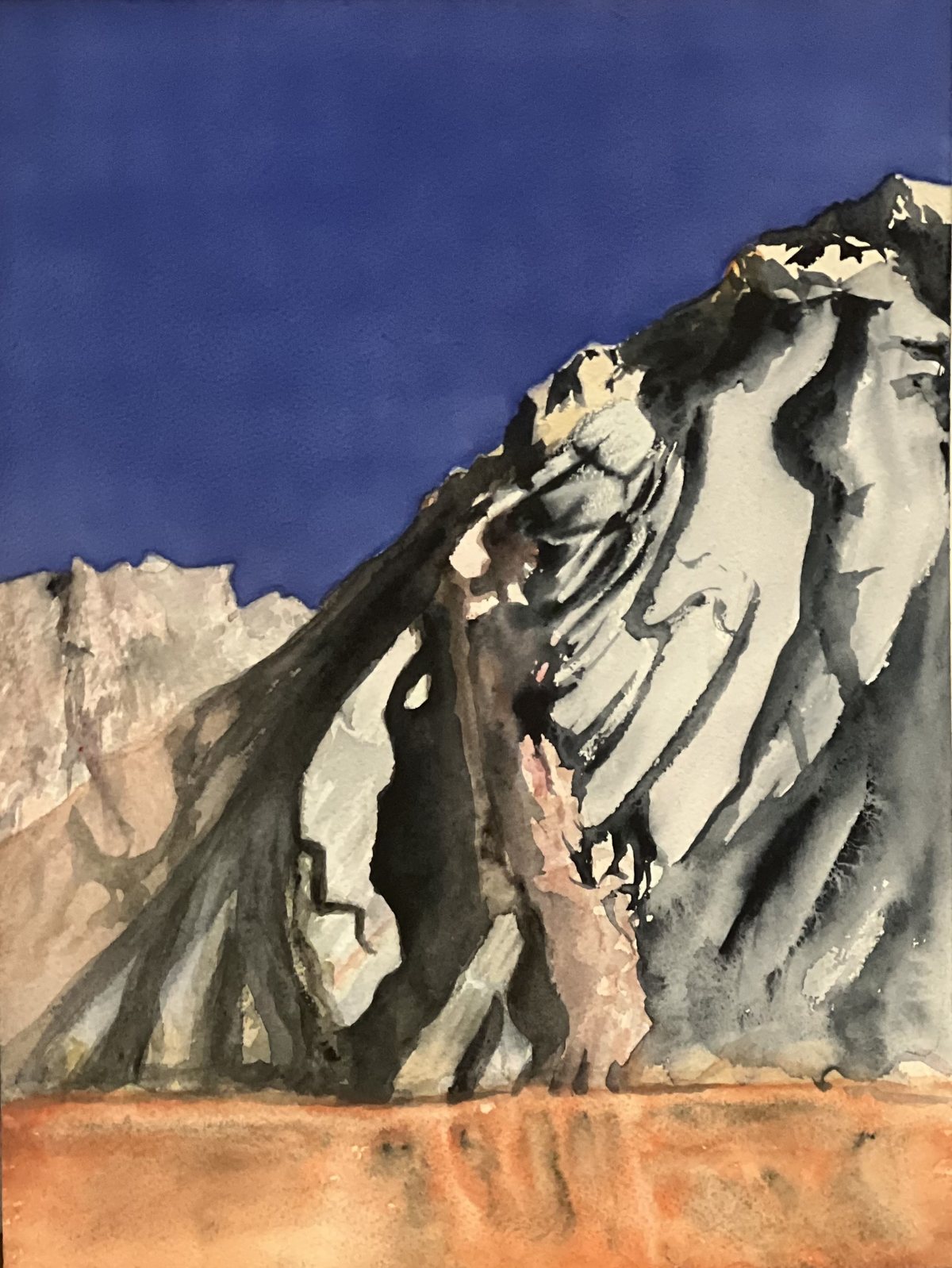
We are continuing to float through the v-shaped canyon. In his report, Major Powell mentions crags on the canyon walls but does not elaborate on them. I found the crags intriguing and have attached a painting of one of them.

Adrift upon the river I pass half-a billion year old cliffs like old cracked skinstigmatic fissures long before the calfof gold and countless wounds a sacred whim.
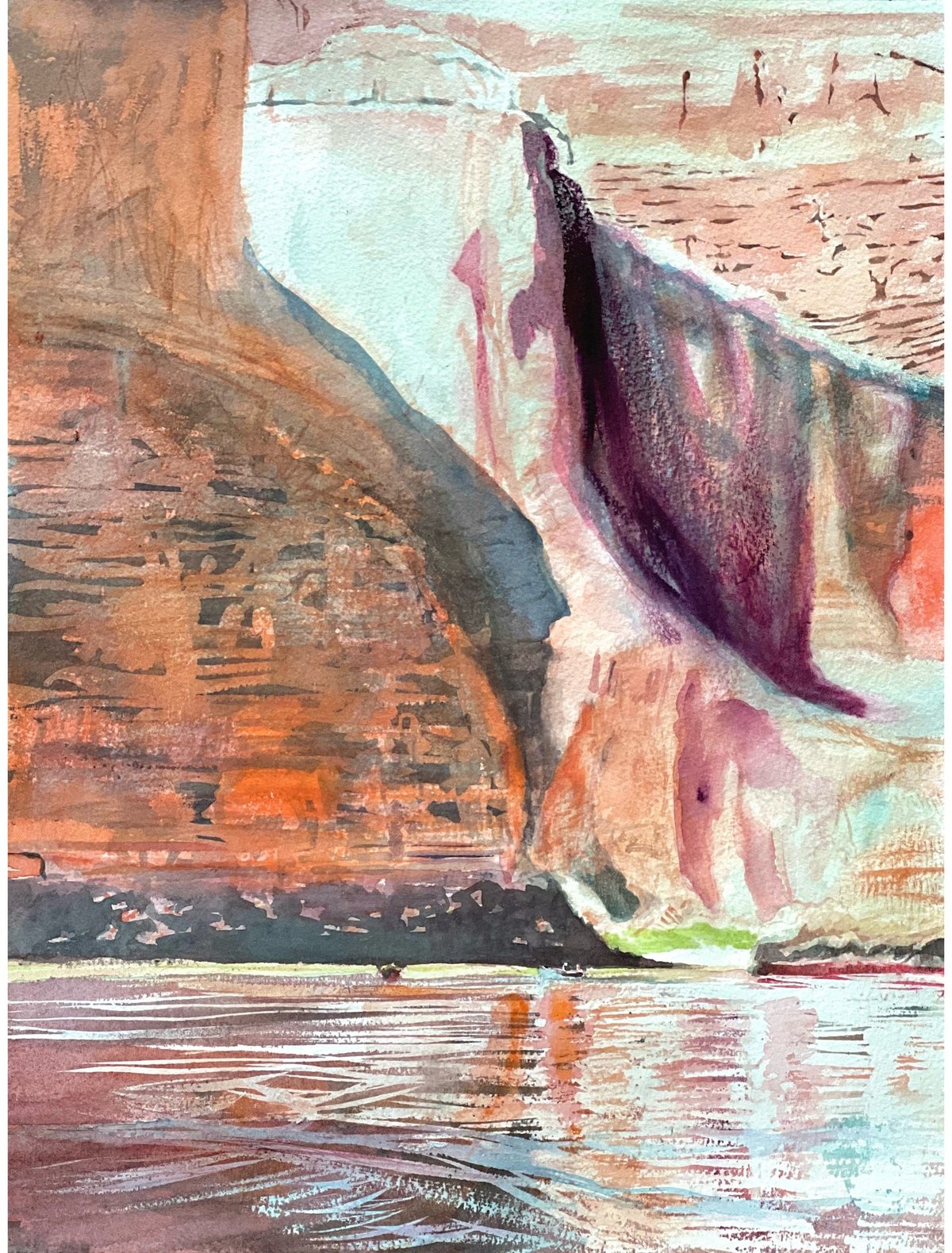
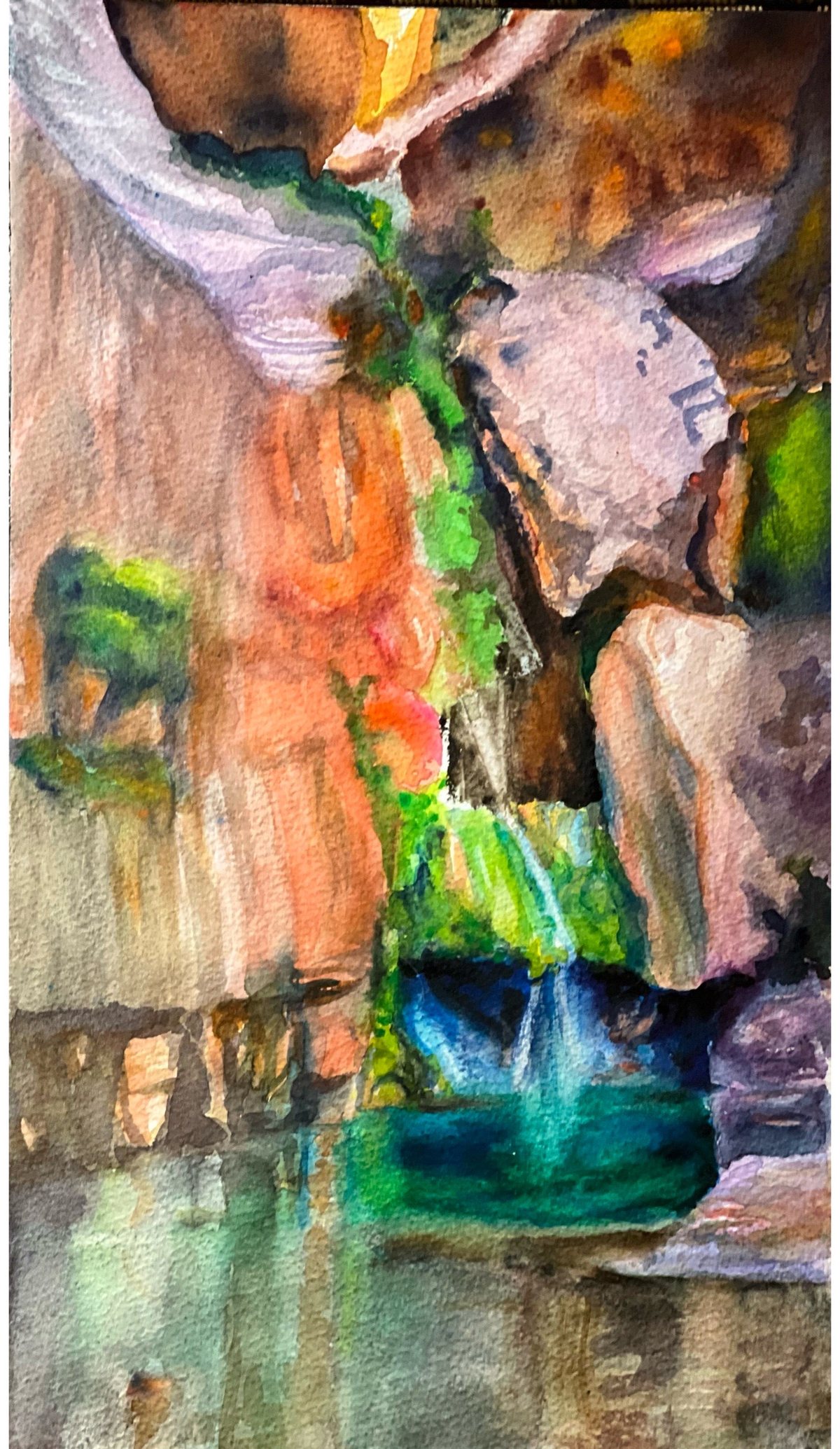
I prefer the watercolor medium for landscape paintings because it comes closest to mimicking the process of creation that takes place in what is seen in nature. For example, most of what you see in the attached painting is nature’s use of water to deposit thin layers of color over a substrate similar to a watercolor. However, the difference is that calcium carbonate has been dissolved from limestone by slightly acidic groundwater and deposited in thin layers over 525 million year old rust colored sandstone to create a thin veneer of luminous travertine. This painting pays homage to nature’s landscape creations using water.

We are the hidden people here withinThe rocks peering out from the shadows byDaylight and dancing in the moonlight inBehind the waterfalls you may see our eyes.
After a six month hiatus, we are continuing our virtual float down the Colorado River through the Grand Canyon. As we drift deeper into the canyon’s rock strata the side canyons appear taller and narrower, and more dramatic spatially. Jewel like, Elves Chasm is a short hike from the Colorado River and a beautiful swimming hole with crystal clear cold water for escaping the heat of the day.

The journey starts at 2 billion yearsEach step travels one hundred million less46 steps brings us to where we’re hereStooping I clip the tip off my toenailThe whole of human existence entailed.
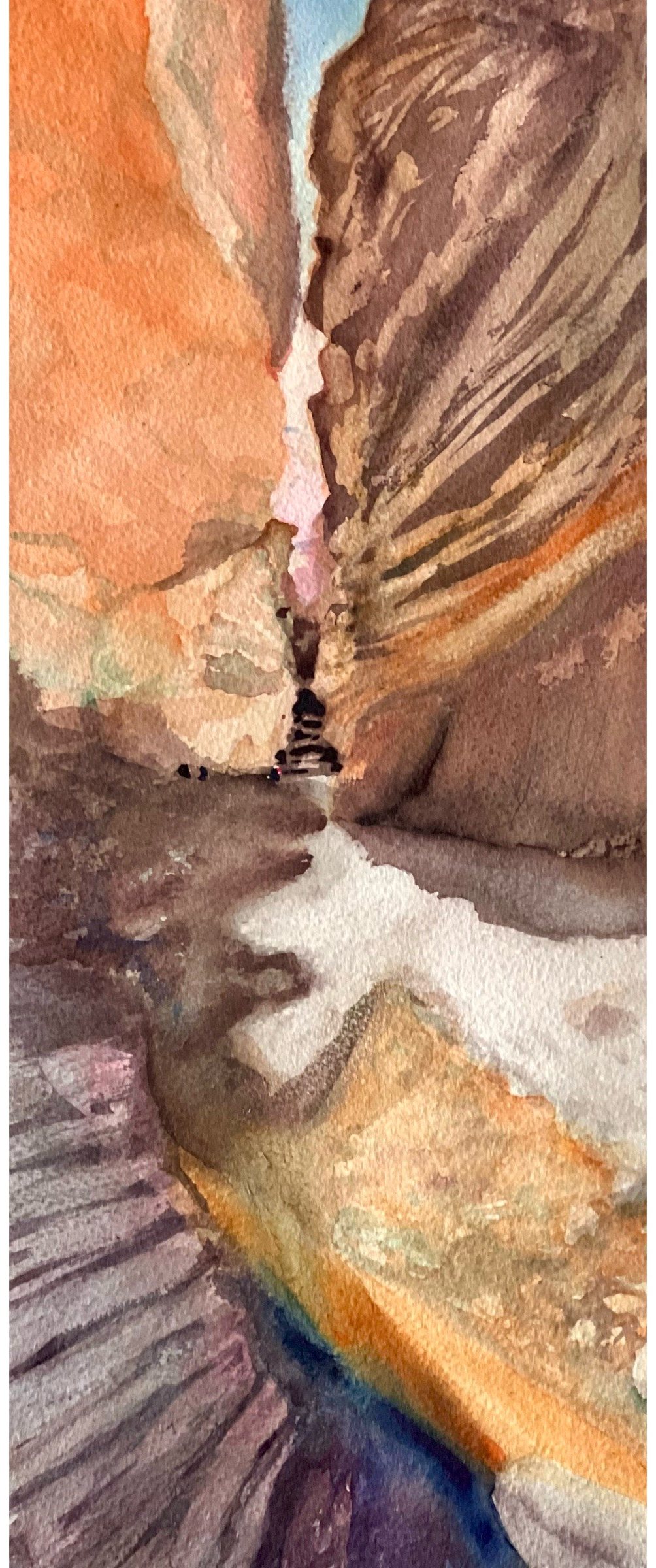
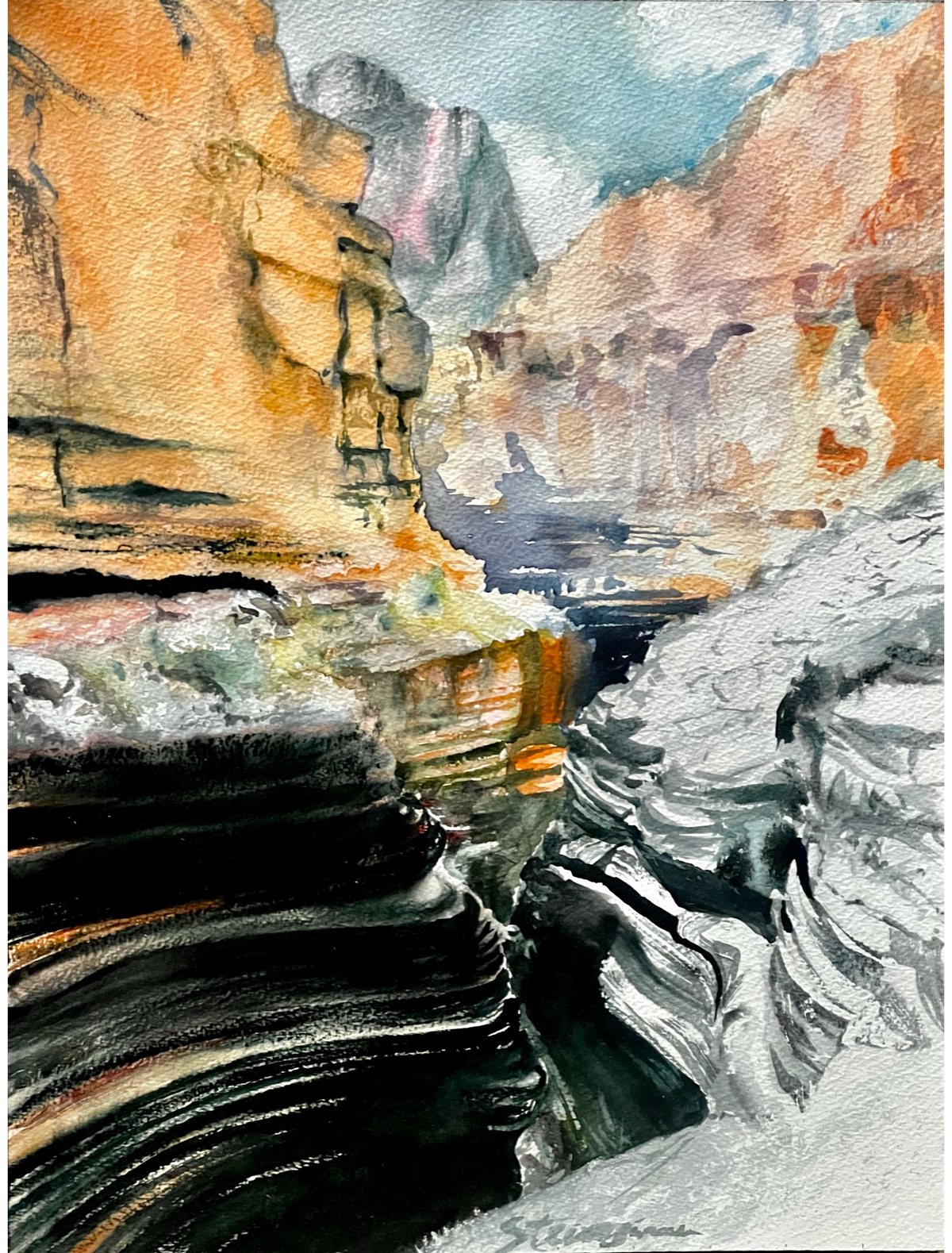
We’ve travelled 120 miles down the Colorado river through the Grand Canyon from Lees Ferry and have arrived at the enigmatic Blacktail Canyon that envelops us in serene splendor. Our guide strums a guitar and sings in a space well known for its acoustics. We mill around looking at two billion year old rock in silent humility like opening day at an art exhibit.

Dark rock that swallows light surrounded byThe efflorescence of glorious dustCreations life and pulse where beauty liesWithin the beast and eyes see but the crust
As strife and tension continue to mount among surface dwelling Homo sapiens, let’s escape to one mile below all that surface tension to vicariously continue drifting with the Colorado river through the glorious and peaceful Grand Canyon. We have now covered 133 river miles, and have entered the realm of the Vishnu Basement Rock, a hard metamorphic schist, the oldest rock in the canyon at 1,800,000,000 years old, or 40% of the age of the earth.
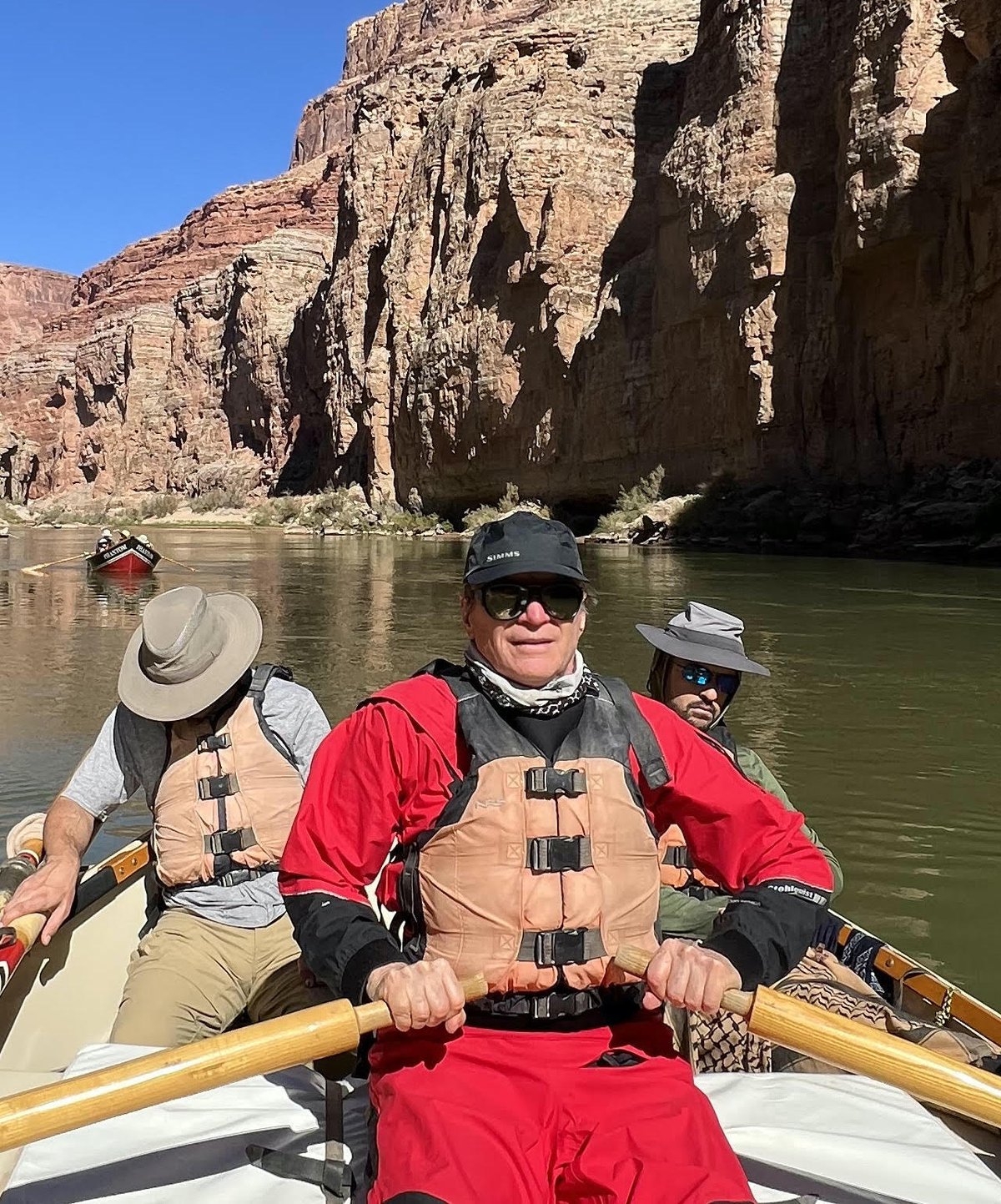
The oarsmen who rowed our dories, are considered the elite river guides of the canyon. For them, it’s not a job. It’s a lifestyle. Granted, it’s seasonal, but they savor it while it lasts. Our oldest oarsman was 70, and had been rowing for Grand Canyon Dories for 50 years. We estimated that he had lived 15 years of his life in the canyon. He held the record for the most number of capsizing, but only because he had been rowing for so long not because of a lack of qualifications.

As an event horizon captures lightSo Vishnu cliffs capture the river’s archCompressed into a channel, currents fightThe maelstrom’s sucking decent into the dark.
The Vishnu Basement rock squeezes the Colorado River down through a steep vee-shaped canyon into its narrowest channel that measures 3 or 4 dory lengths between the canyon walls depending upon the water level. Moreover, in the latter half of October, it becomes cold in this area of constant shadows cast by the cliffs. Ghost like, the currents are known for shifting suddenly here in strange and unpredictable ways.
By now, I had been on several extended guided river trips in the West, and it had always amazed me how they had self- organize into efficient tribes with each individual filling several niches where they could contribute to the whole. This trip was very similar. However, it was during COVID, so we all spent the first 2 days masked. When no one showed any symptoms, the masks came off, and we went about forming our COVID bubble tribe. Since, no one brought their paints and brushes, I graciously filled the dual niches of tribal painter and poet leading impromptu watercolor painting classes by day and writing poetry for the campfire at night. Life was good, if only the river could have been longer.

Some breakaway shadows shapeshift to lifeOff of their canyon walls that even GreatUlysses would doubt his eyes running rifeWithout sleep would wonder about his fate.
Among my New Year’s resolutions is to complete my Grand Canyon Series of watercolor paintings. Therefore, I am beginning 2026 with my first offering of the new year, ‘Above Mohawk Creek’. This watercolor features a natural phenomenon I believe none of the explorers in history would consider to qualify as a legitimate discovery and would certainly not want to be remembered by it. Even Homer would undoubtedly have omitted it from the ‘Iliad and the Odyssey’ although it would certainly have been much more believable than the creatures Homer has Ulysses encounter on his voyage. However, as an artist I am not saddled with the burden of an explorer trying to make it into a history book but free to document my journey through life as I see it unfold. Have a look through my eyes,

Would you believe me if I told you hereIs where the ancients came from? You might sayWell, that may be, but before this here place DeerCreek, Eden was where they all lost their way.
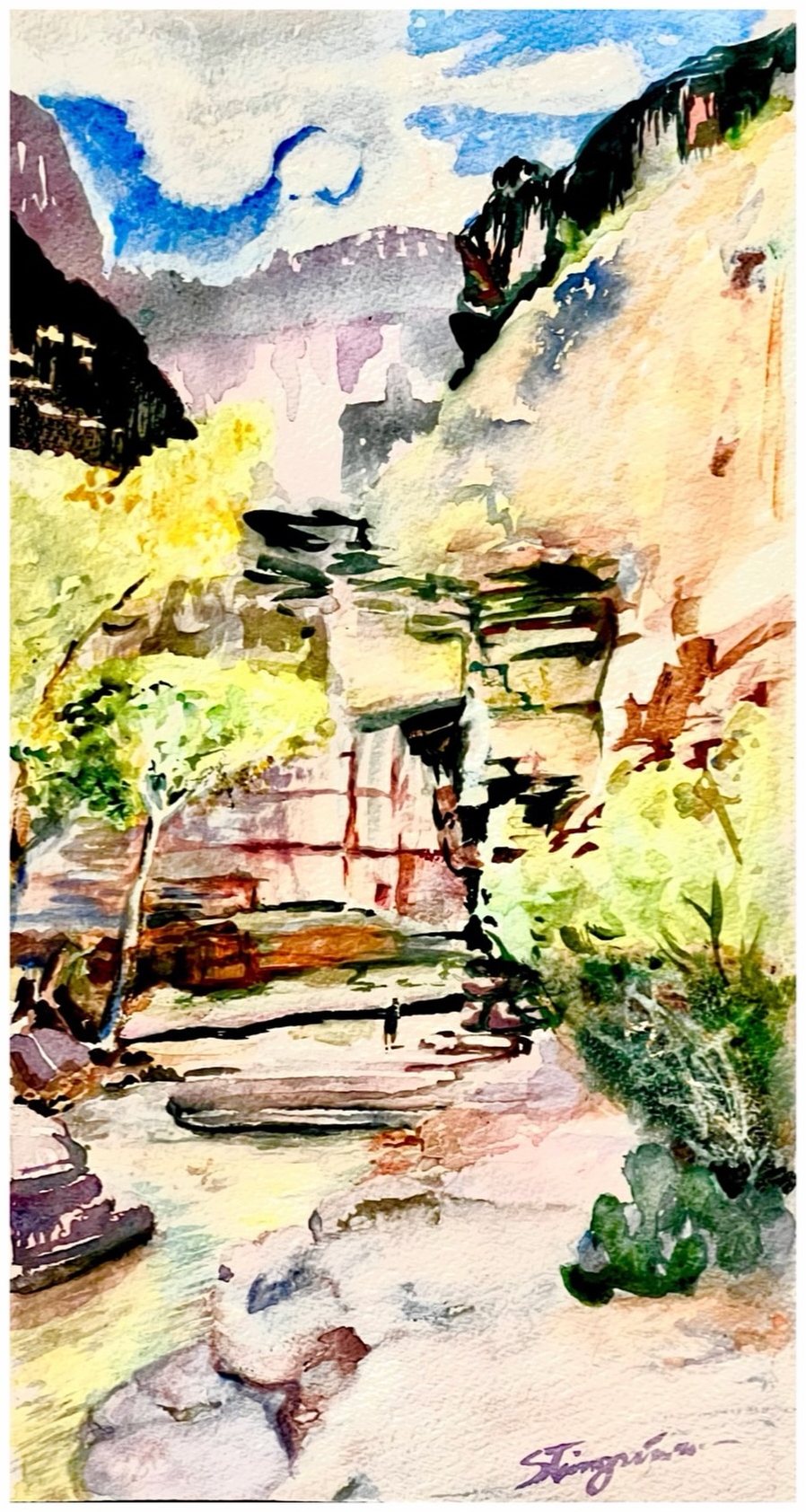
We are back in the Grand Canyon 136 miles down river from Lee’s Ferry. We are preparing to enter a slot canyon sacred to four of the six major tribes that occupied the Grand Canyon. Moreover, two of those tribes believe the Narrows to be a spiritual gateway through which the spirits of their ancestors journey and leads to where their people came from.
The mouth of Deer Creek is a 150 foot waterfall that plunges directly into the river. The hike into the Narrows begins on a stone trail of switchbacks ascending to a protruding shelf that follows a sedimentary layer starting about 50 feet above the creek. Hiking at creek level is forbidden, reserved for the spirits. Nevertheless, we will be paralleling the journey of the spirits from above to reach their origin.
Unfortunately, I regret leaving you at this cliff hanger. Deer Creek Narrows is a spiritual journey that needs more than a single painting. This miniseries will continue with two additional painting installments before we reach the origin of creation. So, … stay tuned.

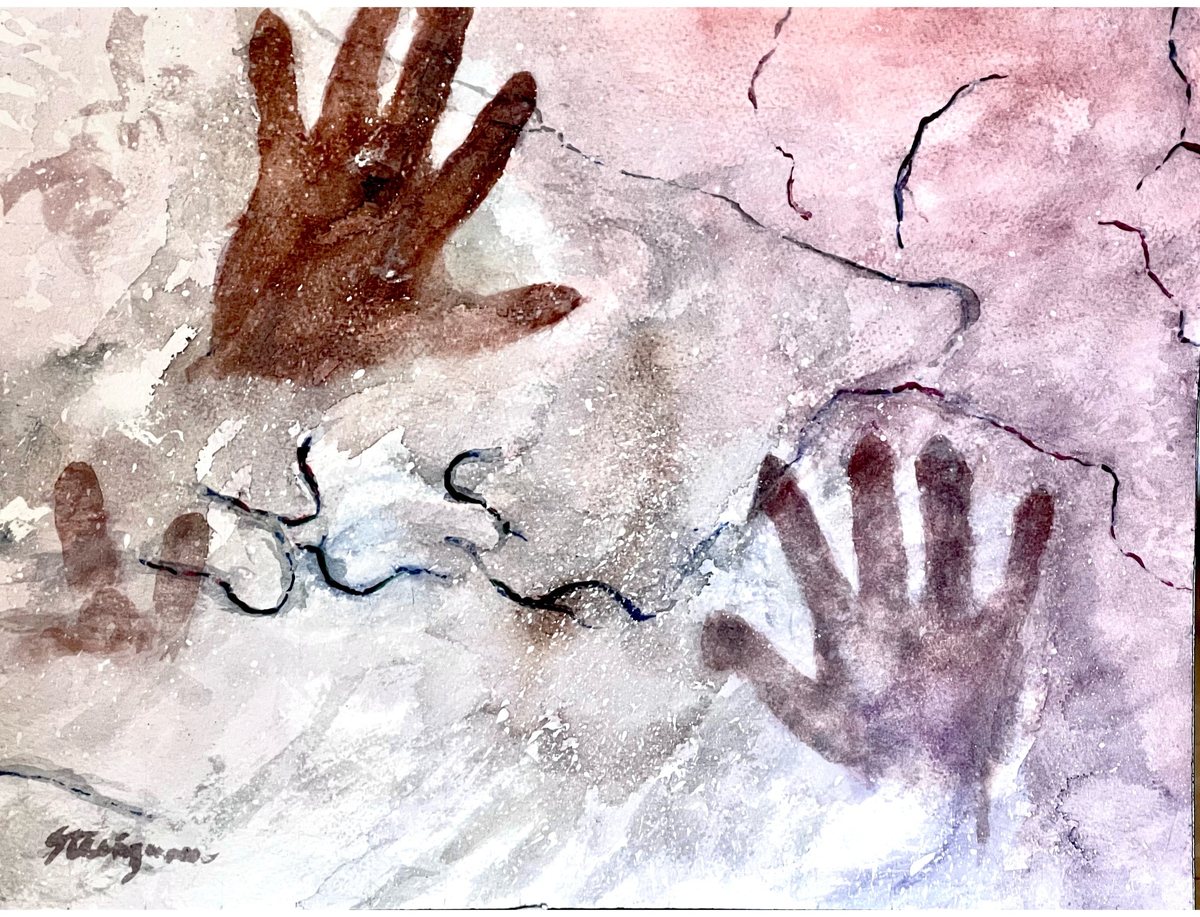
Beyond the handprints that say hiI see a universe in sparkling dustAppear within the rock with hands that vieTo touch the spirits of us passers-by.
We are on a ledge that serves as the trail to hike into the Deer Creek Narrows where the location of the origin story starts for two of the main tribes that occupied the Grand Canyon. Along the trail on the rock wall beneath an overhanging rock ledge just above eye level are handprints estimated to be 1200 years old. They are petrographs in the form of inverted handprints made by spraying a mouth full of minerals across a hand placed on the rock.
I have a fascination for Stone Age art because of its age, simplicity, and what it says about the artist and the tribe. I painted the handprints on the rock wall to feel what the artist may have felt when creating it. In the process, I noticed how significant the cracks in the rock around the three handprints are to the composition. The artist positioned the last knuckle of each index finger of each of the handprints directly on a crack that runs through them all. In this way, the artist guides the viewer’s eyes counterclockwise along the cracks in the rock from a partial handprint to a complete but flat one to one that feels like it is emerging from the rock wall evoking a sense of the third dimension.

I would like to catch up after my summer hiatus from my Grand Canyon Suite of paintings with two new paints: Deer Creek Patio, and Tree of Life, which are included with this email.
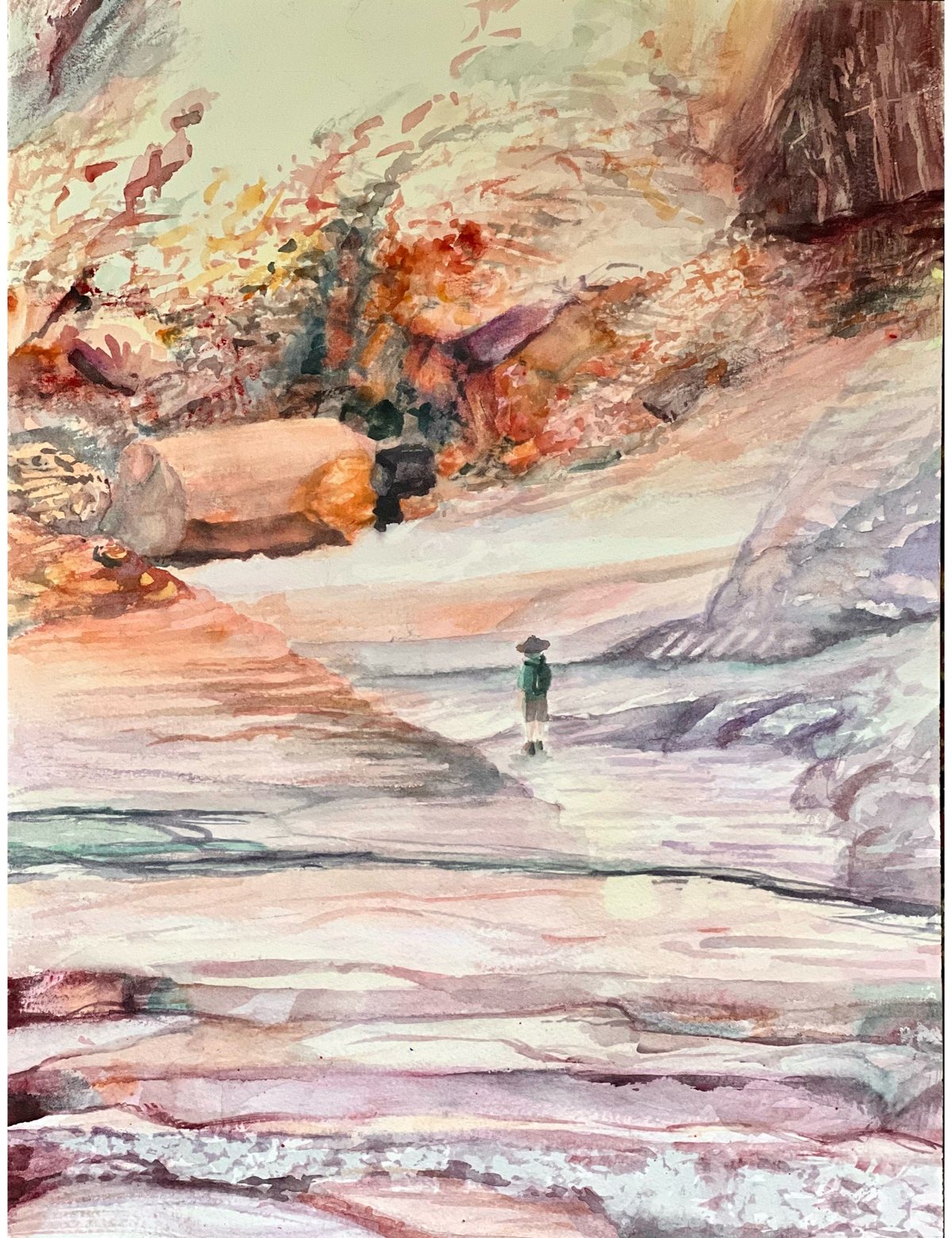
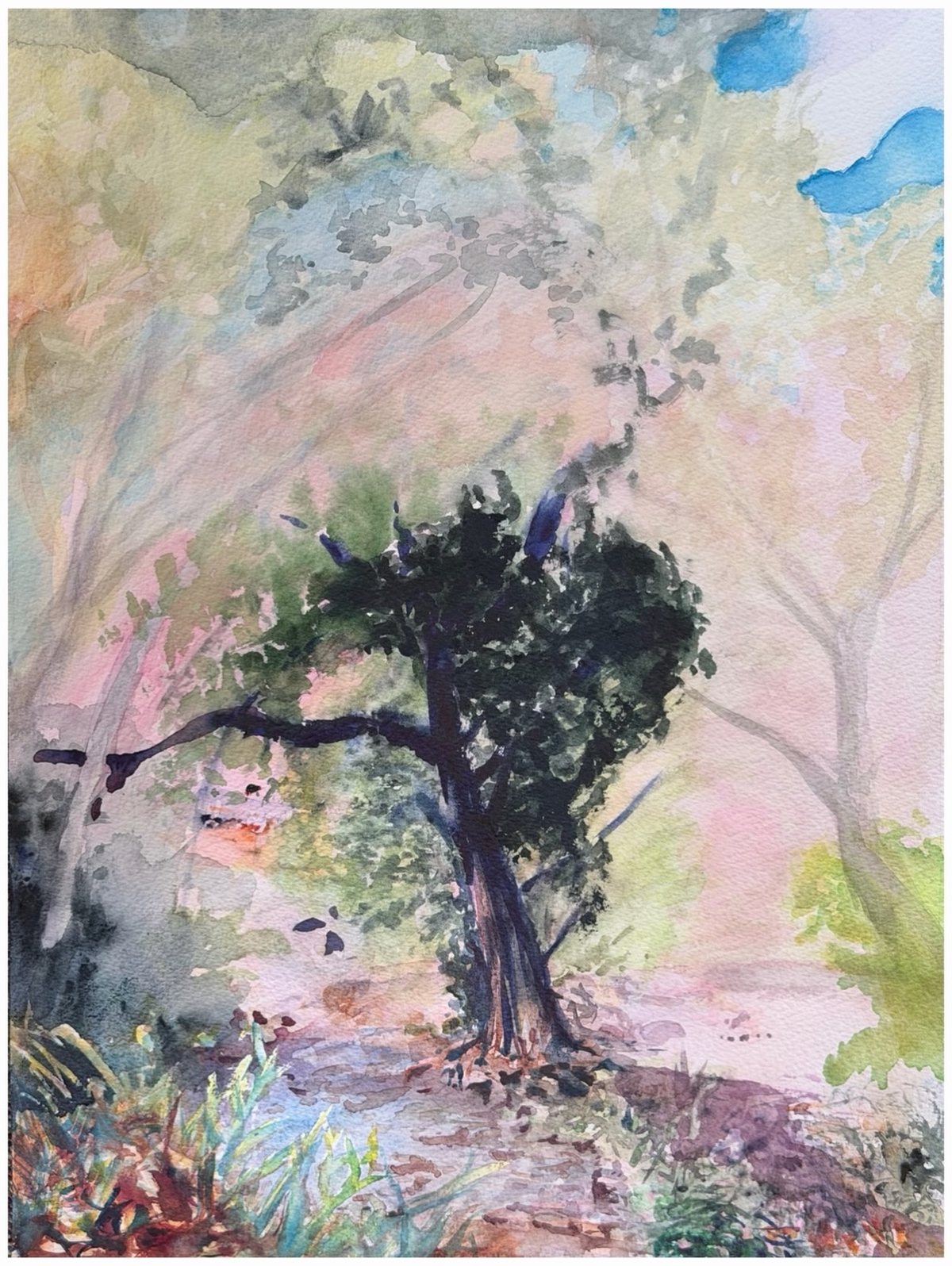
The Deer Creek trail ends in a beautiful oasis known as the Patio with a stream that meanders through its center and cascades down into the realm of the ancestral spirits located below the level of the Patio, which is sacred for those two tribes whose origin stories begin here. I continued to follow the stream past a couple of small waterfalls up into a wild garden with pink earth and springs that were the source of water for the stream. I sat beside a tree and dipped my paintbrush into the spring at its base to paint the view of where I had come from. I have also included a painting of the tree.
I have included all the Deer Creek Narrows paints here since they are a series that should be views together along with a verse.

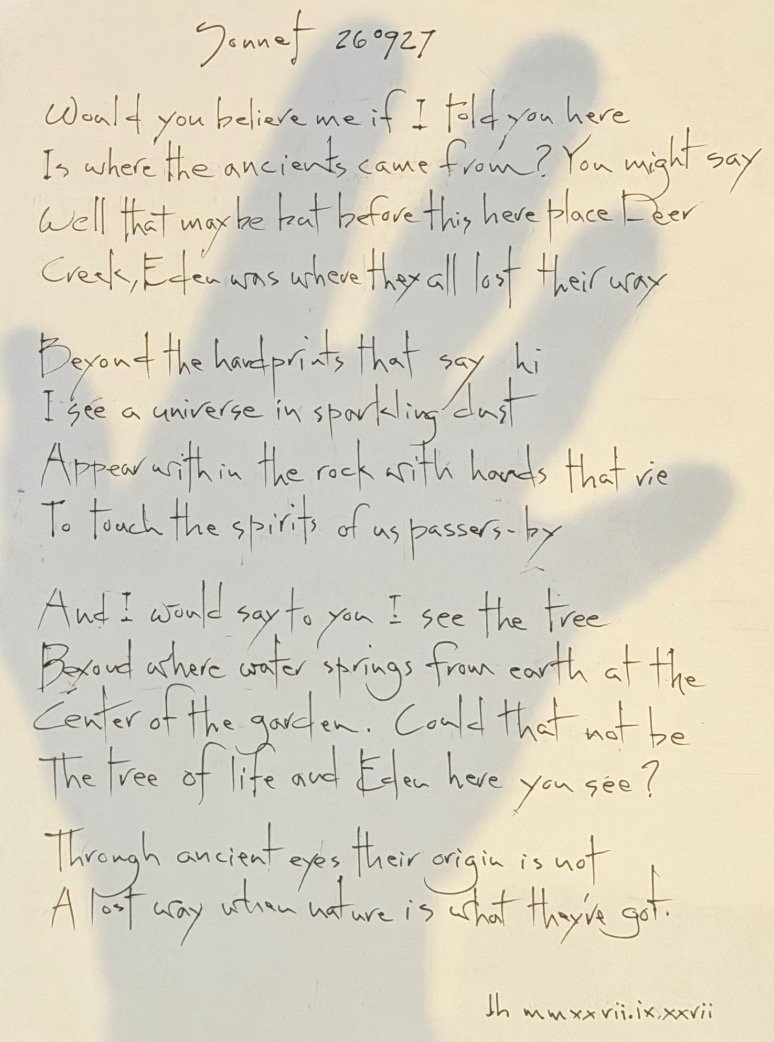
Would you believe me if I told you hereIs where the ancients came from? You might sayWell that may be but before this here place DeerCreek, Eden was where they all lost their wayBeyond the handprints that say hiI see a universe in sparkling dustAppear within the rock with hands that vieTo touch the spirits of us passers-byAnd I would say to you I see the treeBeyond where water springs from earth at theCenter of the garden. Could that not beThe tree of life and Eden here you see?Through ancient eyes their origin is notA lost way when nature is what they've got.
jh mmxxvi.ix.xxvii (September 27, 2026)

II
Hikes to the eruption on Iceland’s Reykjanes peninsula: the crater under the midnight sun, fissures still glowing beneath a sharkskin crust, and the trolls the sunlight turned to stone.
18 works

The efflorescence of glorious dust,Creation’s life and pulse where beauty liesWithin the beast and eyes see what they mustI linger here for you, creation’s guise. -jh

Some say the world will end in fire,Some say ice,From what I’ve tasted of desireI hold with those who favor fire,But if it had to perish twice,I think I know enough of hateTo know that for destruction iceIs also great,And would suffice.
Robert Frost, 1920

…living where life was never yet dreamed of, nor hinted athere, in the other world, still terrestrialmyself, the same as before, yet unaccountably new.
D. H. Lawrence, “New Heaven and Earth,” 1917

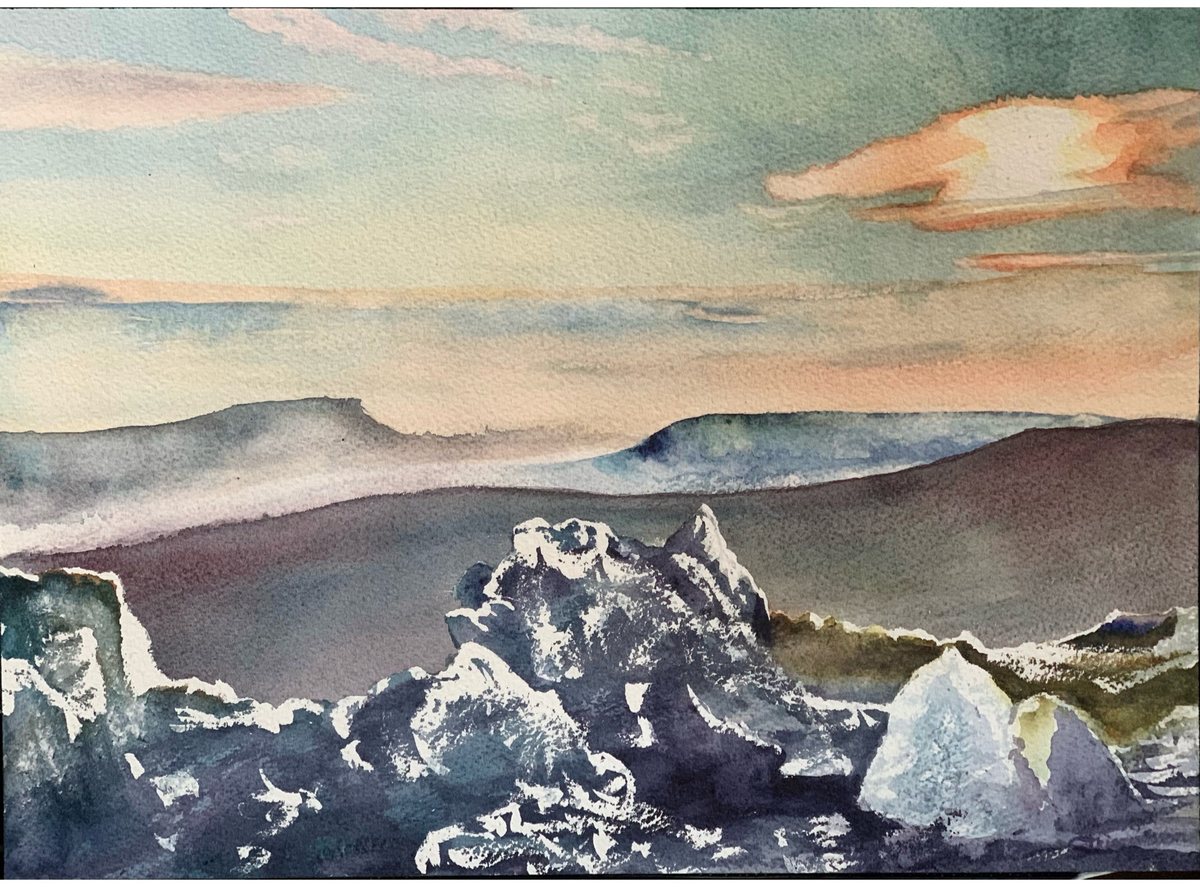
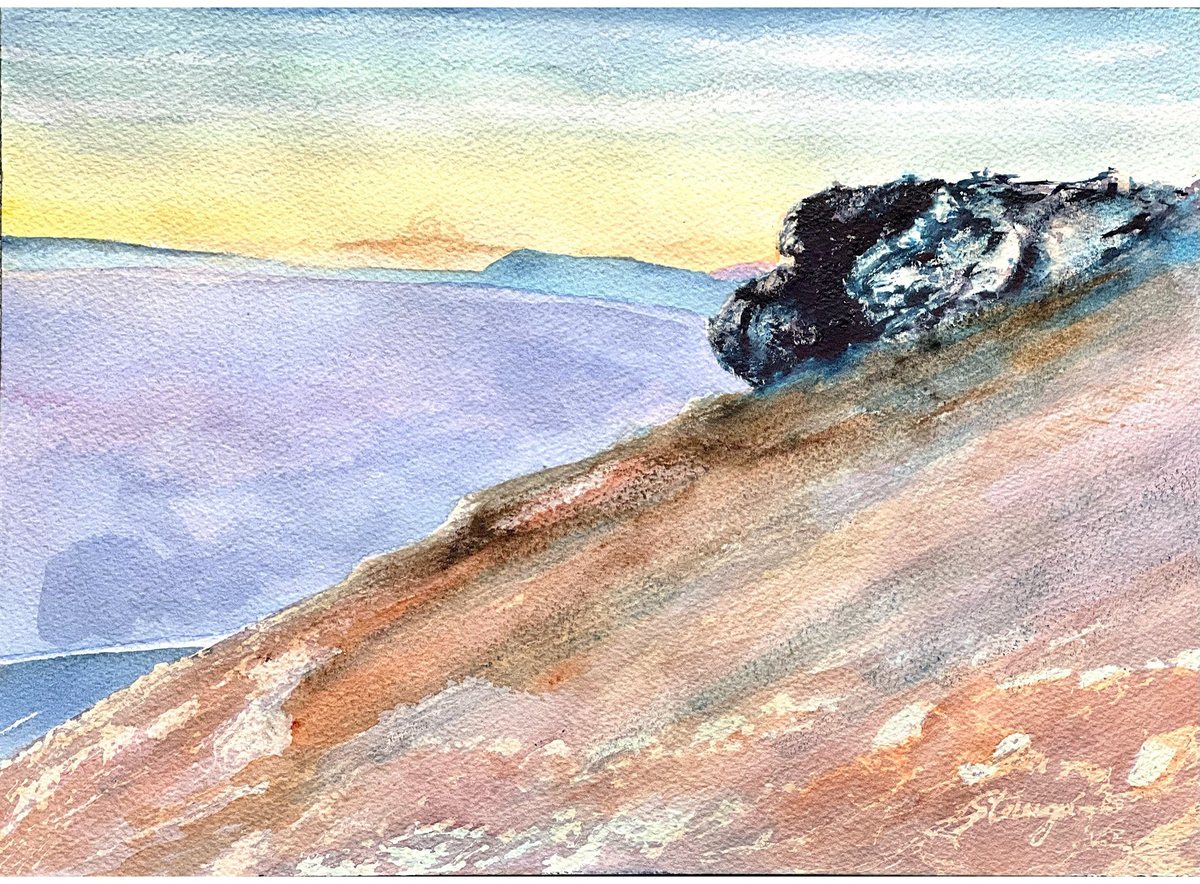
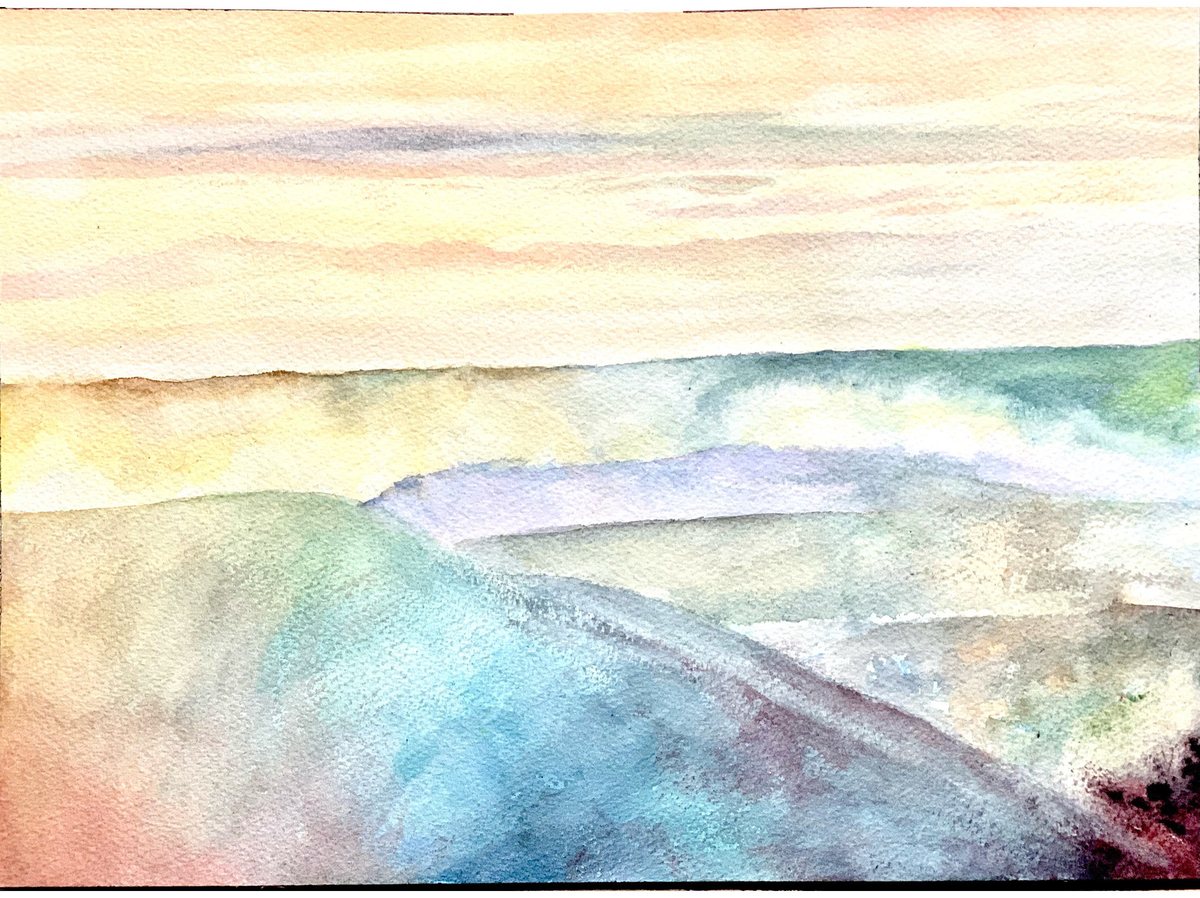
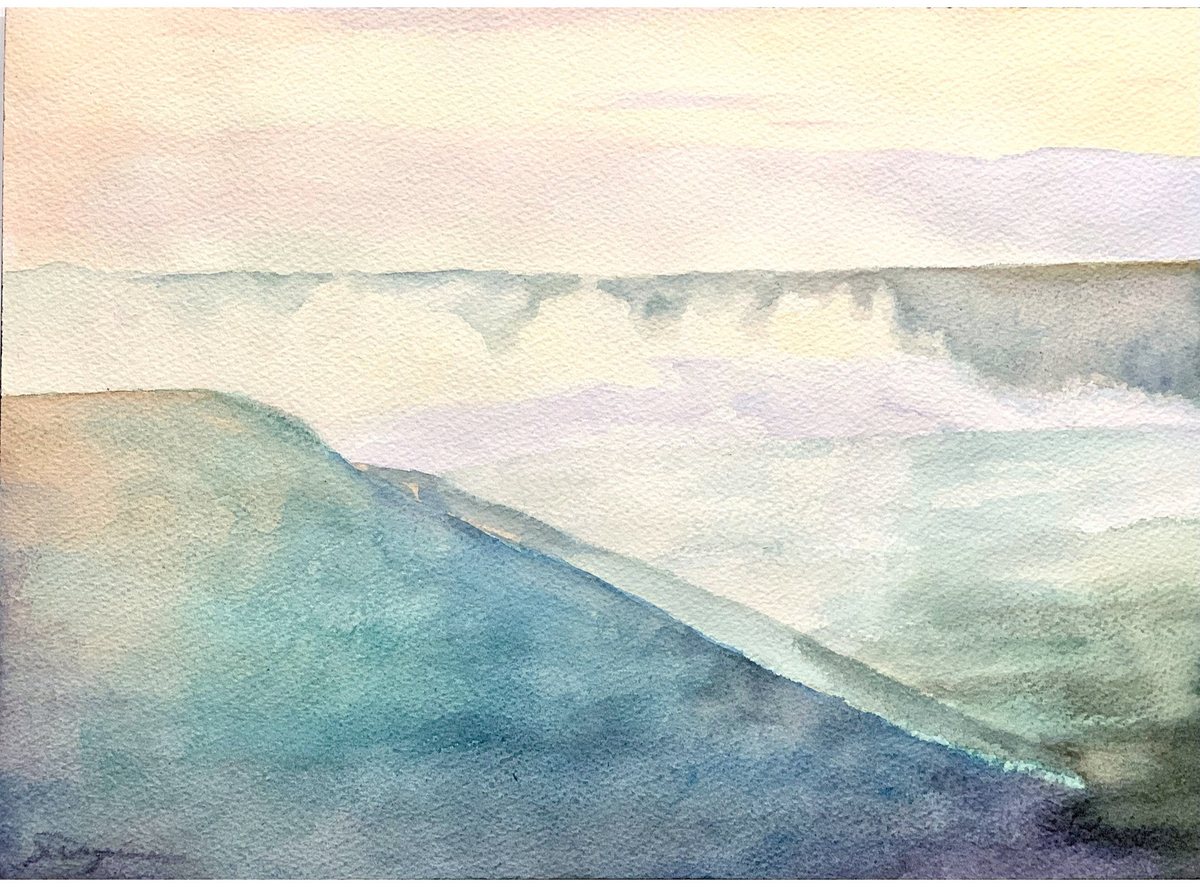
When I hiked three out of four times to the Fagradalsfjall volcano that was not erupting, I became aware of a subtle beauty unfolding before me. July is a time of the midnight sun in Iceland. It’s eternal sunset crouches on the horizon like a fat cat with nowhere to go. Claw-like shadows rake the earth and a glaring yellow-orange cat eye like sun renders time motionless. ‘ Fagradalsfjall Volcano XIV, Midnight Sun ‘ is one of those beautiful motionless moments under the midnight sun in Iceland.

Dark Icelandic winters are not only a time of holiday merriment and the welcoming of the New Year, but also a time when trolls descend from caves in the highlands down to populated areas to indulge in their own kind of merriment, which includes harassing and playing tricks on people. This is because according to Icelandic folklore, trolls flourish in the darkness, but turn to stone in sunlight. For more than two weeks, Iceland has been tilting towards the sun and emerging from the darkness into the light of longer days, and of course, the ultimate antidote against troublesome trolls is the glorious midnight sun.
Can you see the troll rock in the foreground? The head of the troll became a stone when it was exposed to sunlight. An expression of forlorn surprise bears witness to the moment when the troll saw the light.

Icelandic trolls are mischievous and can be quite clever, but according to folklore, they are not very smart. In the painting, a female troll is turned to stone when a youngster lured his mother into sunlight as a prank with his false calls for help. The troll boy can be seen crouching in the shadow of a rock on the left. To his surprise, the all seeing eye of the midnight sun, on its circumnavigational path, eventually found him and also turned him to stone.

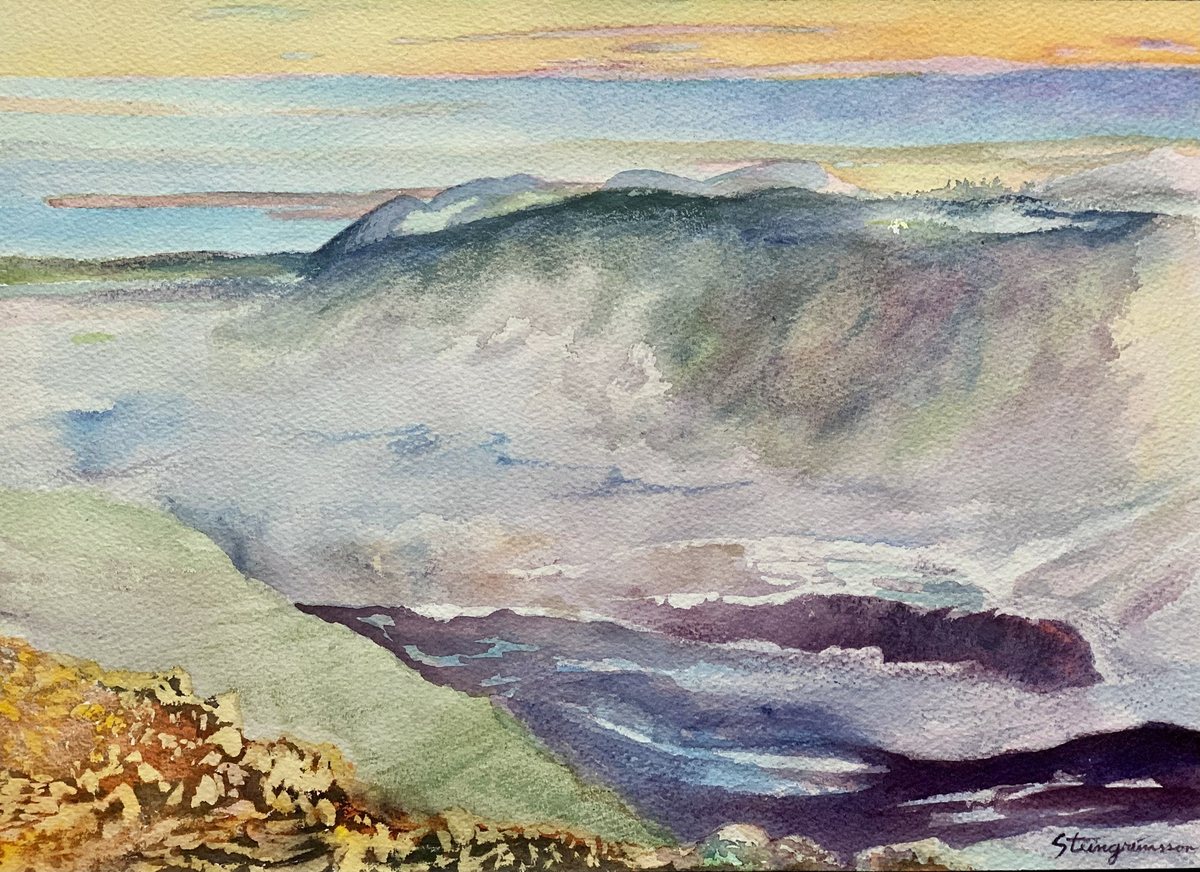
A gaseous malaise would have completely smothered us in toxic gases if we were not careful to approach the volcano from upwind. We landed in Keplavik in the morning and were hiking to the volcano by late afternoon. As it turned out, we were smothered in fresh air in the form of a heavy fog that swept in from the ocean and caught us ascending a ridge about half-way to the volcano. But spirits were high. One of us strummed on a ukulele and sang a song in the fog and howling wind. We hiked back to our vehicles to return a few days later.

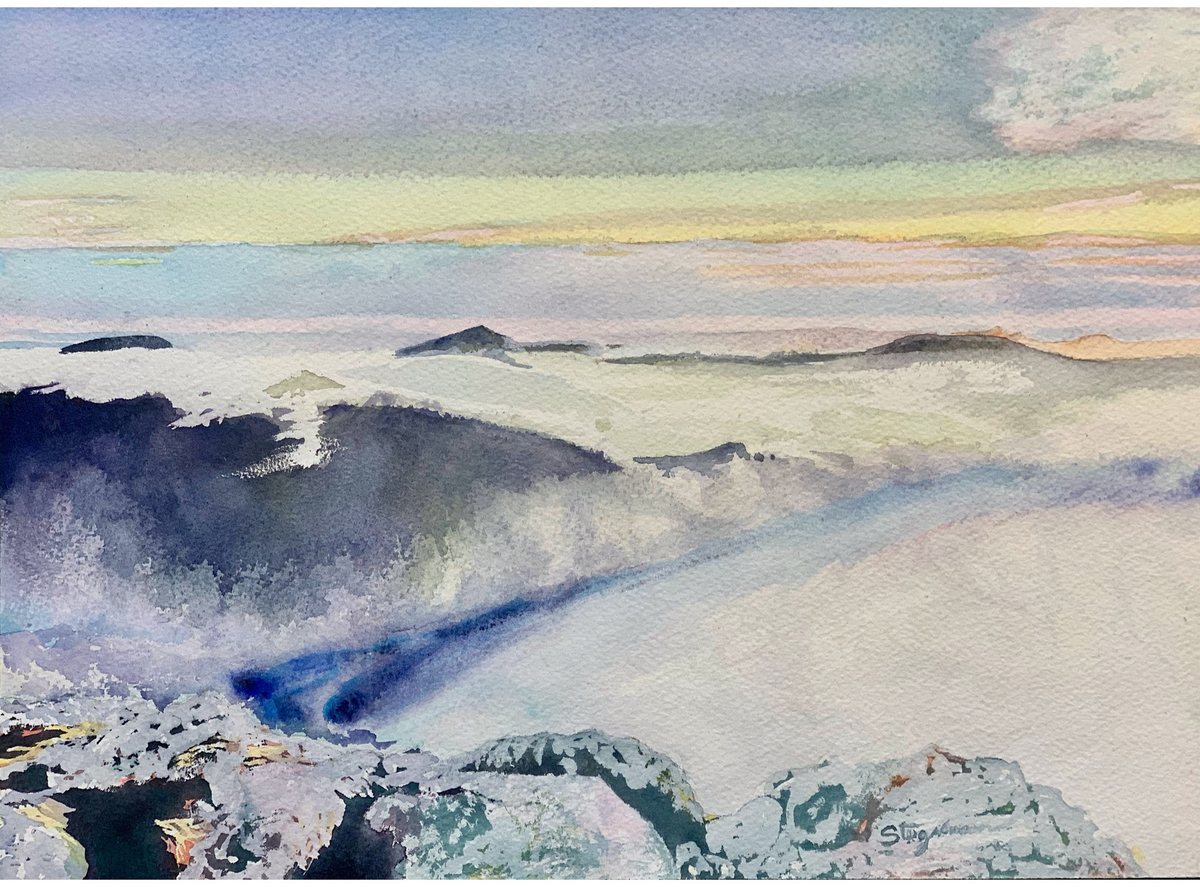
A receding fog unveils a masterwork in progress. After being repelled by fog on our first attempt, we made it to the volcano on our second attempt and stood in awe before the eruption. Soon after that, the eruption stopped. It would be our last hike to the volcano as a group. I continued to hike to the volcano and made two solo trips up through the valley to ascend the ridge and follow the midnight sun’s rays through fog and rising gases to the birthplace of new earth.

Deity like, the volcano’s crater languishes in a postpartum blues of toxic gases while basking in a halo of radiant glory under the midnight sun. The volcano had stopped erupting. My last two hikes were made solo to see what I may have missed while my attention was focused on the spectacle of an eruption. It was on these solo hikes that I saw more clearly to the beauty of stark landscape compositions of light, space, and earth.

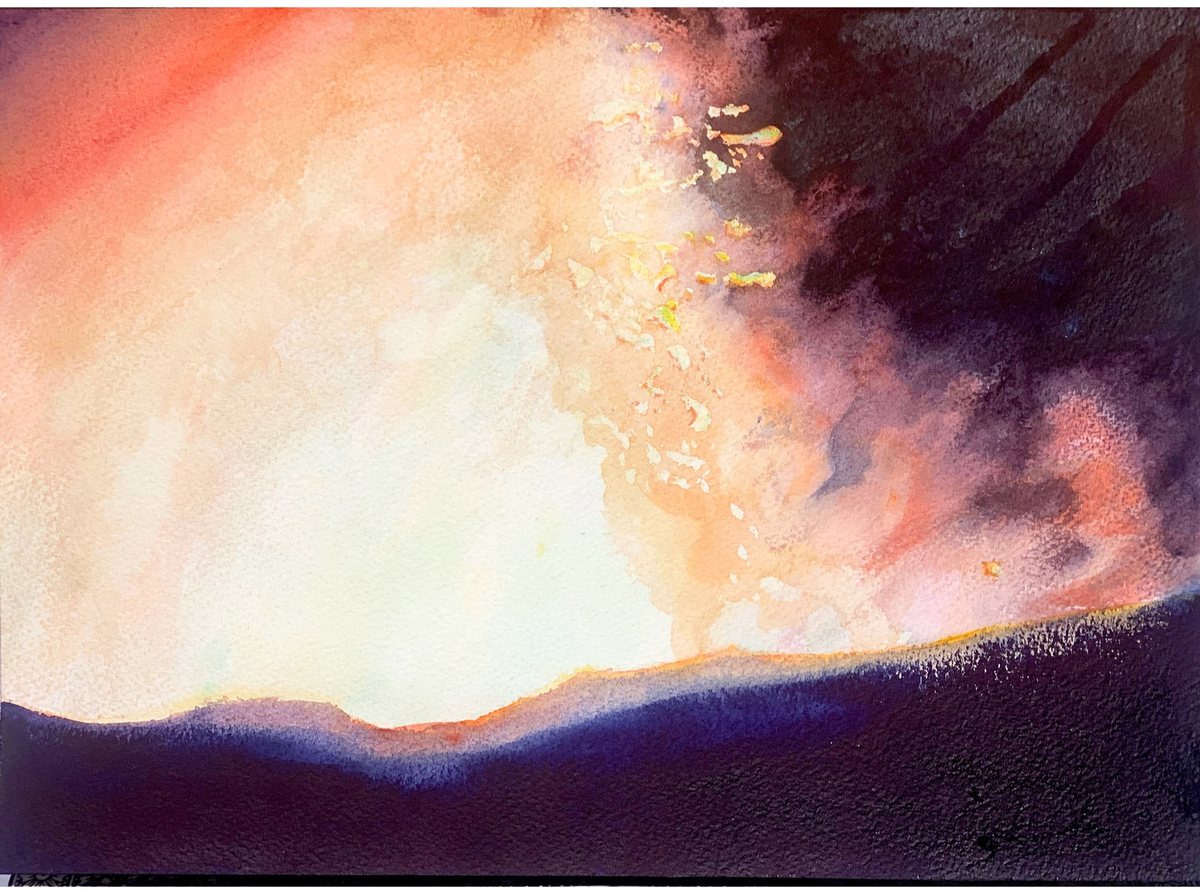
With the air refracting the midnight sun a gaseous mist rises from the volcano’s crater and swirls about in an effulgence of eruptive and glowing light that spreads and mixes in the wind. It becomes an air painting.

After 6,000 years, roused from the depths of slumber on a fiery couch, Gaia takes leave to rest within a toxic veil of hot gases - perhaps for another 6,000 years.

Overlooking the crater after the eruption has ceased, a troll dog and his troll master are immortalized in stone as they stare north for eternity into the midnight sun at midnight. At this moment, people are on top enjoying the view.

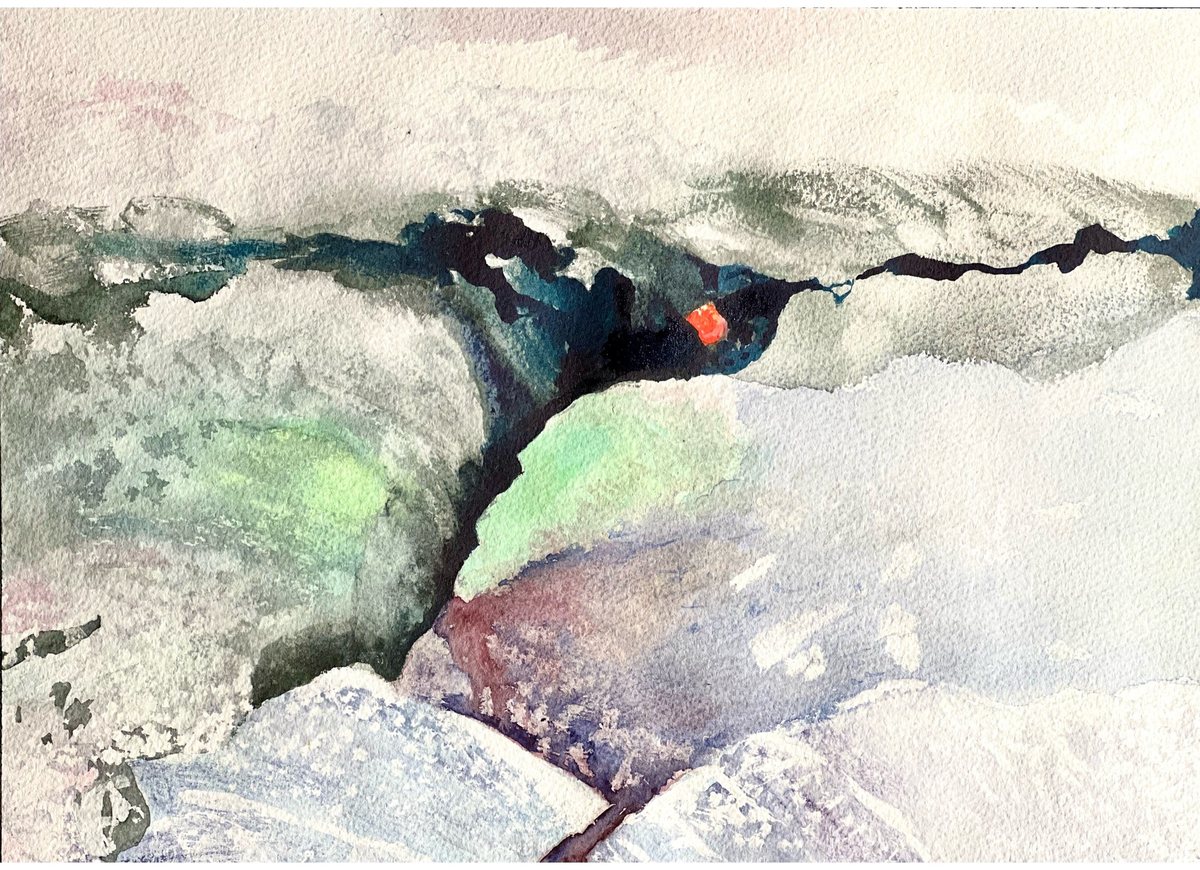
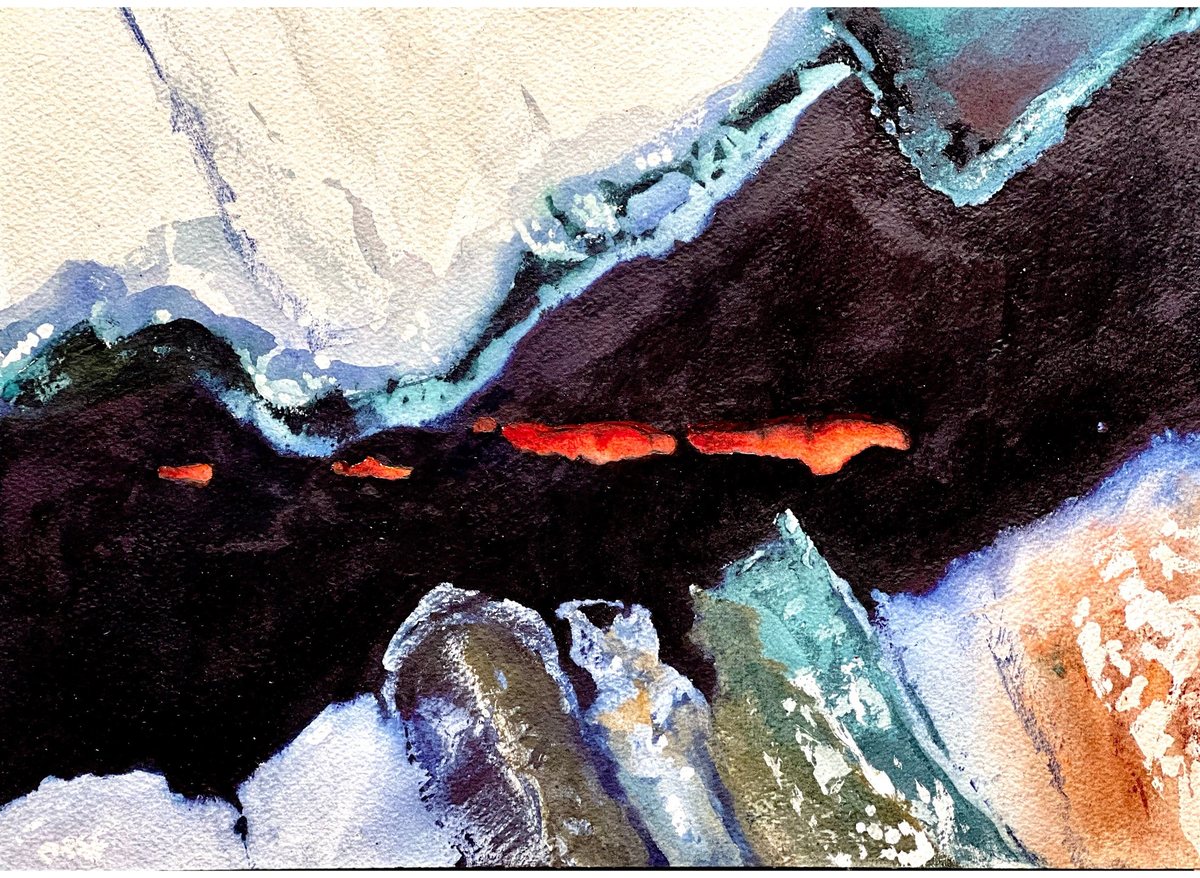
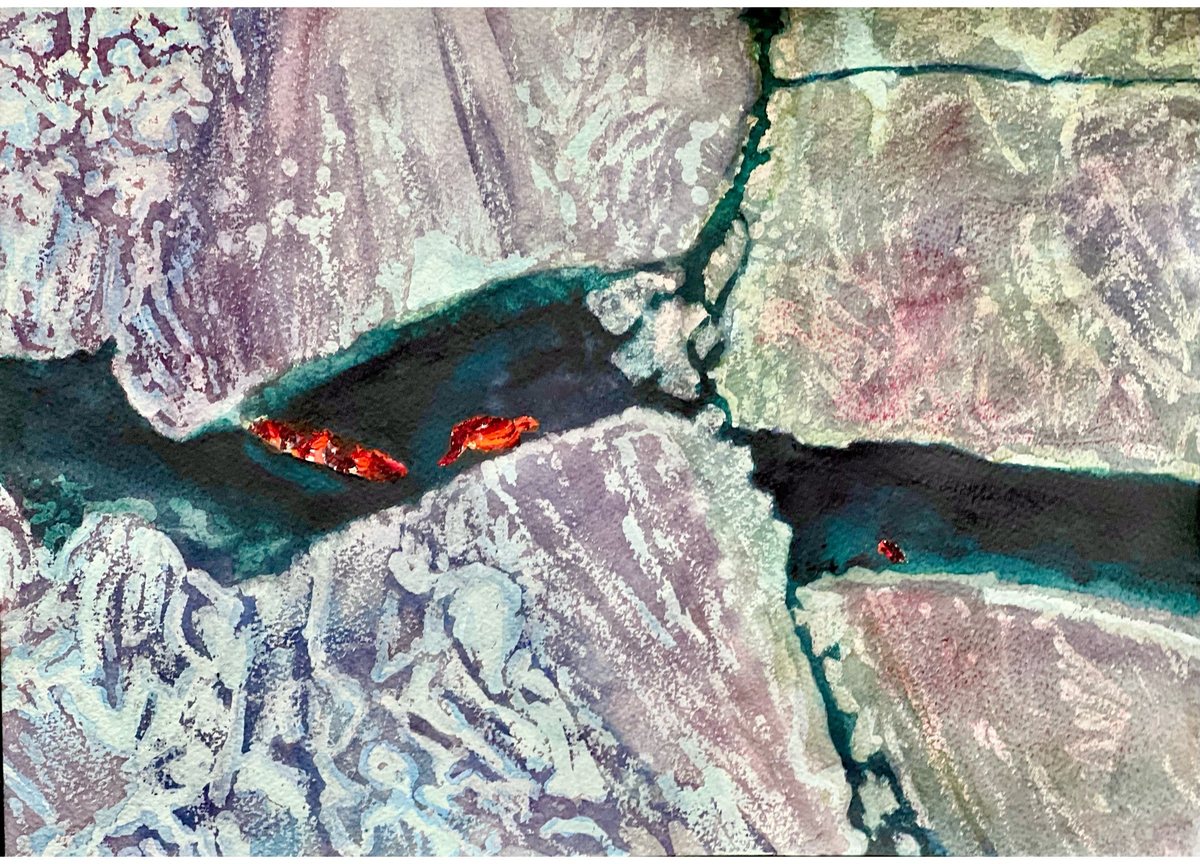
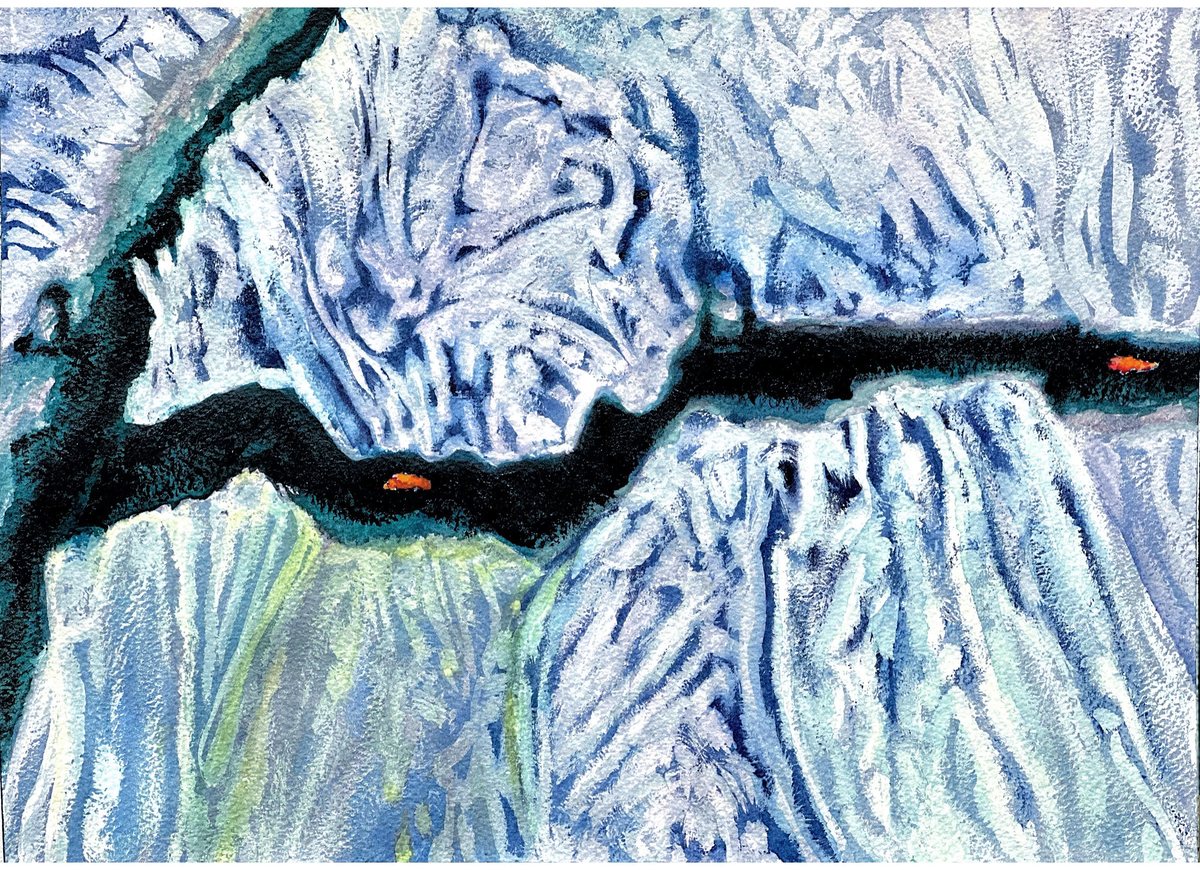
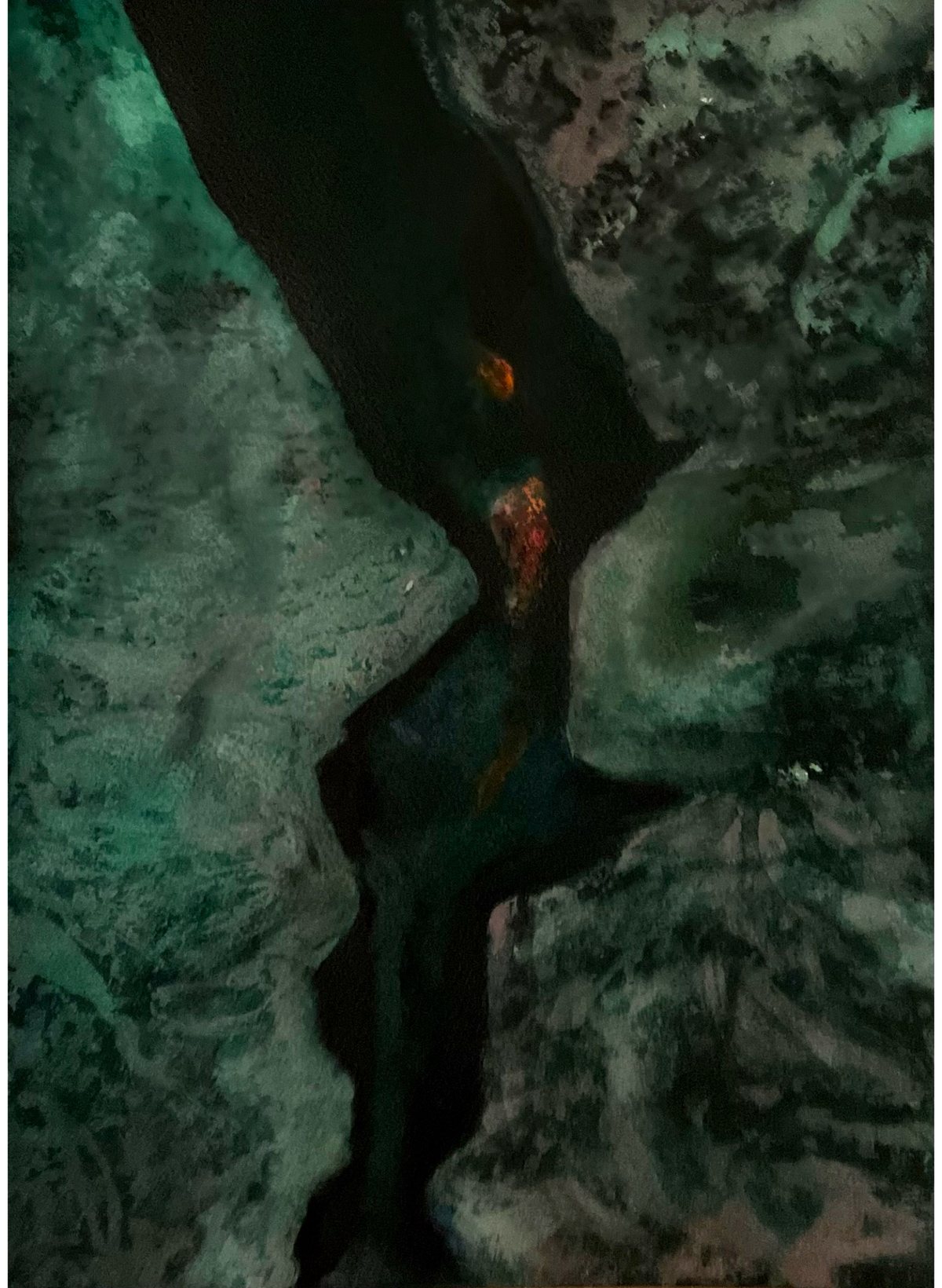
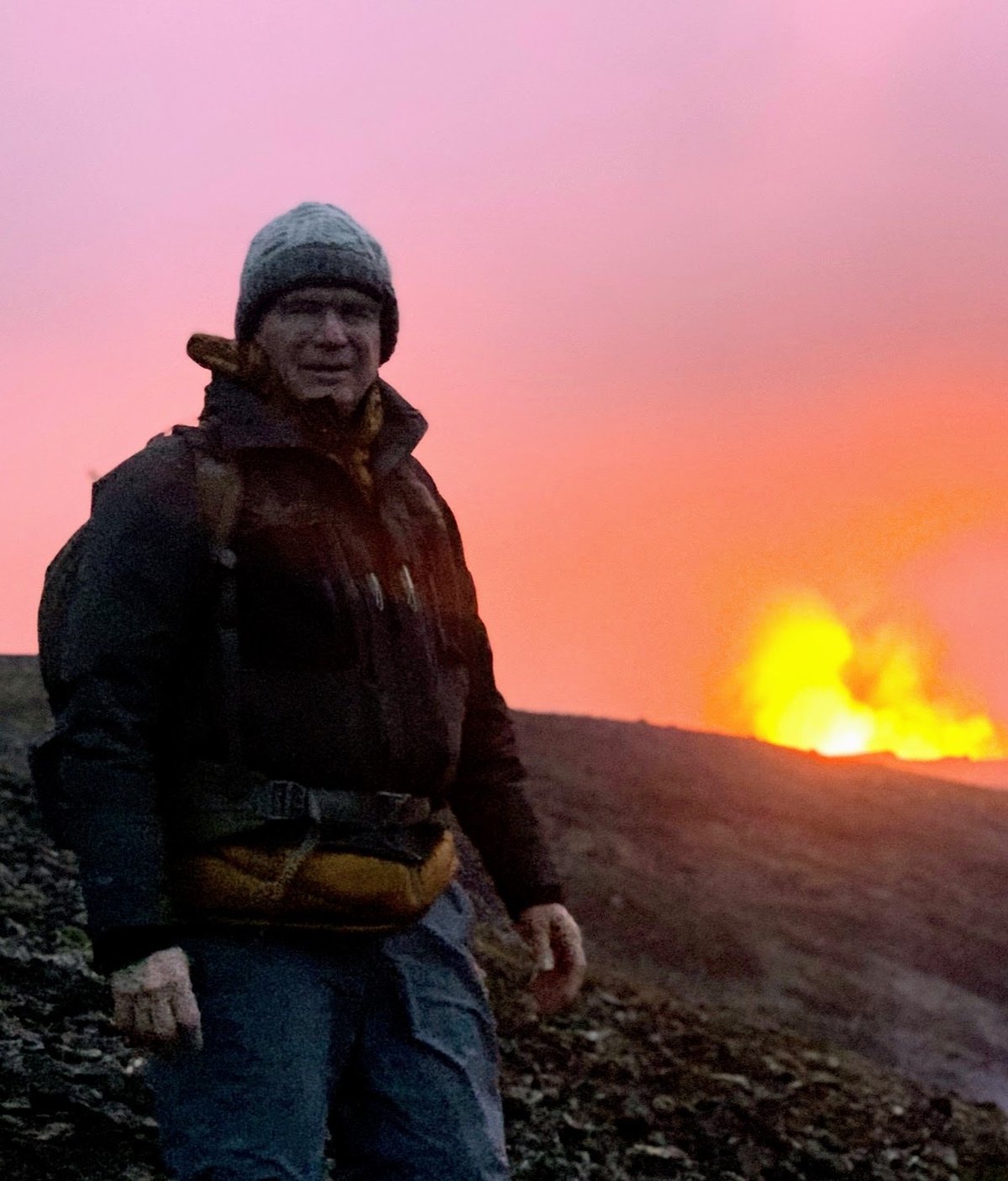
I felt that I made an intimate connection with the Earth when I stepped onto a field of lava that had recently formed a sharkskin crust covering molten rock two feet down. Flowing like blood through an artery, an intense heat pushed up through my clothes where I lay peering down into a fissure at a bright red spot that looked back at me like a wild animal.

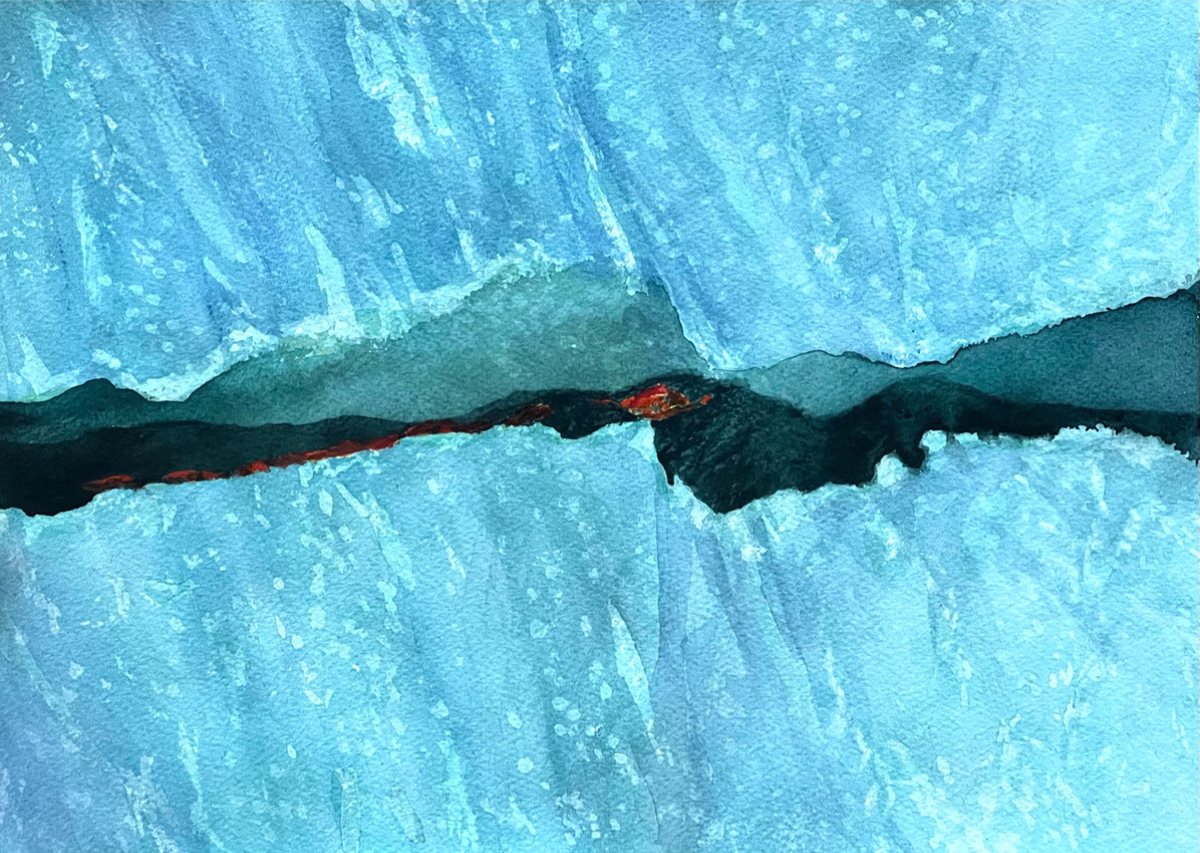
Fissures are like doors left cracked open just enough to tantalize our curious minds to spy upon our neighbors. The world of Hidden People described in Icelandic folk tales are elves that live within rocks in a parallel world to ours only revealing themselves at will. I dropped a marshmallow into this fissure. It burst into flames and briefly illuminated the underworld of the Hidden People, but no elves chose to reveal themselves to me on that day.

Rock Dwellers have been know to speak to people in poetry from deep within the earth as in the 14th century Icelandic saga ‘The Tale of the Rock Dweller’. The saga is mostly a verse that describes a volcanic eruption that is imminent.

Just in case you don’t already know, a new volcanic eruption has taken place, in Iceland, northeast of the Fagradalsfjall volcano. The new eruption has been a spectacular display of red molten lava fountains flowing out to quickly cover the surrounding landscape. But, as suddenly as it started, it stopped. Volcanologist say it is sleeping, which could be for a few days or a few centuries. What is time to a volcano that lives on a geological time scale? In the meantime, I continue to reflect on and paint volcanic fissures. I hope you are finding them as fascinating as I do.

Lava came up from the Earth. The ice cap burst and melted. Water flooded the land. The sky filled with ash, and darkness reigned like the end of time. The Age of Ice had come to an end. Land was born from the elements of creation. This was when the island of Thule was conceived, consecrated, and brought forth by the will of Gaia, to rise from the sea on the crest of a volcano.
-from “Time Frames”, John Hermannsson

Greetings from the trailing edge of an arctic cold air blast that has just left us mercifully with rising temperatures and cast us into sunshine reflecting on a brilliant white snow covered landscape.
After a two month hiatus, I have attached the last of my Fagradalsfjall Volcano Series paintings to this email, plus two photos, ‘Winter Solstice’ and ‘White Christmas’.
For the new year, I will take you on a very different journey as I turn my attention to the Grand Canyon Suite series of paintings , which will be based on my sketches, photos, and memories of my 2-1/2 weeks in a dory running the rapids of the Colorado river through the Grand Canyon in October.
III
Plein air sketches from Costa Rica, Scotland, Japan, the Philippines, Florida and British Columbia.
14 works


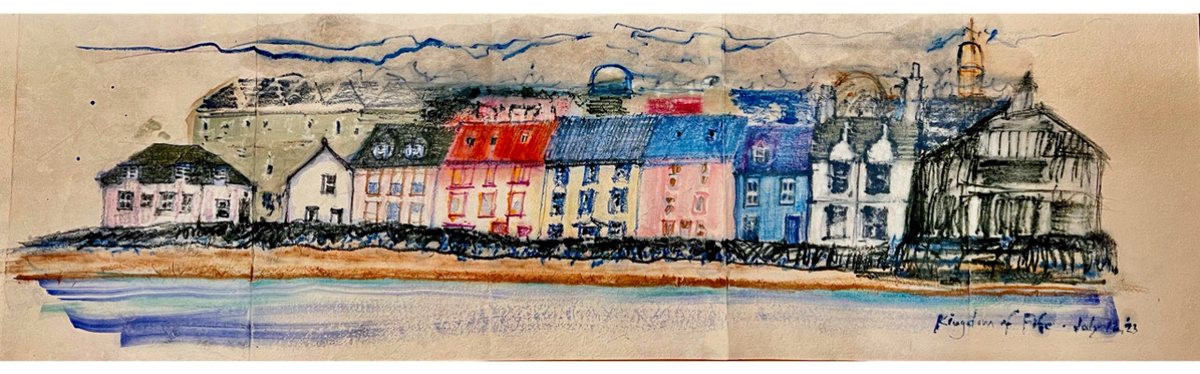
I am experimenting with combining the medium of watercolor with colored pencil for my travels in Scotland because the continuous rain and elevated humidity slows down the drying time significantly of a watercolor painting by itself.
On the road from Edinburgh to St. Andrews is a small fishing village know as the Kingdom of Fife. I strolled out onto the harbor’s breakwater to view this curious village with a pompous name better at a distance from the ocean side and created the attached travel sketch.
How this village earned its name was by being the place from where Scotland was ruled by a Celtic tribe known as the Picts for a thousand years after the Romans left in the 5th century. In addition, after ruling Scotland, the Kingdom of Fife supplied Britain with most of its kings and queens.

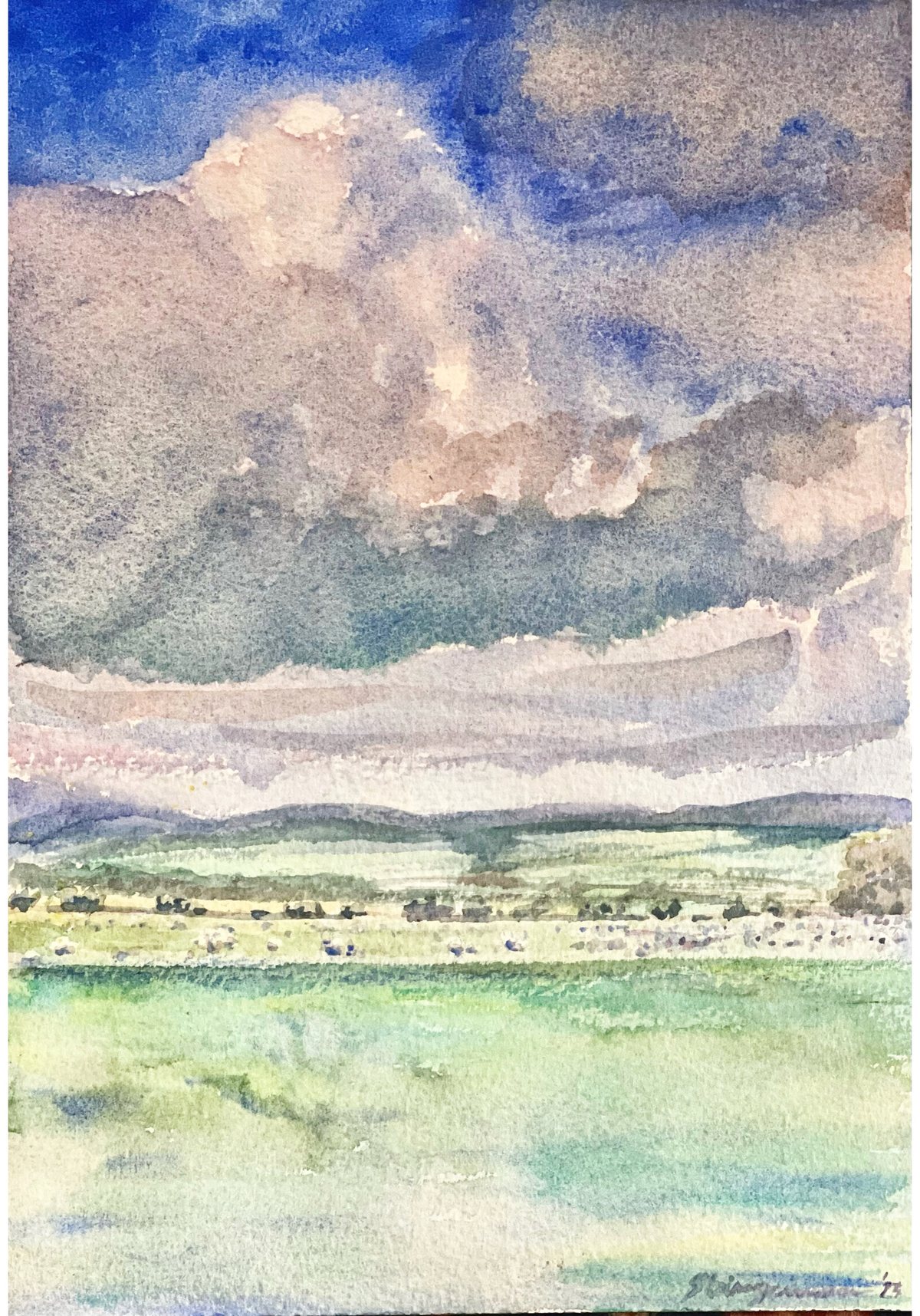
I started this watercolor, ‘Pastures in Sunshine Between Showers’, in Scotland just before I caught COVID and finished it in Oregon in my studio today.

I’m back after traveling for a month in Southeast Asia. While away, I posted eight paintings to my IG account only, due to poor connectivity, which you can view via the following link:

Although spring is remains a week away for us, it already arrived last month for southern Japan with an army of gardeners descending upon Lake Ikeda in Nakahama, Japan, to plant flowers along its shores.

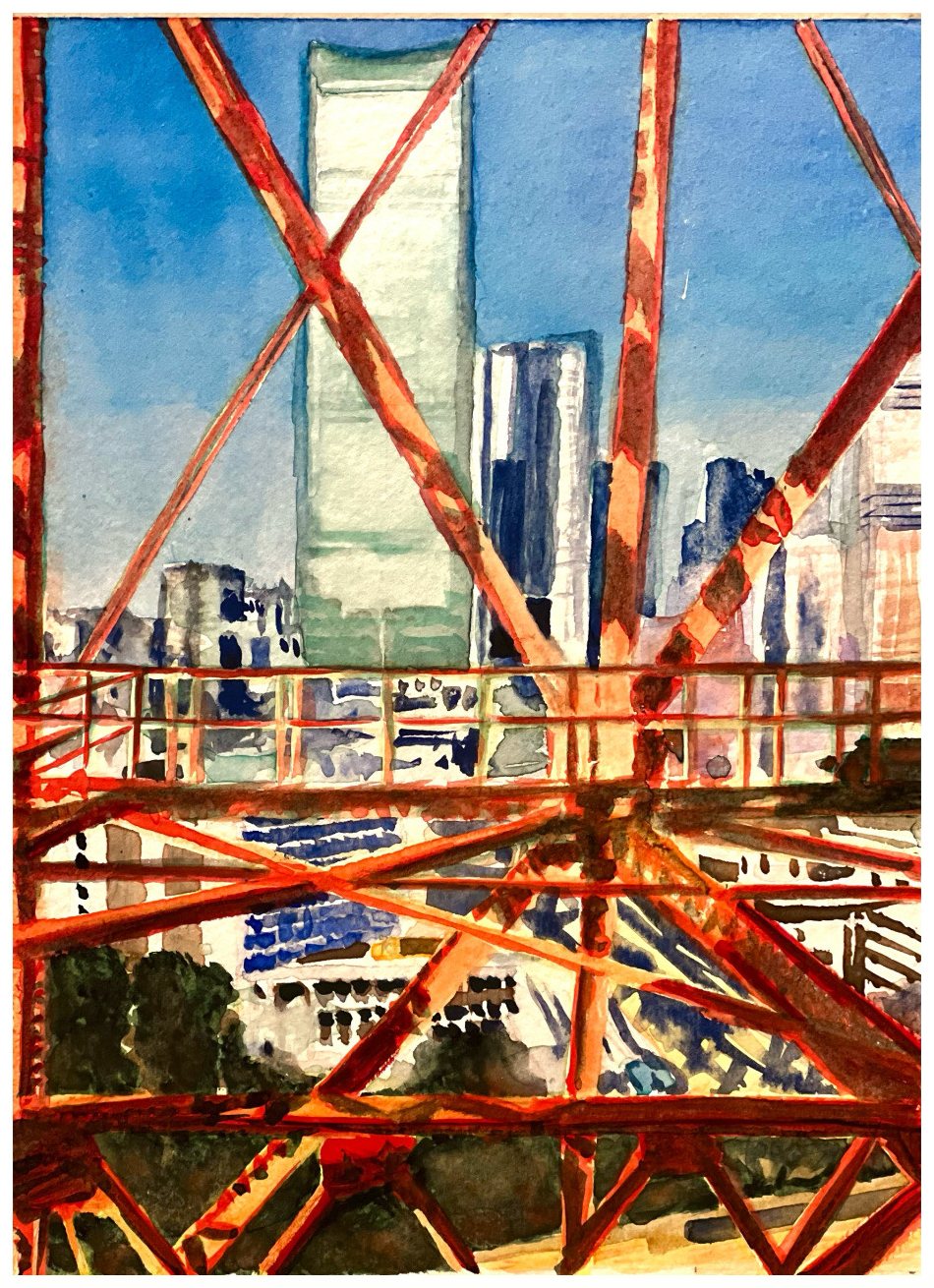
With 37.4 million people, Tokyo is not only the largest city in the world, it is also a very clean functioning metropolis that is impressively livable with an enviable modern public transportation system that includes a subway network that serves the entire city plus a connection to a high speed bullet train for swiftly and efficiently leaving and entering Tokyo at 150 mph rather than creeping along in stop and go traffic that can average 35 mph.
The attached painting is a view of Tokyo from about half way up the Tokyo Tower, which is a copy of the Eiffel Tower. It also captures a view of Japan’s tallest building, Azubudai Hills Mori JP Tower. Nevertheless, at 1,068 feet, it is relatively short compared to, for example, the Empire State Building at 1,454 feet. However, this is to Tokyo’s credit because the streets are bathed in sunlight rather than kept in perpetual shadows, which contributes to the livability of its urban space.

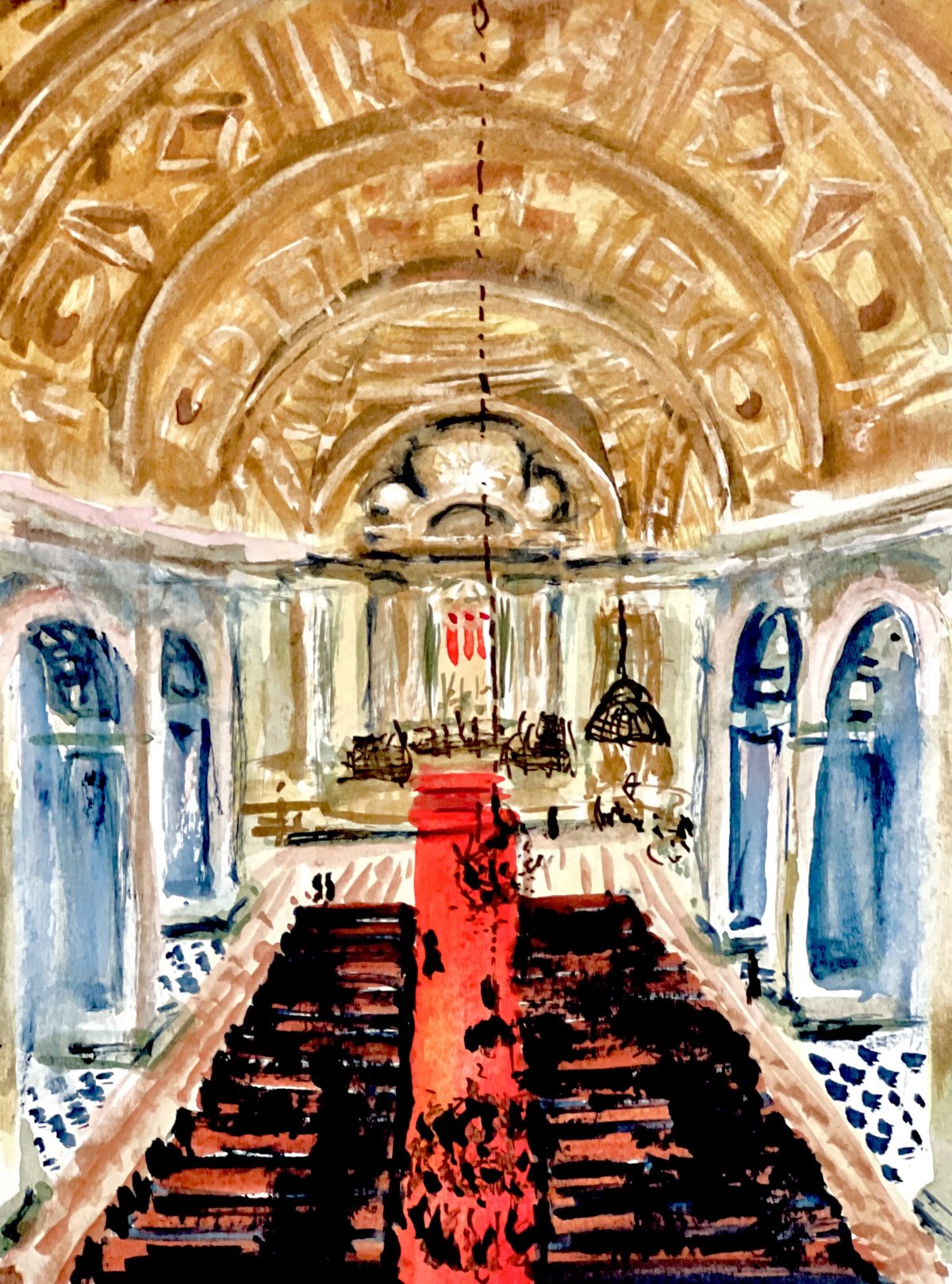
In 1572 Spanish conquistadors arrived with missionaries to lay claim to the Philippines for Spain. Remarkably in Manila, the monks took what was jungle and built the Church of Saint Augustine in 20 years with little funding, mostly unskilled labor and poor access to materials. Nevertheless, the church was completed in 1607 and has survived 9 earthquakes and the Battle of Manila during WWII. I have attached a painting showing its brilliant baroque style interior space featuring a dramatic barrel vaulted nave that leads up to a sanctuary and alter.
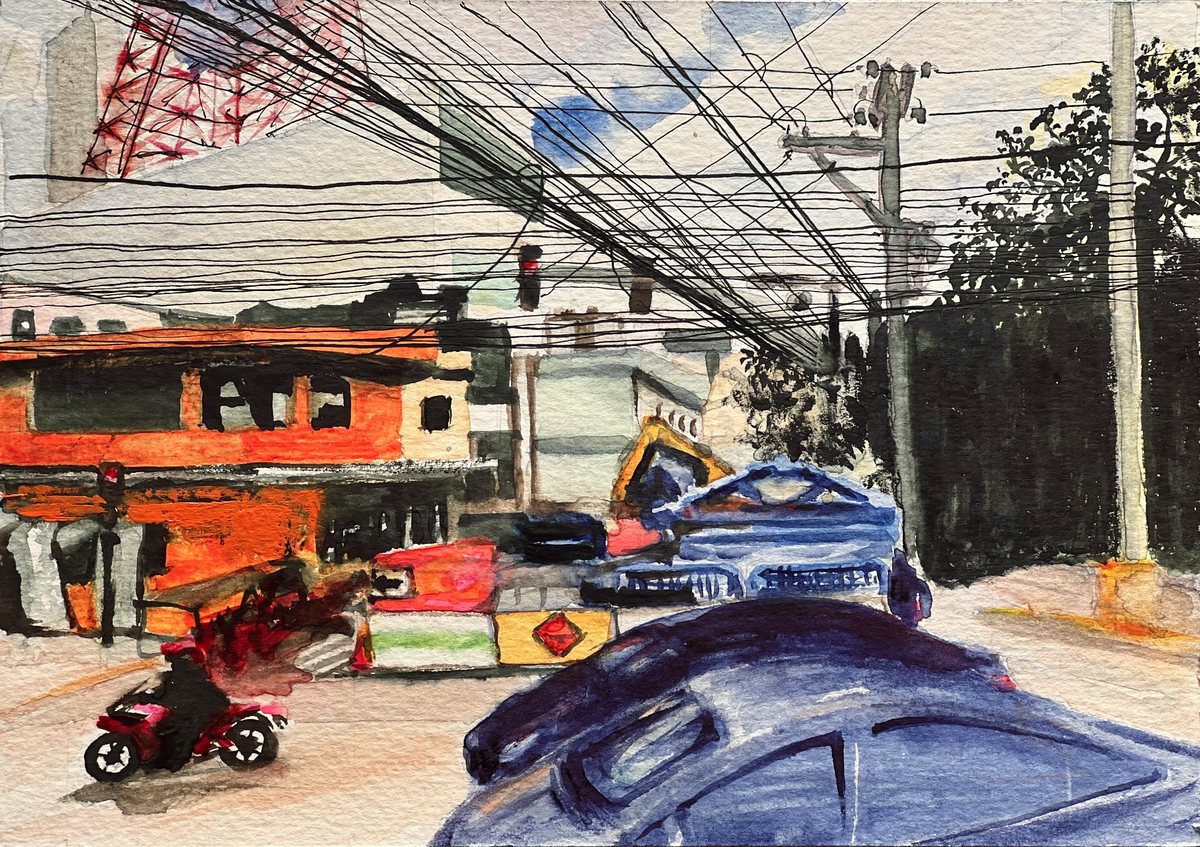
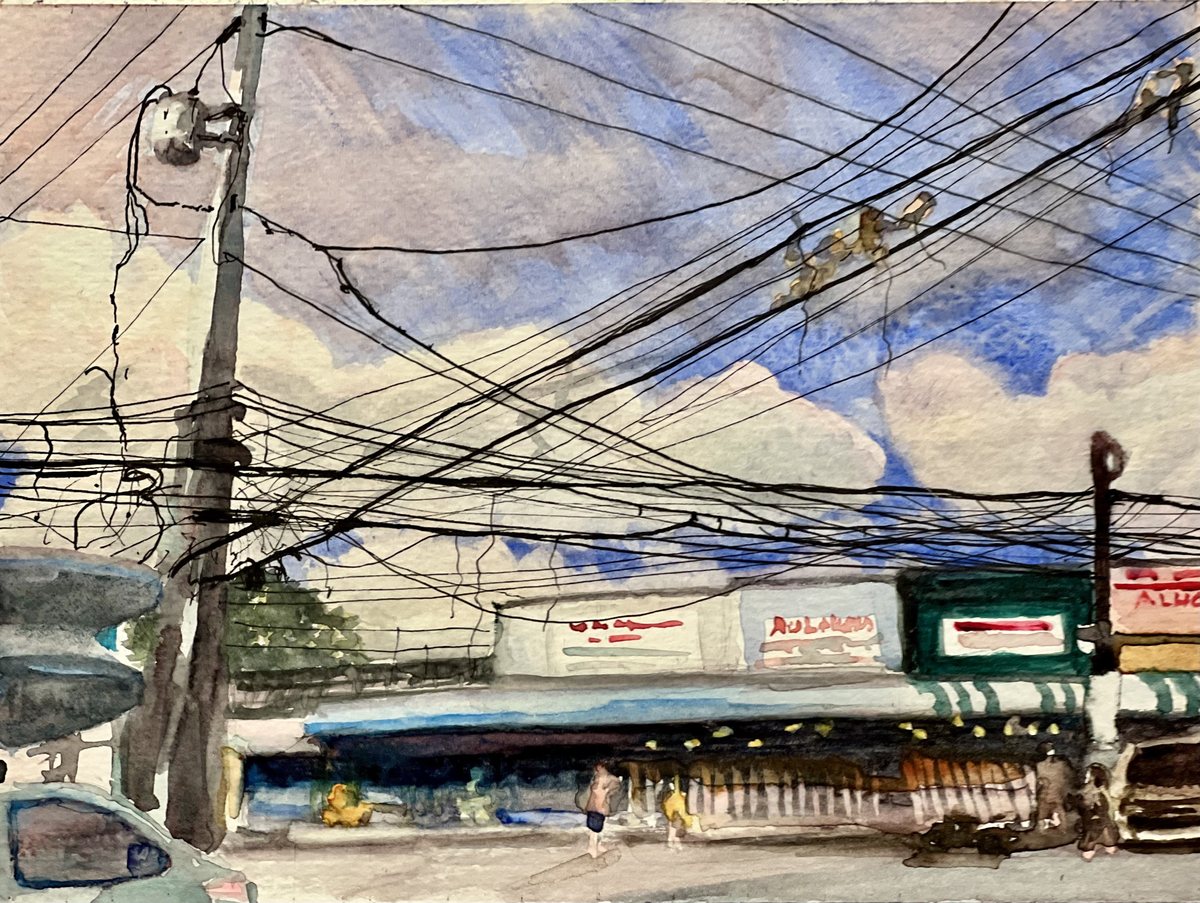
The Church of Saint Augustine brought the concept of the existence of a remote divine celestial space that imposed a new social order and requirements on a local people that lived by religions that were mostly nature based. Fast forward 400 years, and that remote divine celestial space is being challenged by roads and wires with their own imposed social order and requirements. To quote John Steinbeck, “Civilization follows the roads and electricity.” I have attached two paintings that reflect upon the course of civilization in Manila.


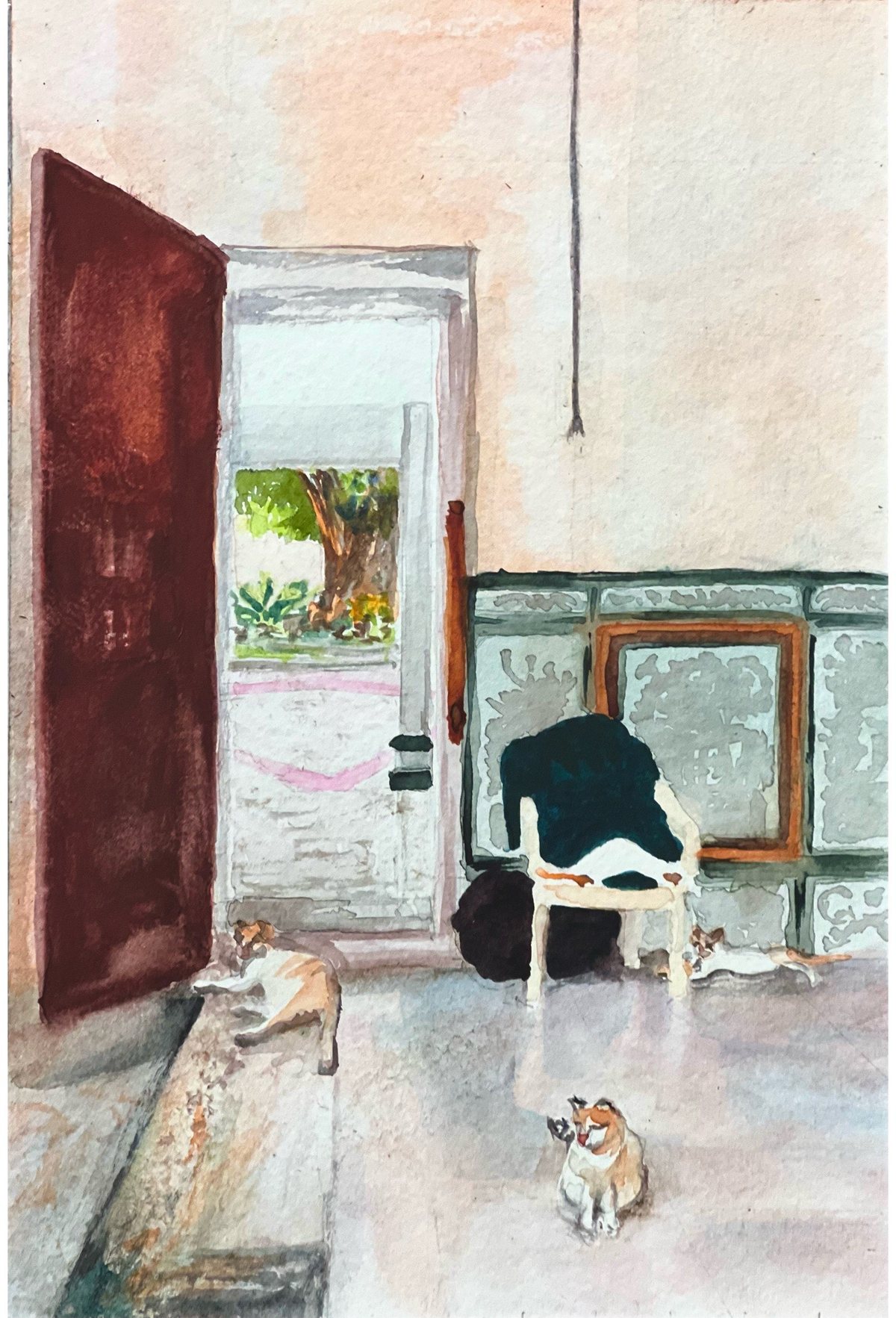
I was on a tour bus that dropped me off at the Chinese Cemetery in Manila. The guide mentioned that the Chinese were not allowed to be buried in Christian cemeteries (at least the ones who weren’t Christians ) so they created their own cemetery located directly adjacent to the Chinese Hospital. He also mentioned that families build the mausoleums not as a place for someone to be entombed and forgotten, but rather a place for family members to gather to play games, such as mah-jongg, while the entombed family members participate in spirit. He added that after they visited a mausoleum, it is a tradition to not go directly home but stop somewhere along the way to make sure that the spirit does not follow them home. It truly is a city for the entombed and the fact that they continue to participate in family life, in spirit, is heartening and comforting to the living I’m sure. I stepped into one mausoleum and was greeted by curious cats. There was also an unoccupied seat there. It wasn’t obvious to me if the seat was for the living or the spirits of the dead, but the space was bright and pleasant with a garden view of a large tree surrounded by plants and a courtyard. It was peaceful and a good place to rest in peace.

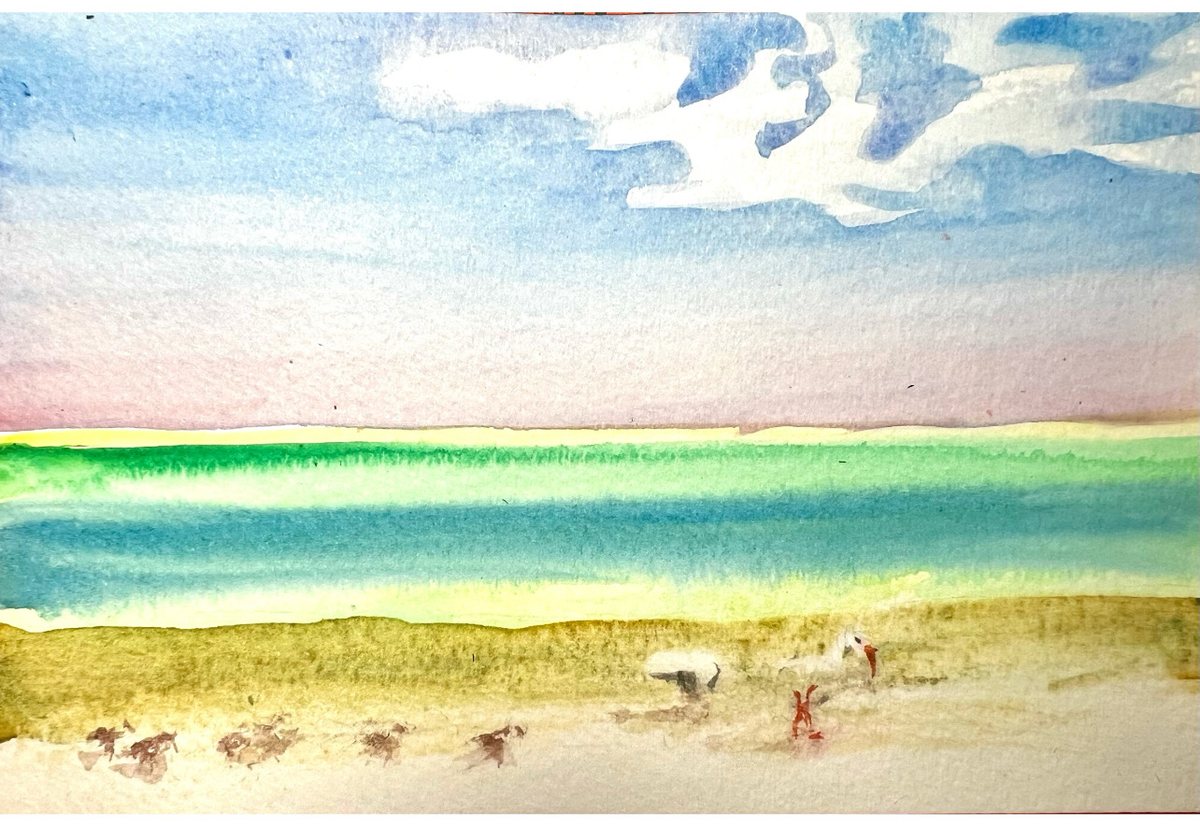
Here are a few digital post cards from Southwest Florida: ‘Sunset on the Caloosahatchie’ (river), Gulf of Mexico from Oat Key, and Estuary Pond on the Imperial River, Bonita Springs, Florida. The first and last paintings were completed onsite, plein air. The second painting was based on my plein air painting of the same subject that someone acquired.


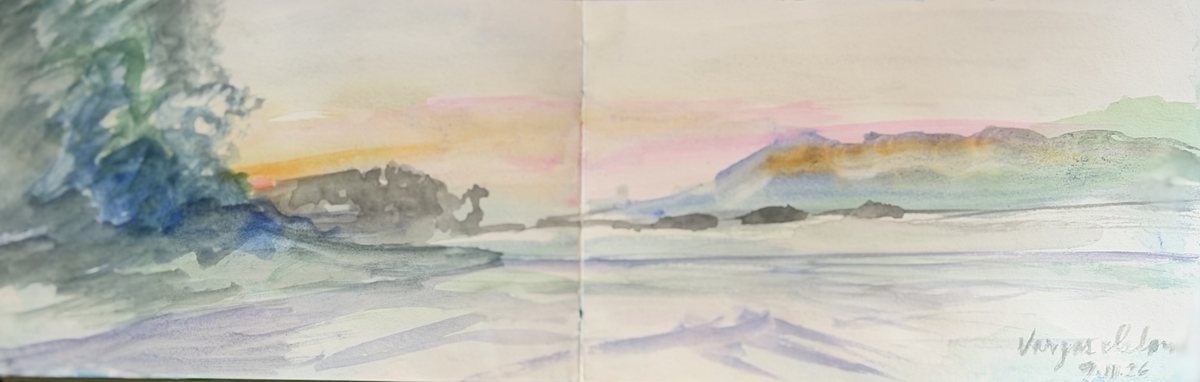
Here’s a plein air watercolor addendum that should have been included in my previous email to you, a Vargas Island sunset painting in my watercolor kayaking sketchbook.
IV
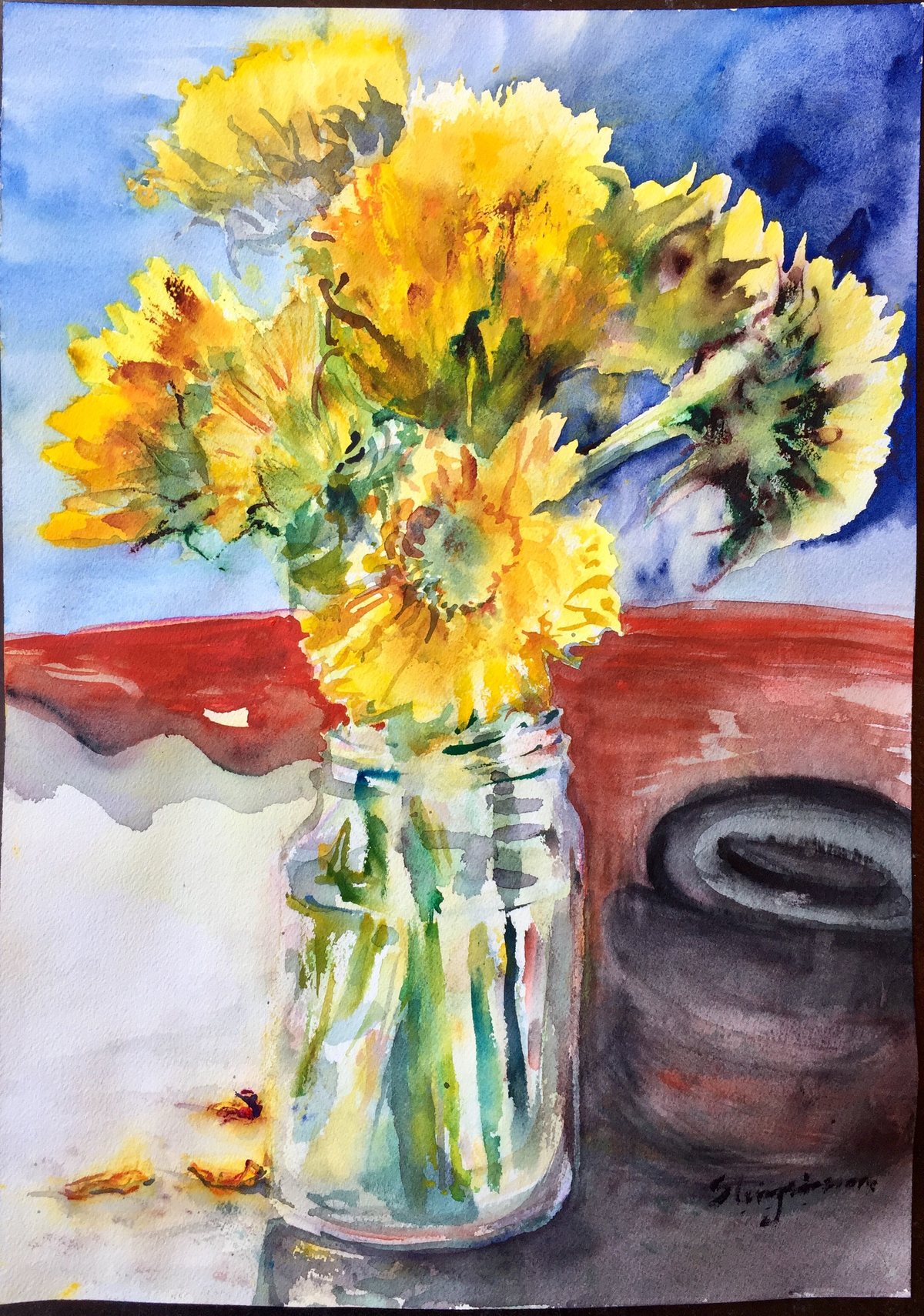
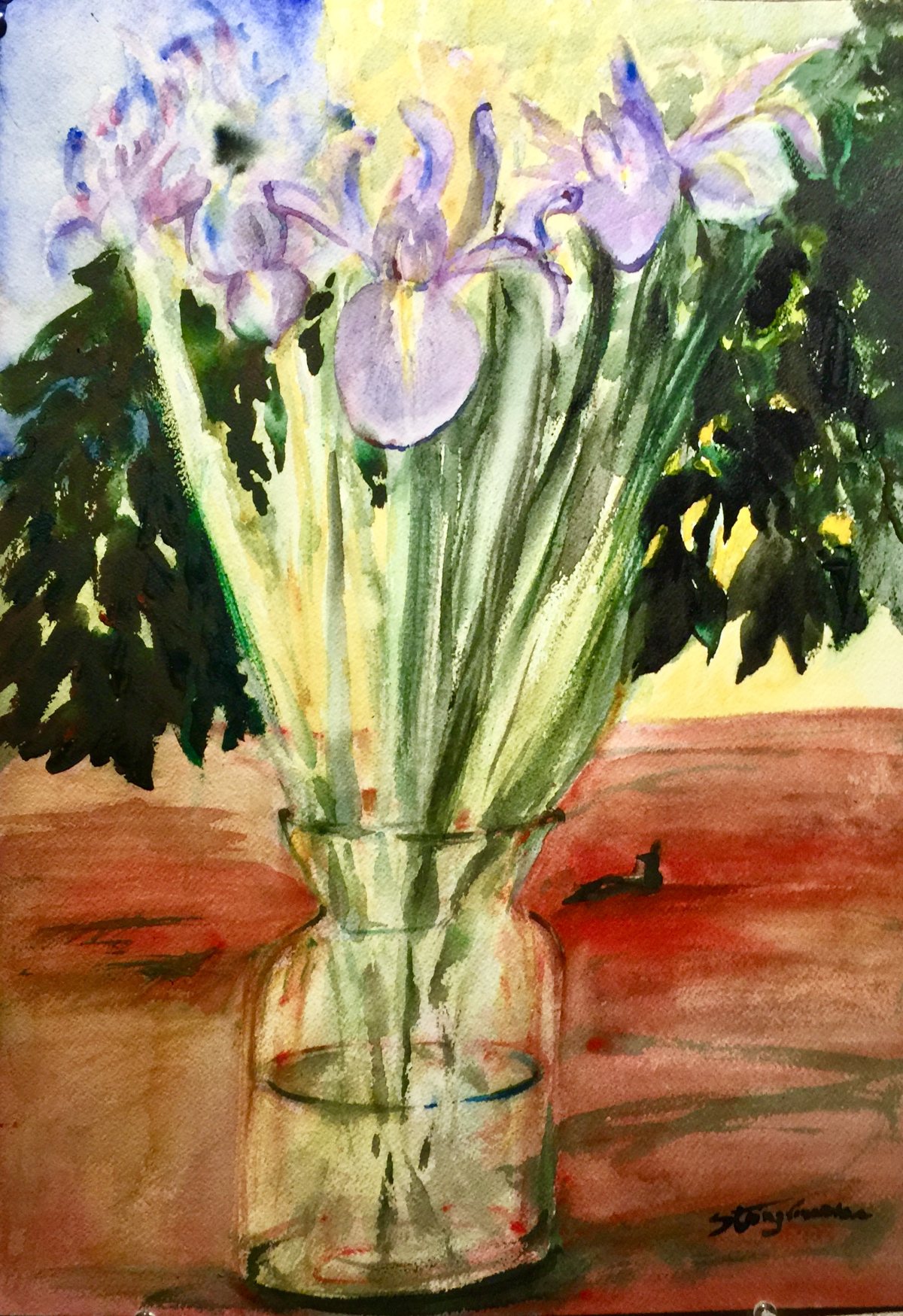
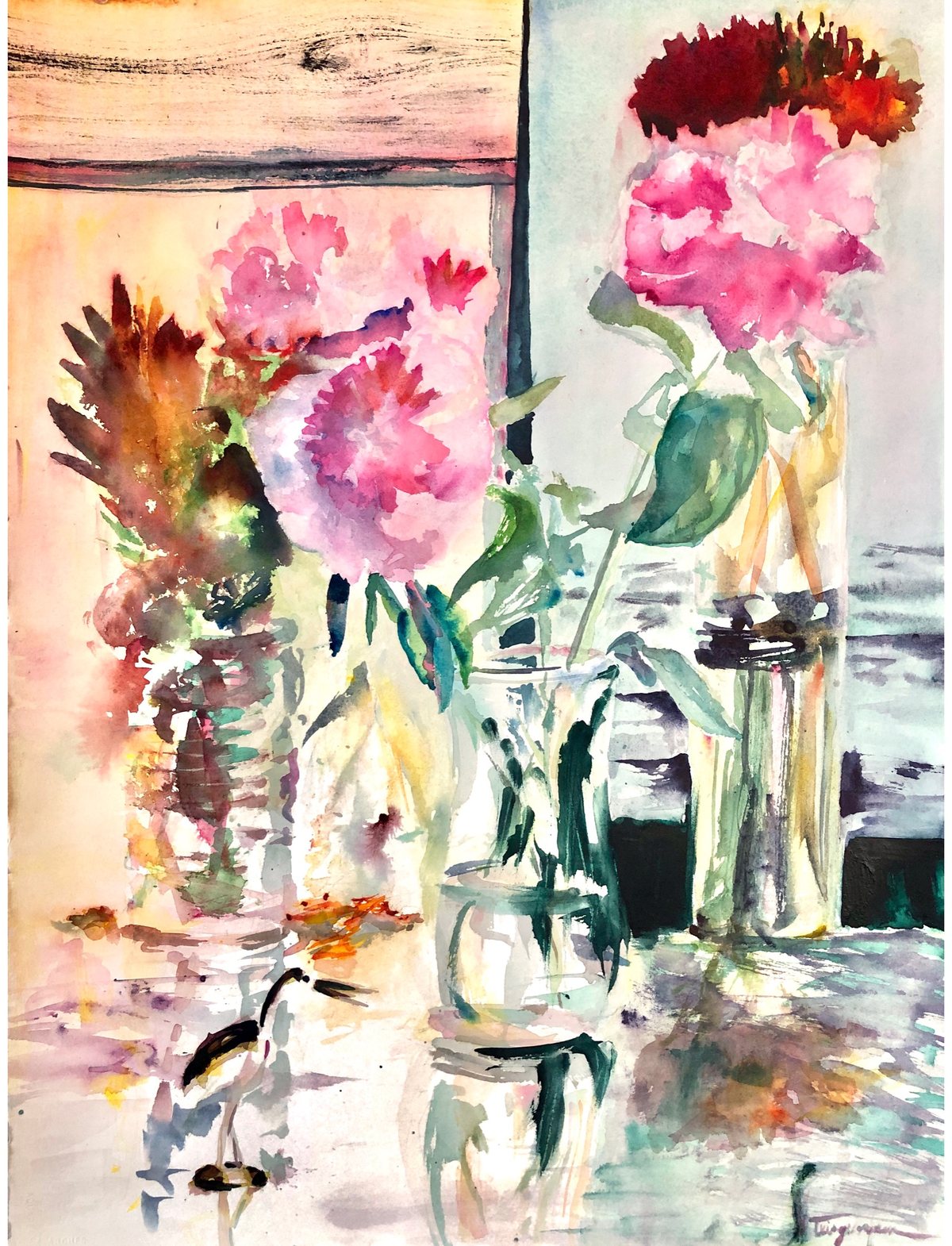
Bouquets and still lifes.
6 works

hurrayfor the arrivalof springIdedicate thisbouquetinSan Franciscoby the bay


Best wishes to everyone for a new year of peace, joy, and love.
V
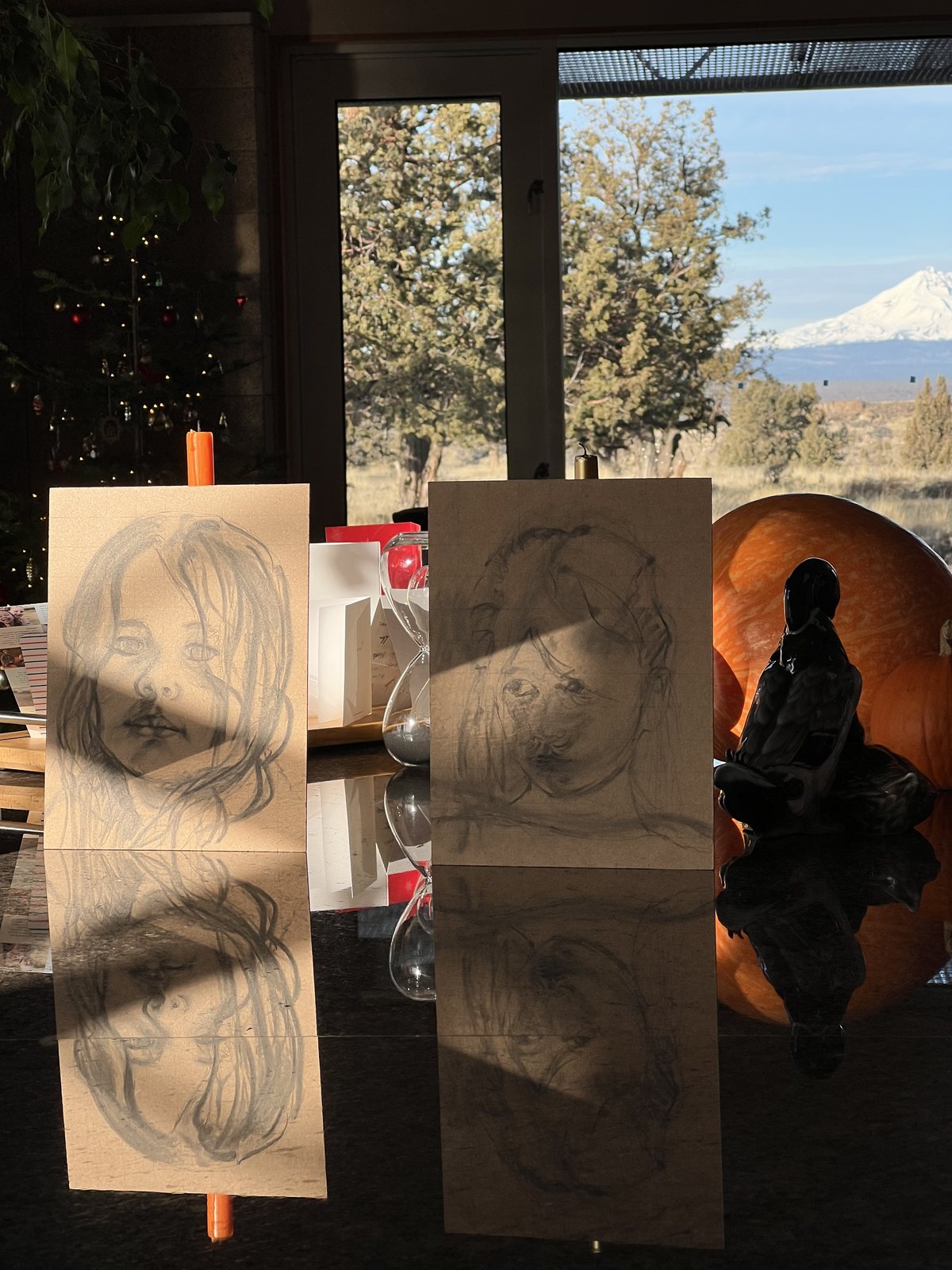
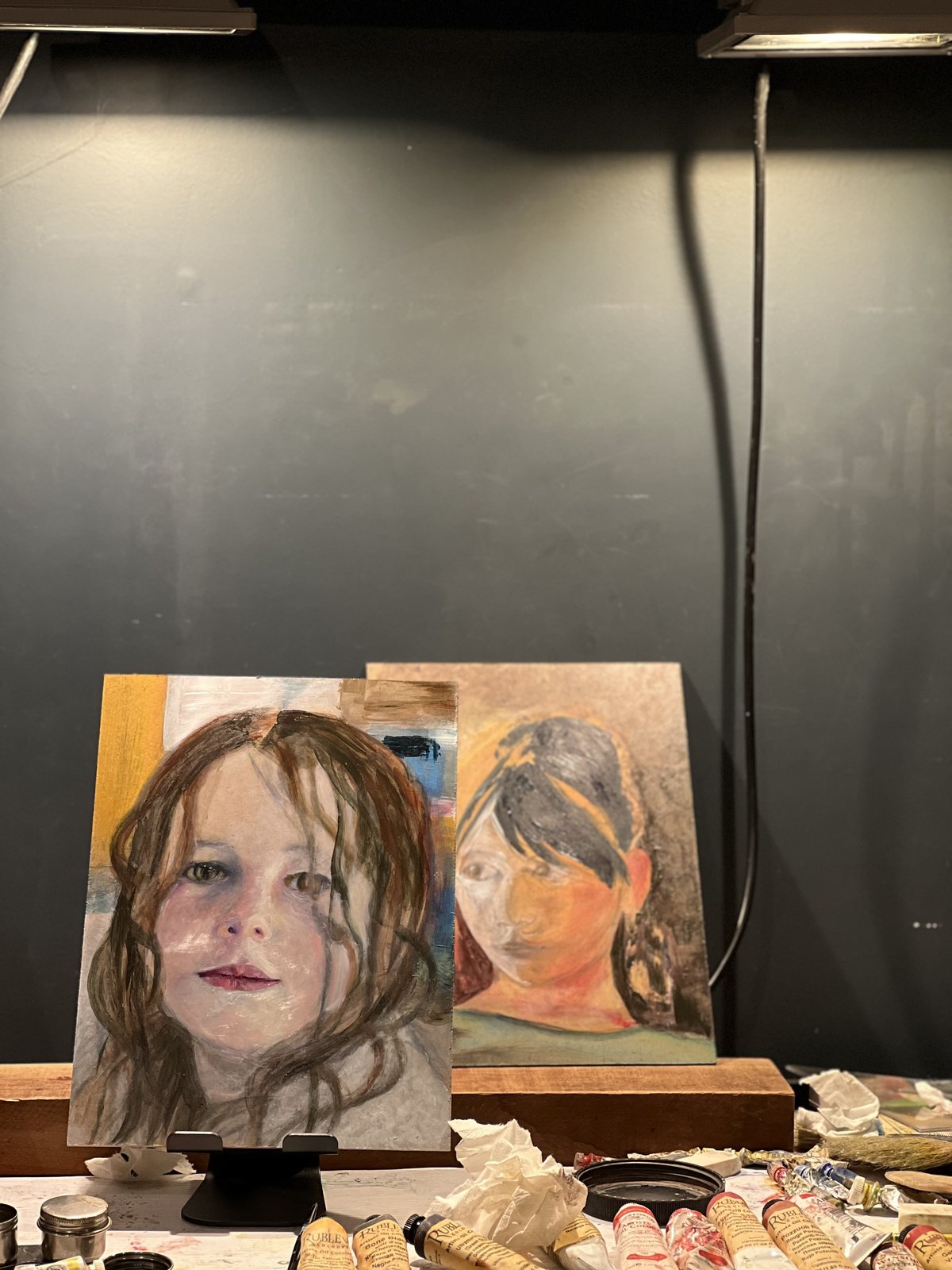
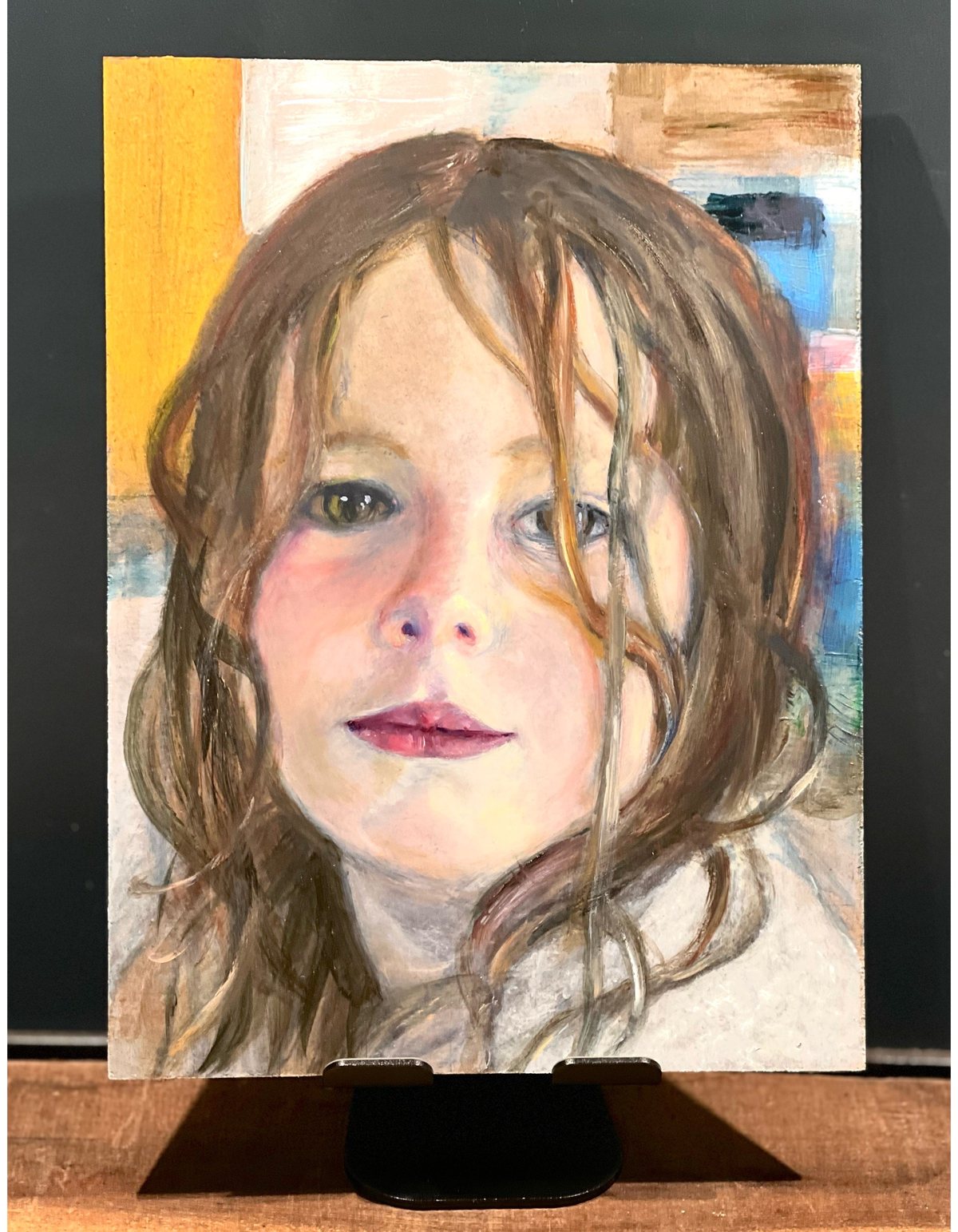
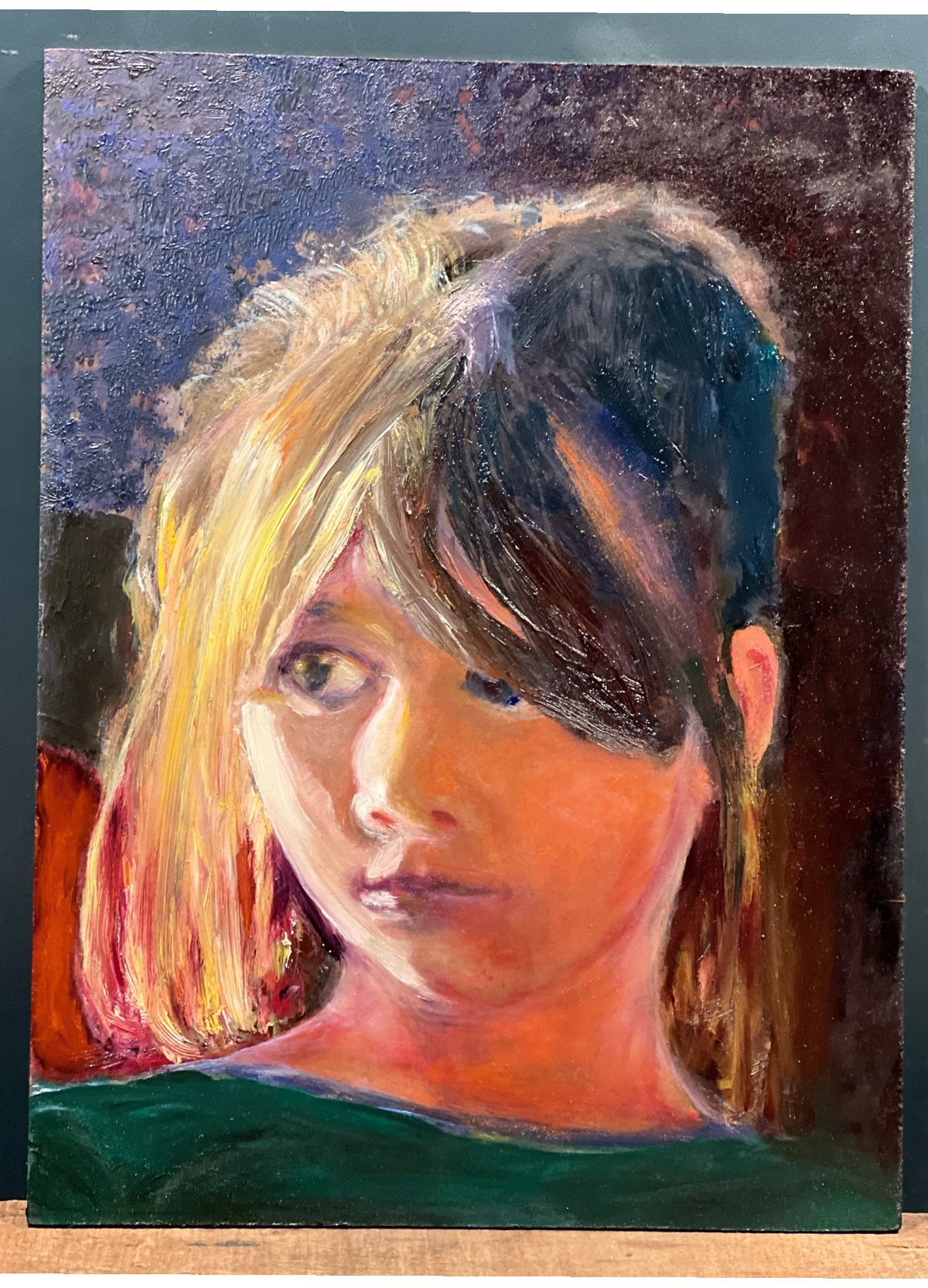
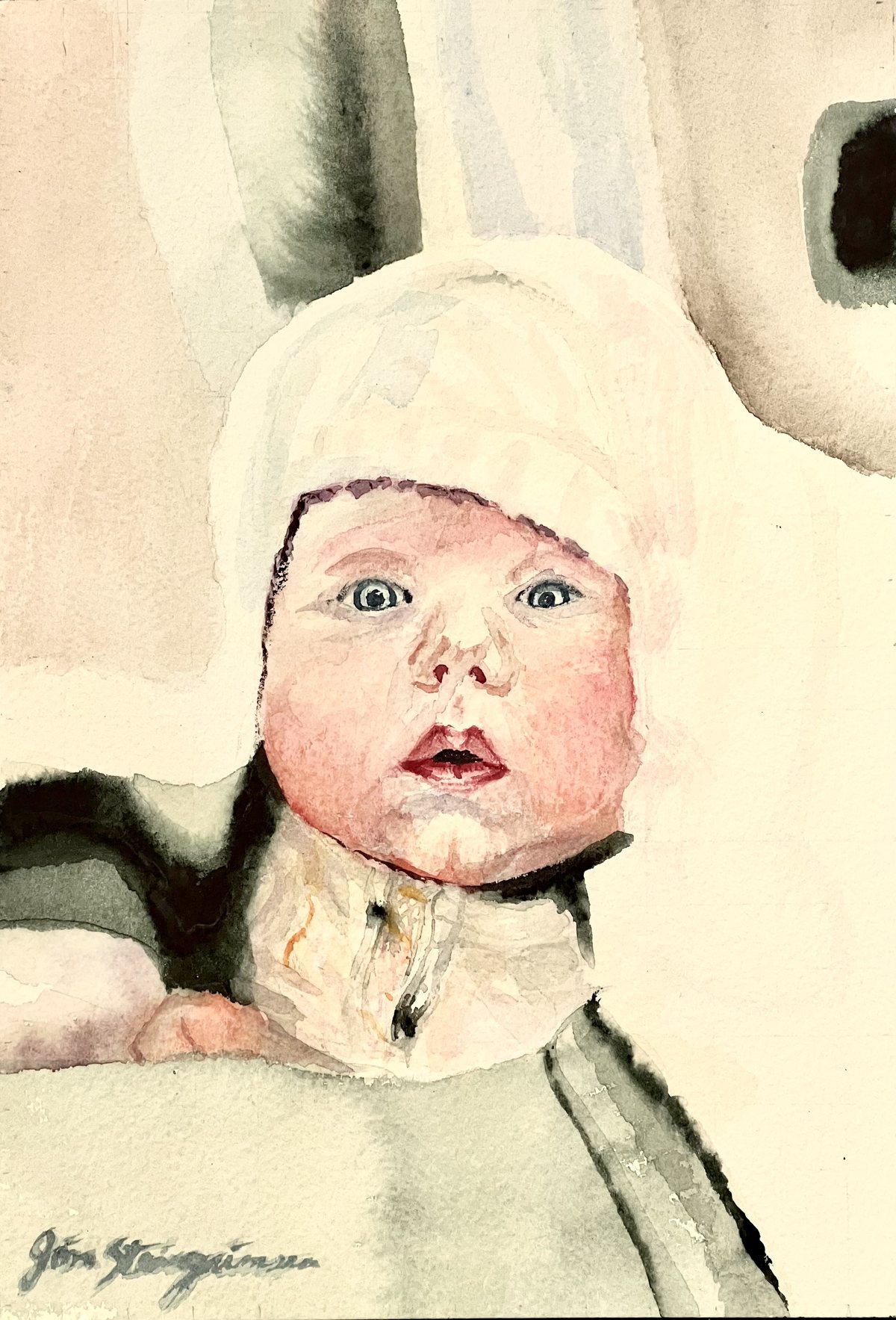
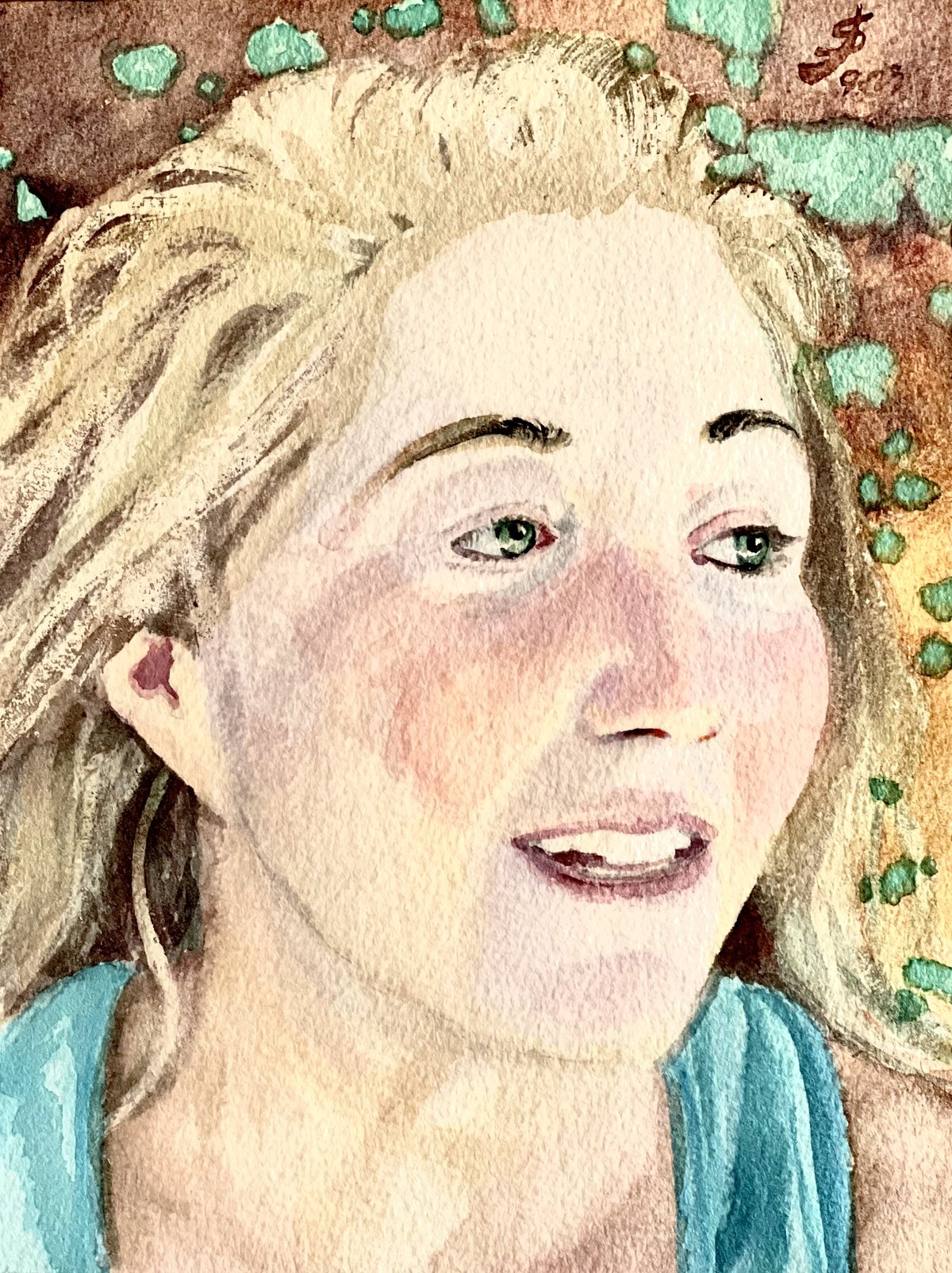
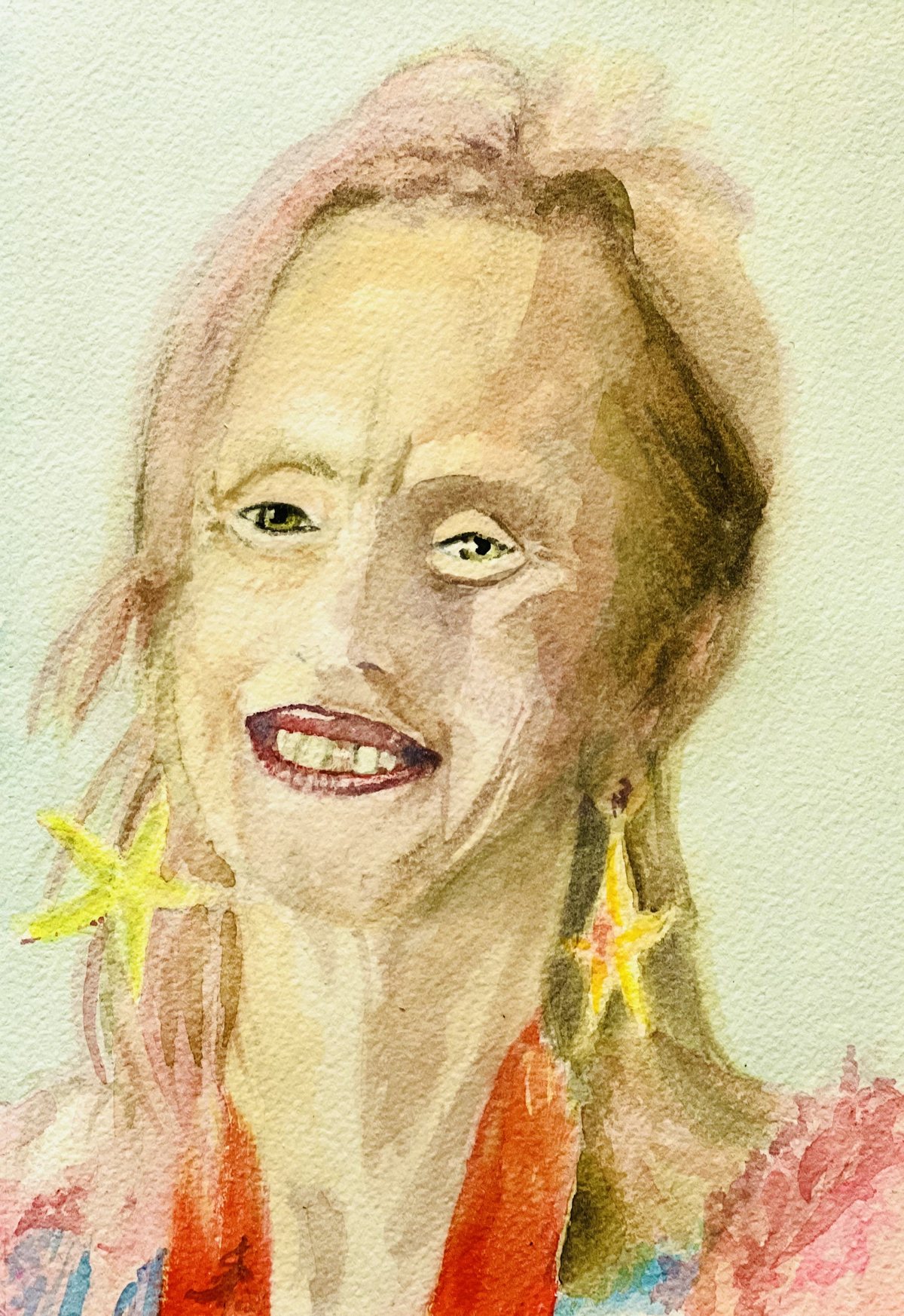
Portraits in watercolor and oil: John’s granddaughters, a museum guard he met at SFMOMA, and one self-portrait.
8 works

Did I mention that I was going to venture into portraiture? I decided to jump start the effort with a self portrait.

The artist and his portraits in oil are works in progress, together each creates the other for the new year.
Happy Holidays, Merry Christmas, and Happy New Year


This oil portrait launches the new year for me, ‘Loa’, granddaughter age 6.
My best wishes to you for 2024.

A second oil portrait for the new year. Loa’s big sister, ‘Maddalena’, age 7.

Una, John’s granddaughter, born December 19, 2024.


On my first visit to SFMOMA to see ‘The Visitors’ (I saw it twice), which was created by a fellow Icelander, Ragnar Kjartansson, I discussed the exhibit with a nearby museum guard perched on a stool. She also enjoyed the exhibit, and our conversation inspired my attached watercolor painting of her.
Did anyone else see ‘The Visitors’ at SFMOMA? I thought it was fantastic.
VI
Illustrated cards John painted for the family: two birthdays, and Herðubreið with its climbing poem.
6 works

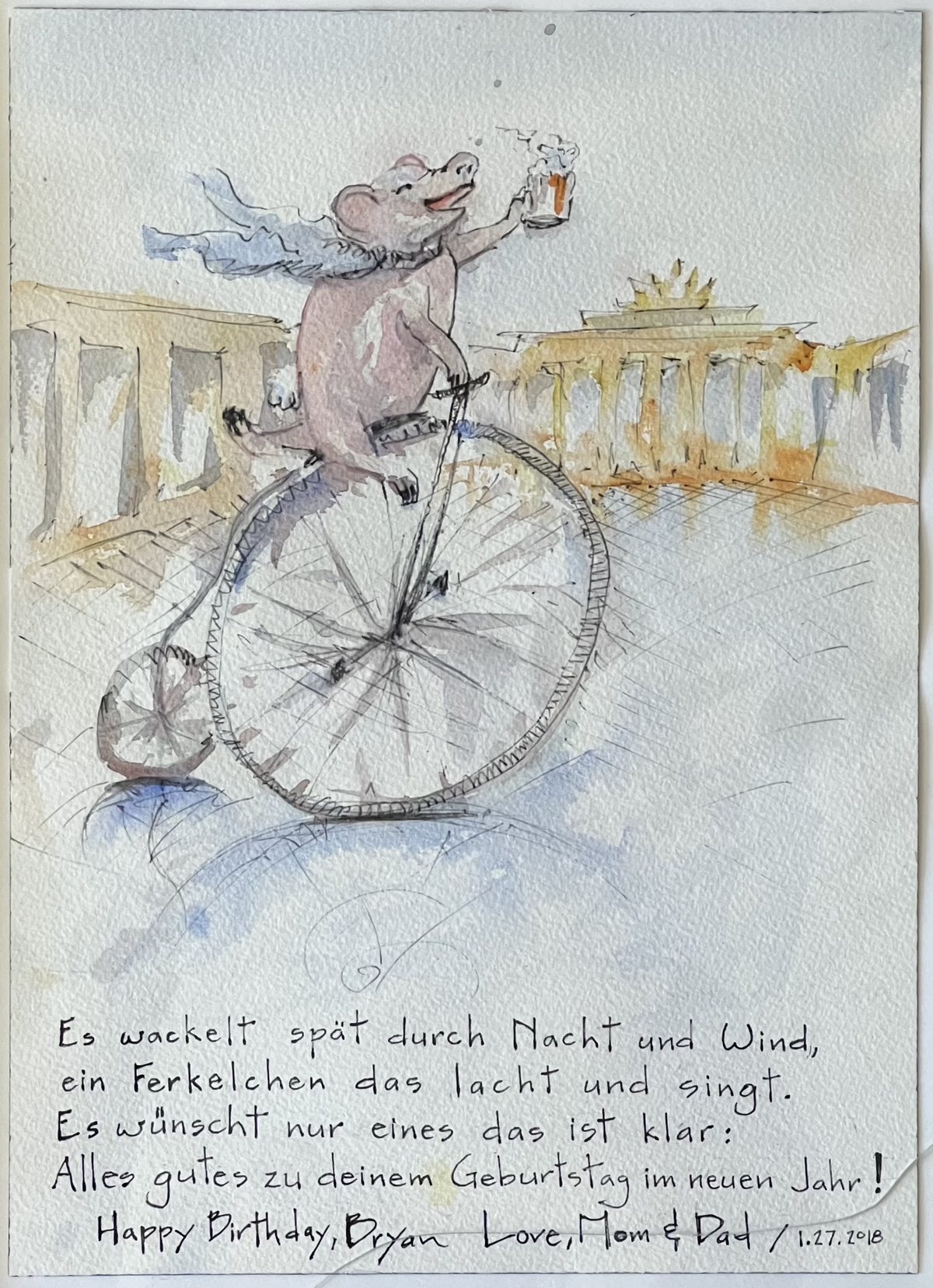
Es wackelt spät durch Nacht und Wind,ein Ferkelchen das lacht und singt.Es wünscht nur eines das ist klar:Alles gutes zu deinem Geburtstag im neuen Jahr!Happy Birthday, Bryan — Love, Mom & Dad · 1.27.2018
Late through night and wind there wobblesa little piglet, laughing and singing.It wishes only one thing, that much is clear:All the best for your birthday in the new year!
A birthday card with a verse in German: a little pig wobbling home late through night and wind, laughing and singing. The background is the Brandenburg Gate in Berlin, where Bryan was living at the time.

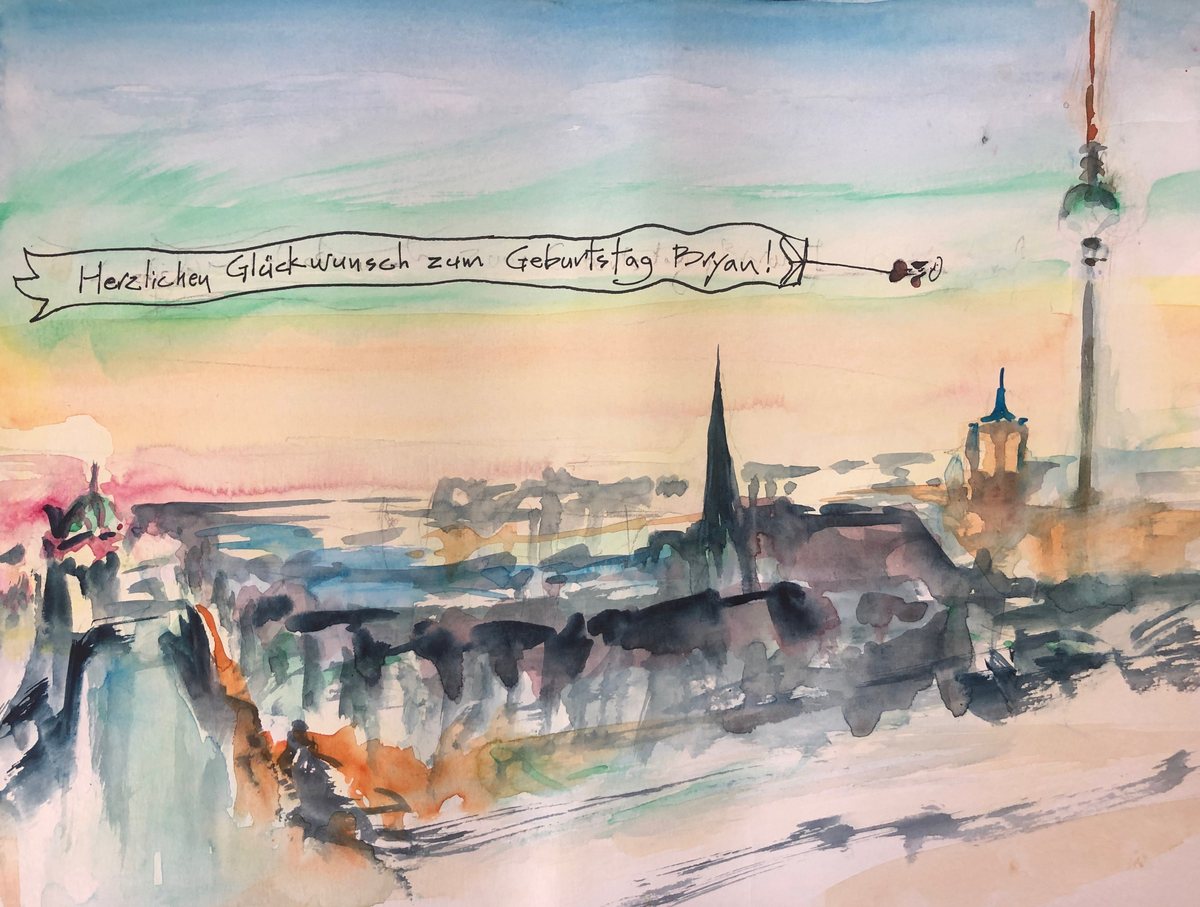
A birthday card for Bryan: the Berlin city skyline, where he was living at the time.

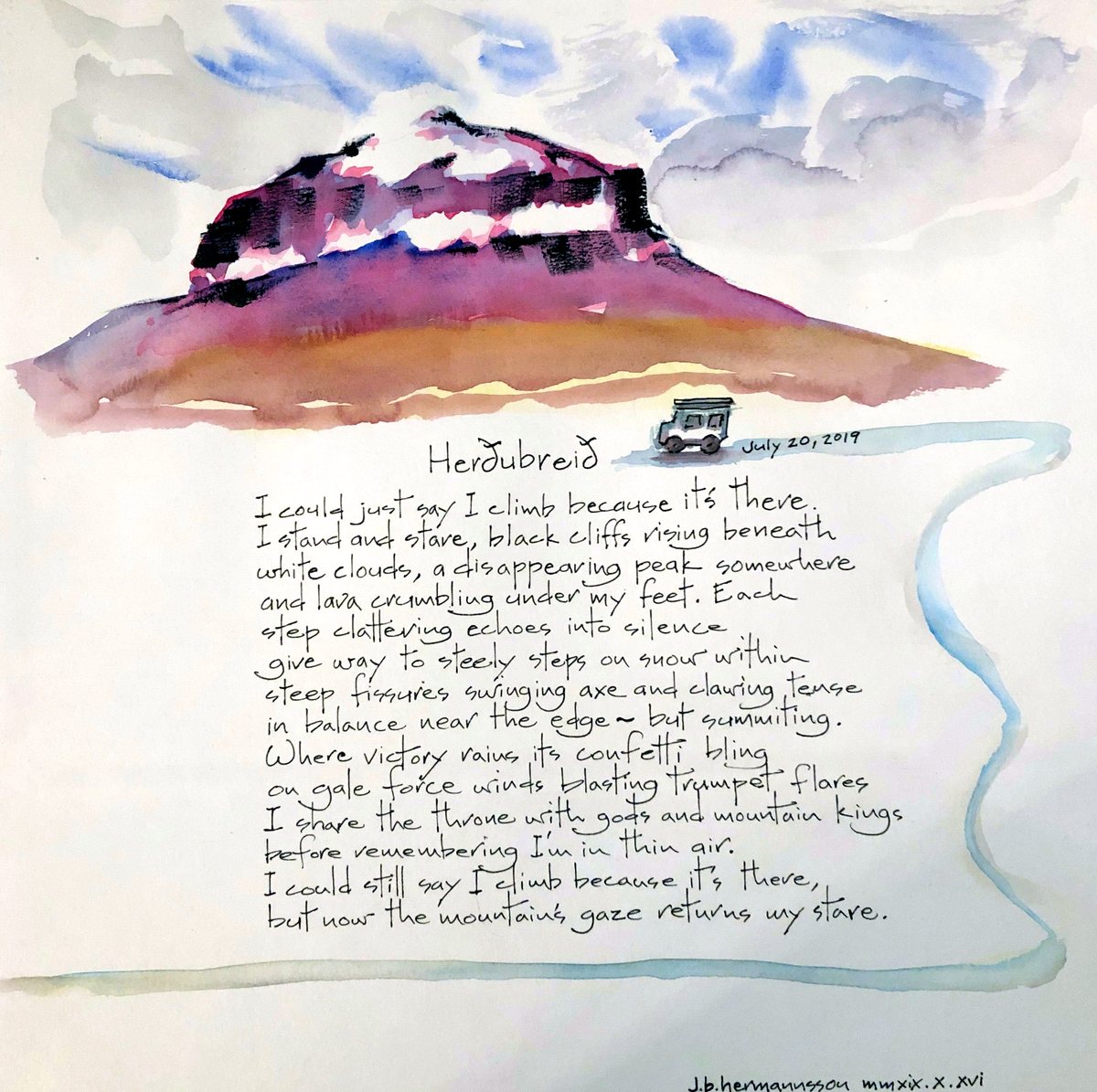
I could just say I climb because it's there.I stand and stare, black cliffs rising beneathwhite clouds, a disappearing peak somewhereand lava crumbling under my feet. Eachstep clattering echoes into silencegive way to steely steps on snow withinsteep fissures swinging axe and clawing tensein balance near the edge ~ but summiting.Where victory rains its confetti blingon gale force winds blasting trumpet, flaresI share the throne with gods and mountain kingsbefore remembering I'm in thin air.I could still say I climb because it's there,but now the mountain's gaze returns my stare.
j.b.hermannsson mmxix.x.xvi (October 16, 2019)
The climb is dated July 20, 2019; the poem is signed October 16, 2019.

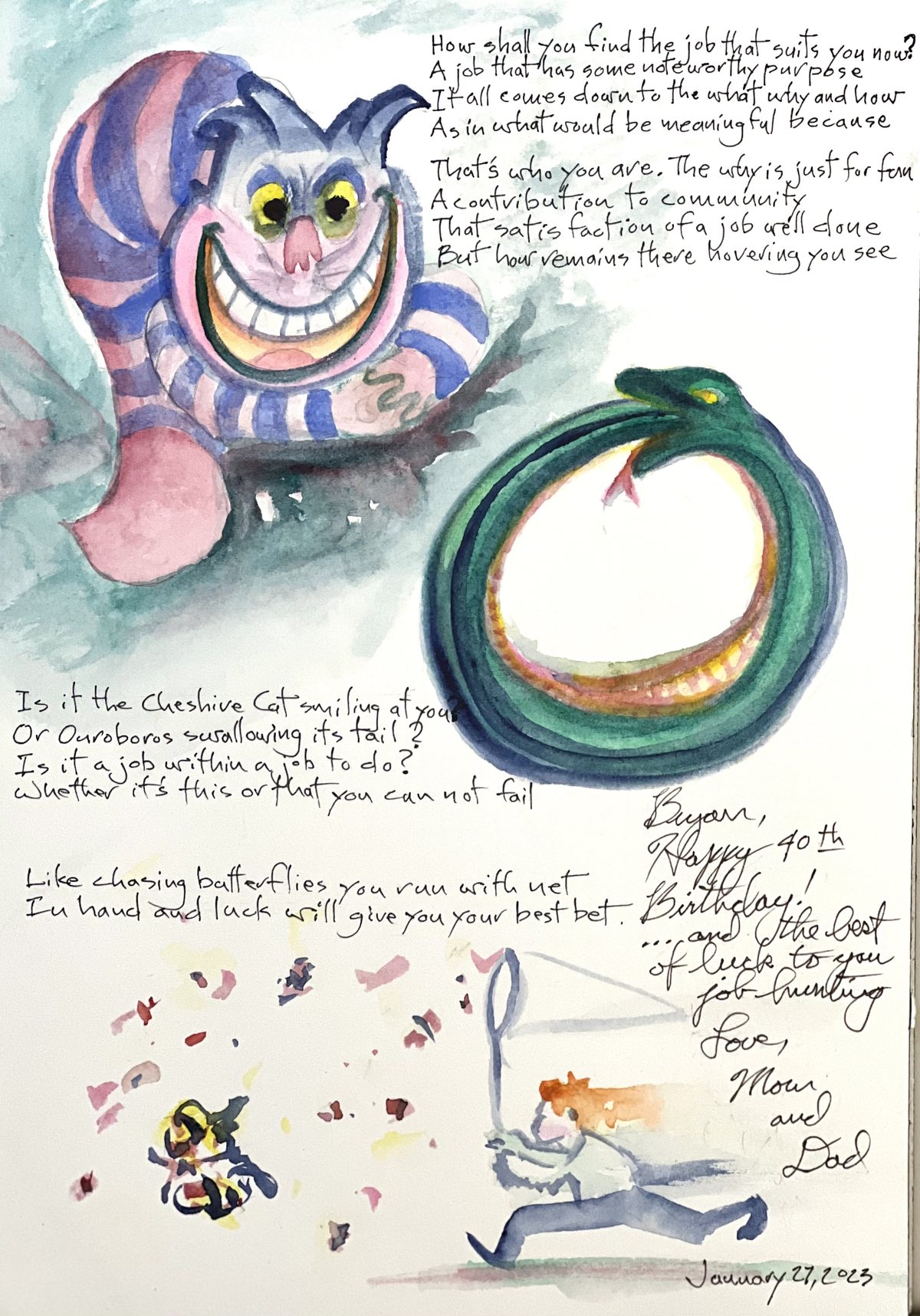
How shall you find the job that suits you now?A job that has some noteworthy purposeIt all comes down to the what why and howAs in what would be meaningful becauseThat's who you are. The why is just for funA contribution to communityThat satisfaction of a job well doneBut how remains there hovering you seeIs it the Cheshire Cat smiling at you?Or Ouroboros swallowing its tail?Is it a job within a job to do?Whether it's this or that you can not failLike chasing butterflies you run with netIn hand and luck will give you your best bet.

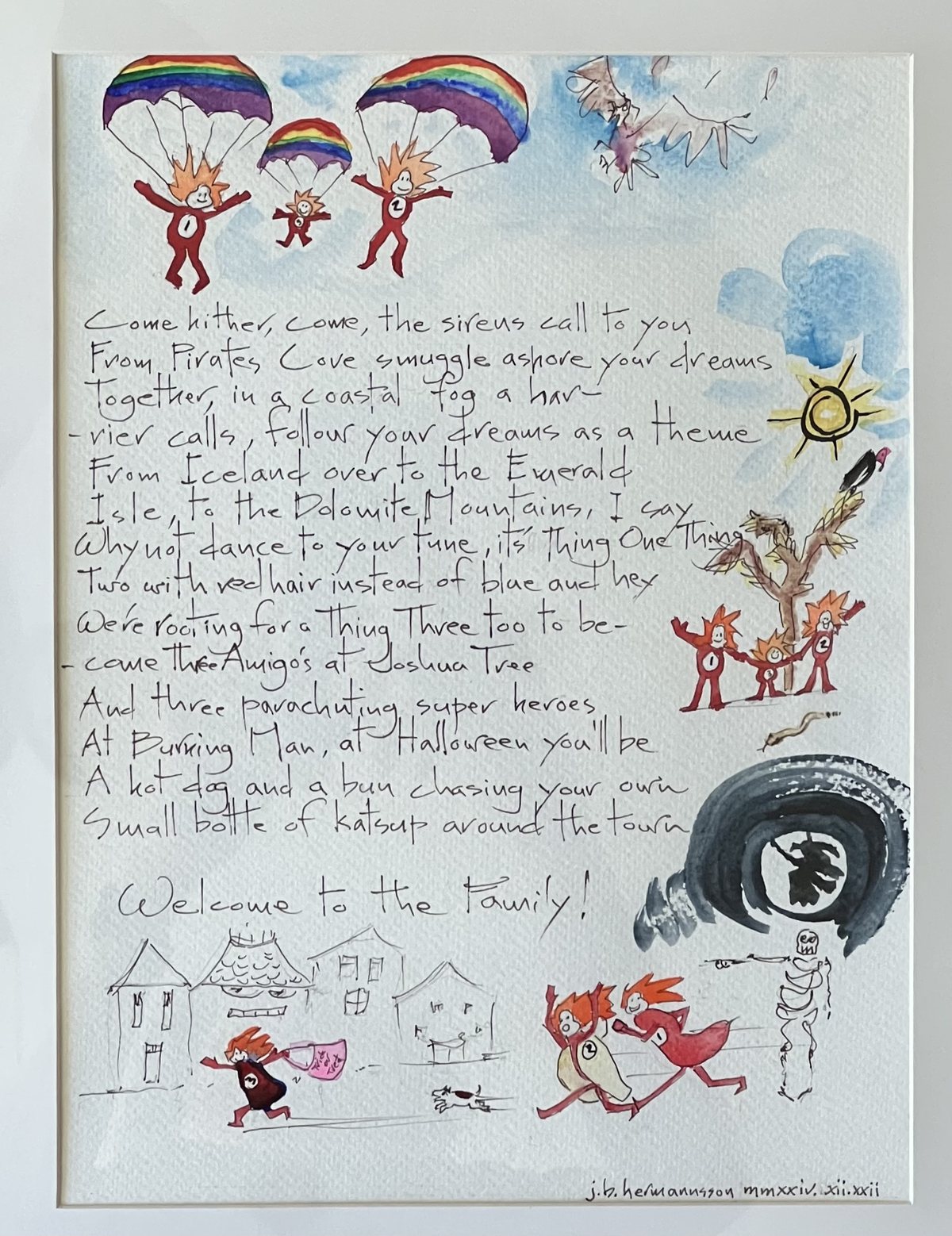
Come hither, come, the sirens call to youFrom Pirates Cove smuggle ashore your dreamsTogether, in a coastal fog a har--rier calls, follow your dreams as a themeFrom Iceland over to the EmeraldIsle, to the Dolomite Mountains, I sayWhy not dance to your tune, it's Thing One ThingTwo with red hair instead of blue and heyWe're rooting for a Thing Three too to be--come three Amigo's at Joshua TreeAnd three parachuting super heroesAt Burning Man, at Halloween you'll beA hot dog and a bun chasing your ownSmall bottle of katsup around the townWelcome to the Family!
j.b.hermannsson mmxxiv.xii.xxii (December 22, 2024)
Dated three days after Una was born: Thing One and Thing Two get their Thing Three.

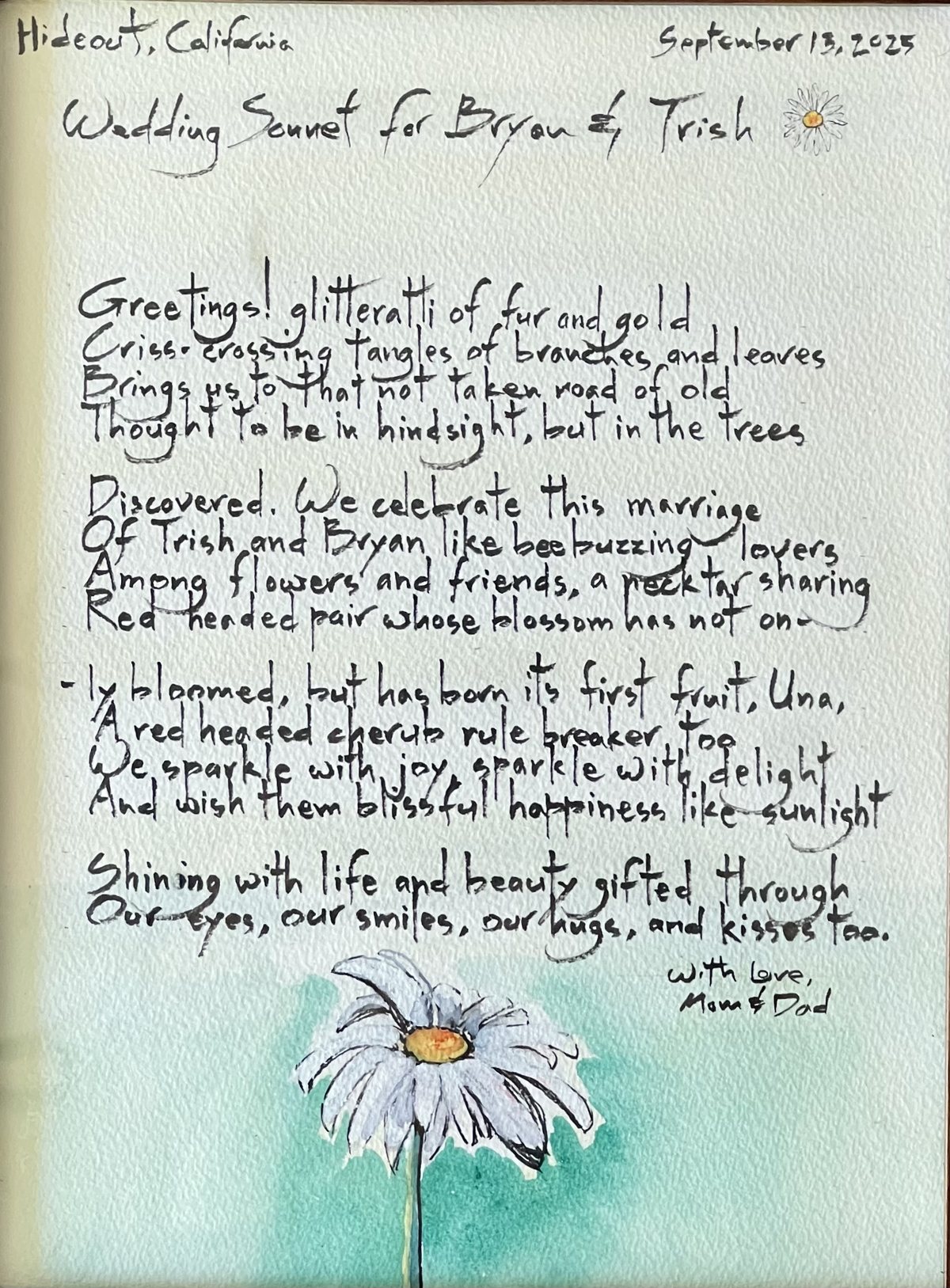
Wedding Sonnet for Bryan & TrishGreetings! glitteratti of fur and goldCriss-crossing tangles of branches and leavesBrings us to that not taken road of oldThought to be in hindsight, but in the treesDiscovered. We celebrate this marriageOf Trish and Bryan like bee buzzing loversAmong flowers and friends, a necktar sharingRed headed pair whose blossom has not on--ly bloomed, but has born its first fruit, Una,A red headed cherub rule breaker, tooWe sparkle with joy, sparkle with delightAnd wish them blissful happiness like sunlightShining with life and beauty gifted throughOur eyes, our smiles, our hugs, and kisses too.With love, Mom & Dad
John read this sonnet at Bryan and Trish’s wedding at Hideout, California, on September 13, 2025.
VII
Storm light over Iceland, the inside of a volcano, a stained-glass study, and the wharf at Matachica.
4 works

A watercolor I did during the lull when the passing storm shifted from being a southeasterly to being a southwesterly. In Iceland, southeasterlies have high steady winds while southwesterlies typically result in gusts. The clouds lifted between storms and cast a particularly beautiful light for about 45 minutes.

This painting is dedicated to the memory of Heather Heyer, who was murdered in Charlottesville, Virginia, in the United States of America.


I am on a hiatus from the Grand Canyon Suite Series while I explore the central highlands of Iceland. Access to the current erupting volcano has been restricted to the press (I’m looking into access for painters.) In the meantime, I have been lowered into a nearby extinct volcano on a window washing apparatus to paint the aftermath of a past eruption from a very different perspective. That is to say, from inside the magma chamber looking up and out the crater. The temperature inside is 38 deg. F. and water drips throughout.
VIII
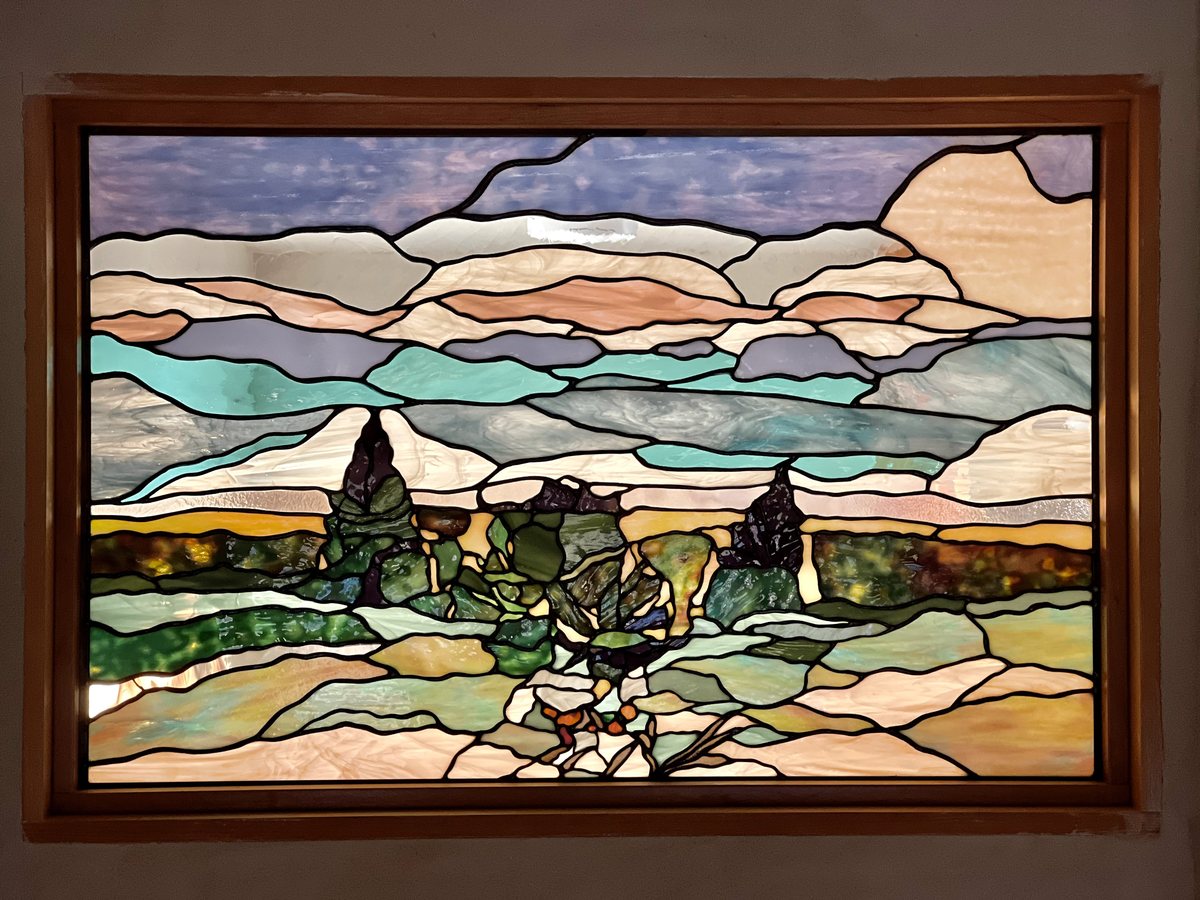
An oil landscape, acrylic, iPhone paintings and stained glass, and a 1944 independence tapestry made by John’s Icelandic grandmother, Vigís Steingrímsdóttir.
9 works

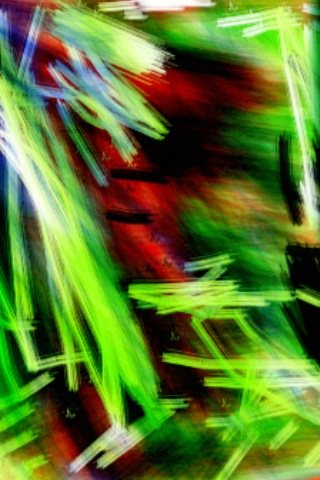
My first iPhone painting.

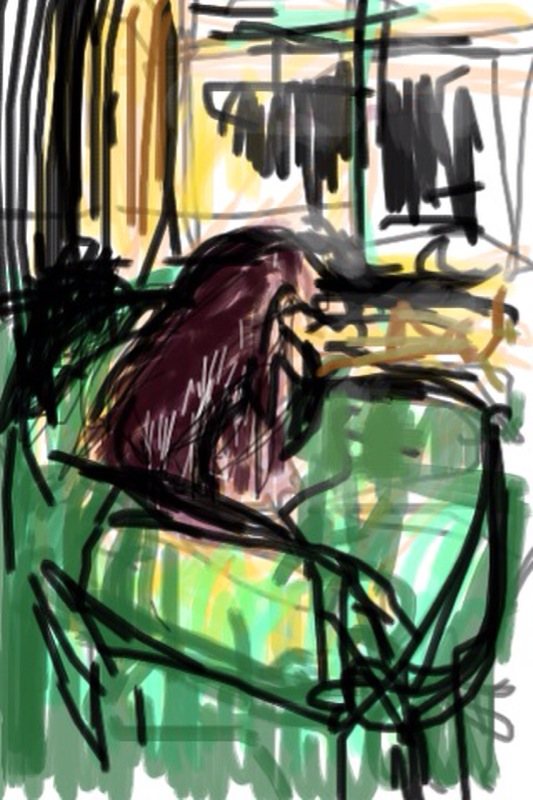
D likes to keep me company in the easy chair while I'm working at the desk in the back room.


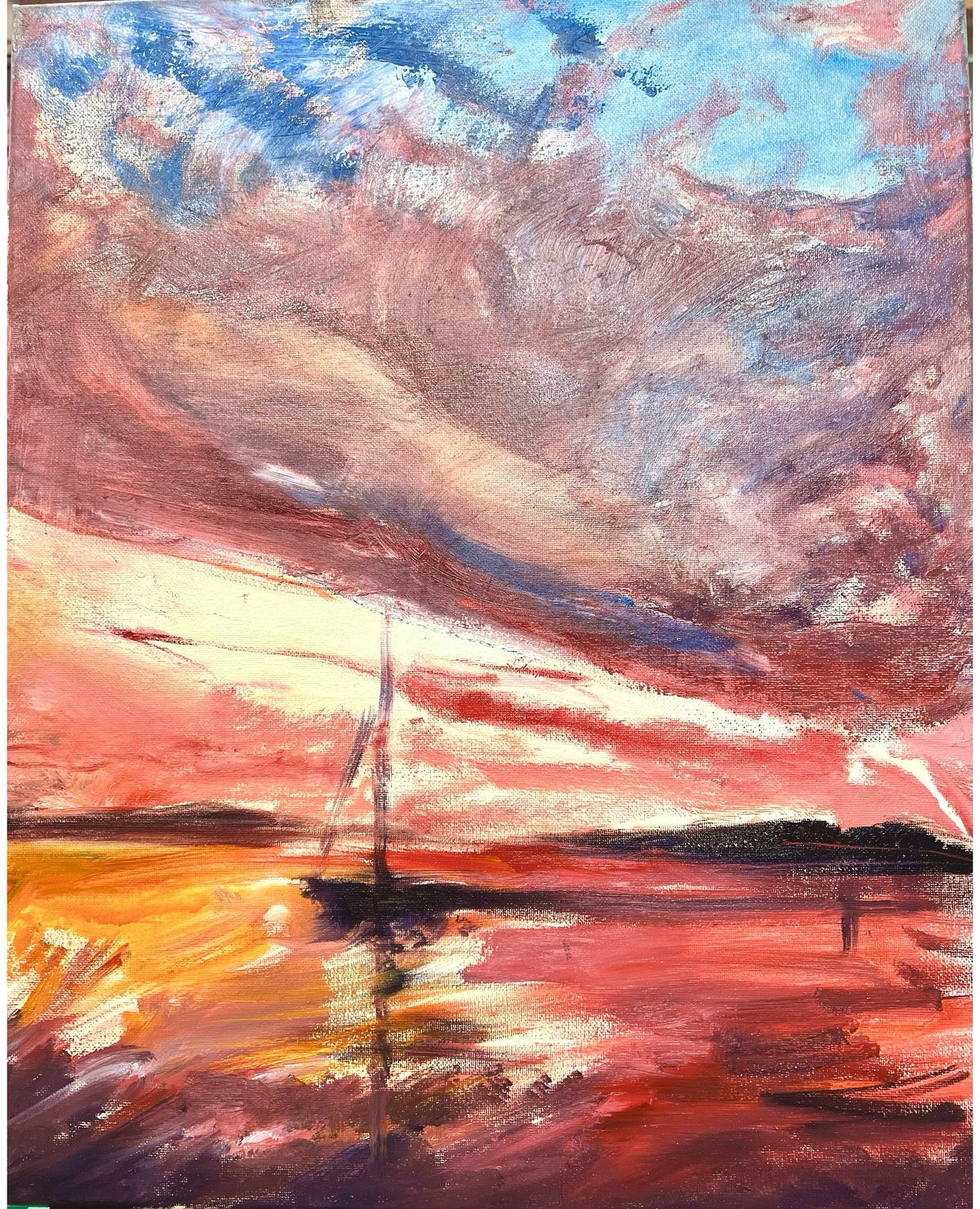
I am expanding my repertoire to include landscape oil paintings. I have been working on bringing my watercolor painting techniques into oil painting to achieve a greater sense of light and transparency with oils to enhance the expression of space. This painting is my most successful attempt at achieving that goal.

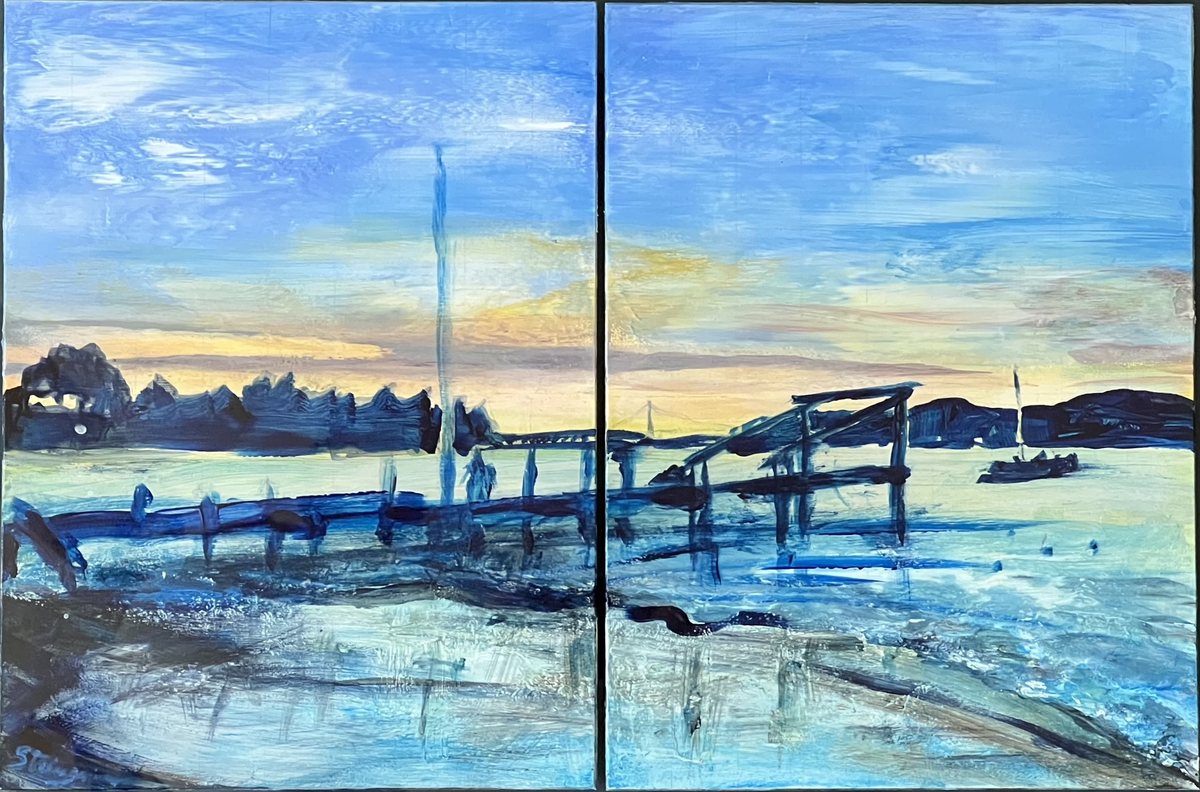
The South End Rowing Club on San Francisco Bay. It is where Trish met Ari, the mutual friend who introduced her to Bryan — in other words, the reason Trish and Bryan met. A Christmas present to Bryan and Trish in 2023.

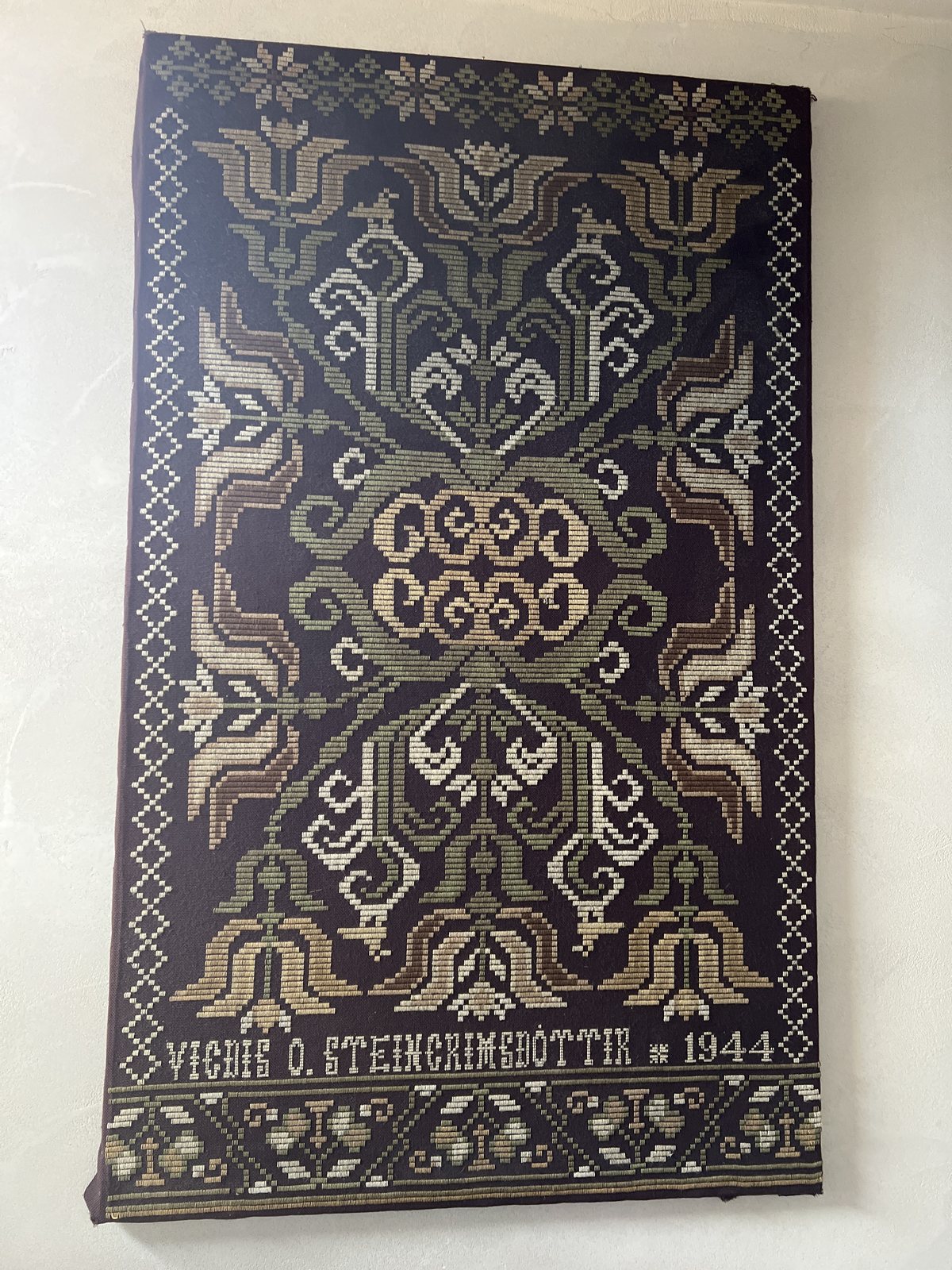
Today Iceland is celebrating its 80th year of Independence. Iceland took the liberty of declaring its independence from Denmark on June 17, 1944, while Denmark was occupied by Germany during WWII. At the end of WWI, in 1918, Denmark had ruled Iceland for 700 years and finally gave in to the pressure from the growing independence movement in Iceland. Denmark decided to present to the Icelandic people a referendum to vote for their Independence. The referendum passed, and it was agreed that Iceland would receive its independence in 25 years. Unfortunately, when the year for independence arrived, it was 1943. The world was at war and Denmark was occupied by Germany. Iceland waited a year, then declared independence.
To celebrate the occasion my Icelandic Grandmother, Vigís Steingrímsdóttir, created the attached tapestry (6’x4’)

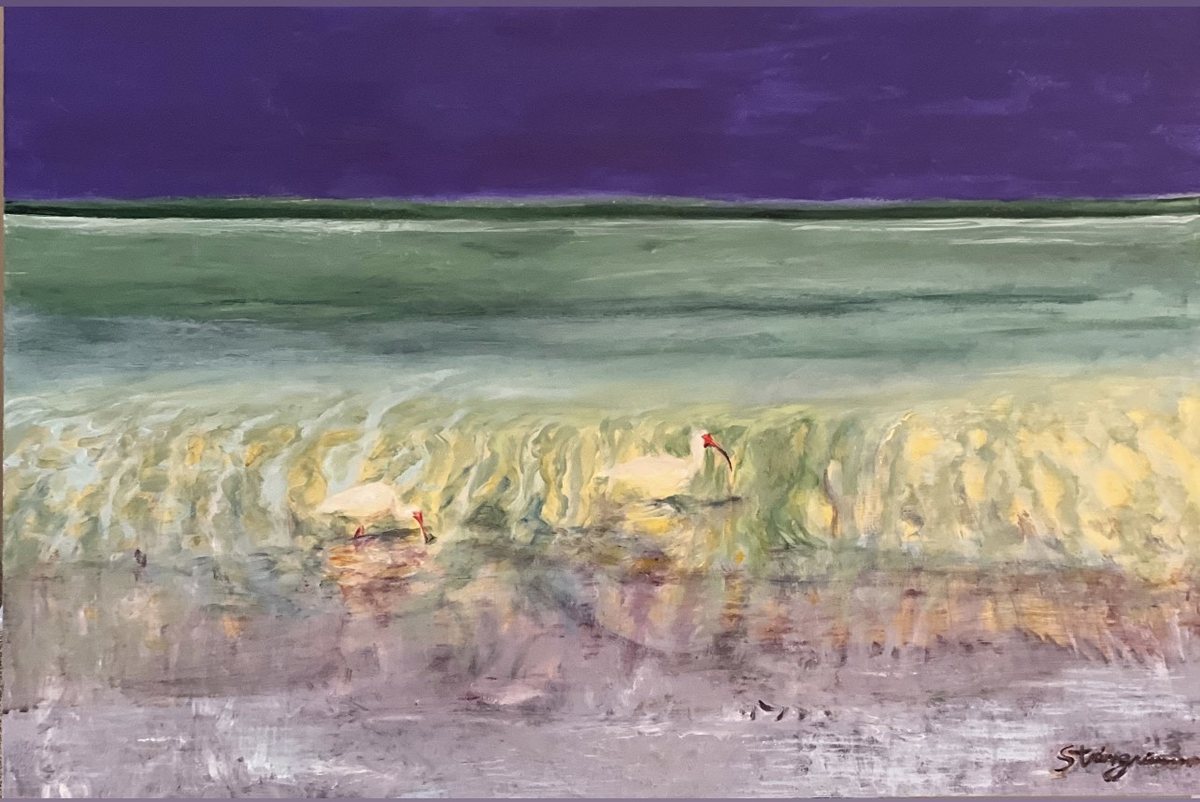
Along the beach in morning lightThe Gulf of Mexico becomes a showOf glittering sequins tangoing whiteIbises to step pause the beat just so.
-jh
Let’s take a brief respite from politics, and vicariously enjoy a morning walk on the beach with the following painting and verse.

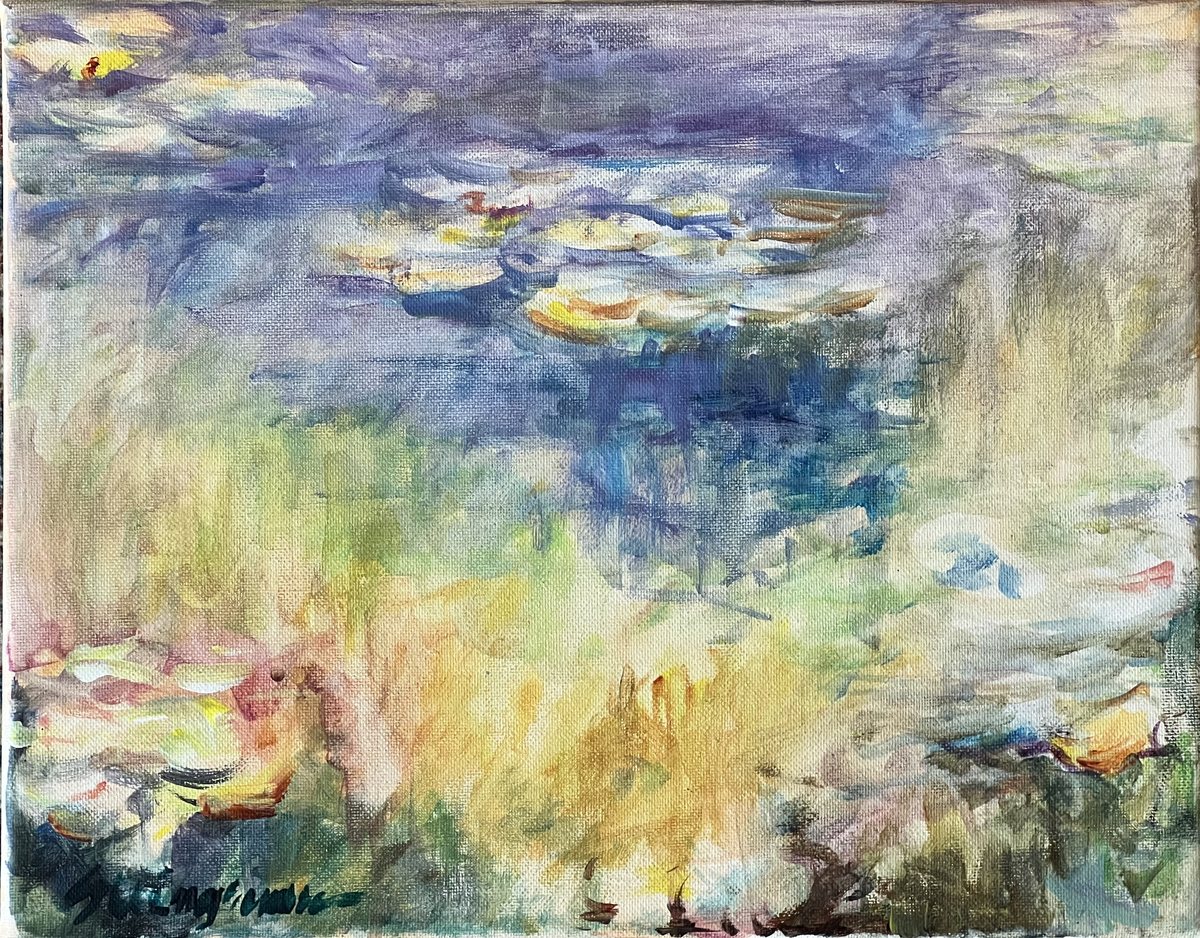
Painted after John and Bryan visited the Monet exhibition at the de Young Museum in San Francisco, and given to Bryan and Trish in 2026.
About the artist


John is an architect, painter and poet. He lives in Central Oregon and goes back often to Iceland, where his family comes from.
He paints mostly in watercolor, and often on the spot: beside a spring deep in the Grand Canyon, inside an extinct Icelandic volcano, in a kayaking sketchbook on Vargas Island. For more than twenty years he has sent the results to family and friends by email, usually with a few lines about where he was, and often with a poem.
The Grand Canyon Suite comes from a seventeen-day dory trip down the Colorado River in October 2022. The Fagradalsfjall series comes from his hikes to the eruption in Iceland in 2021.
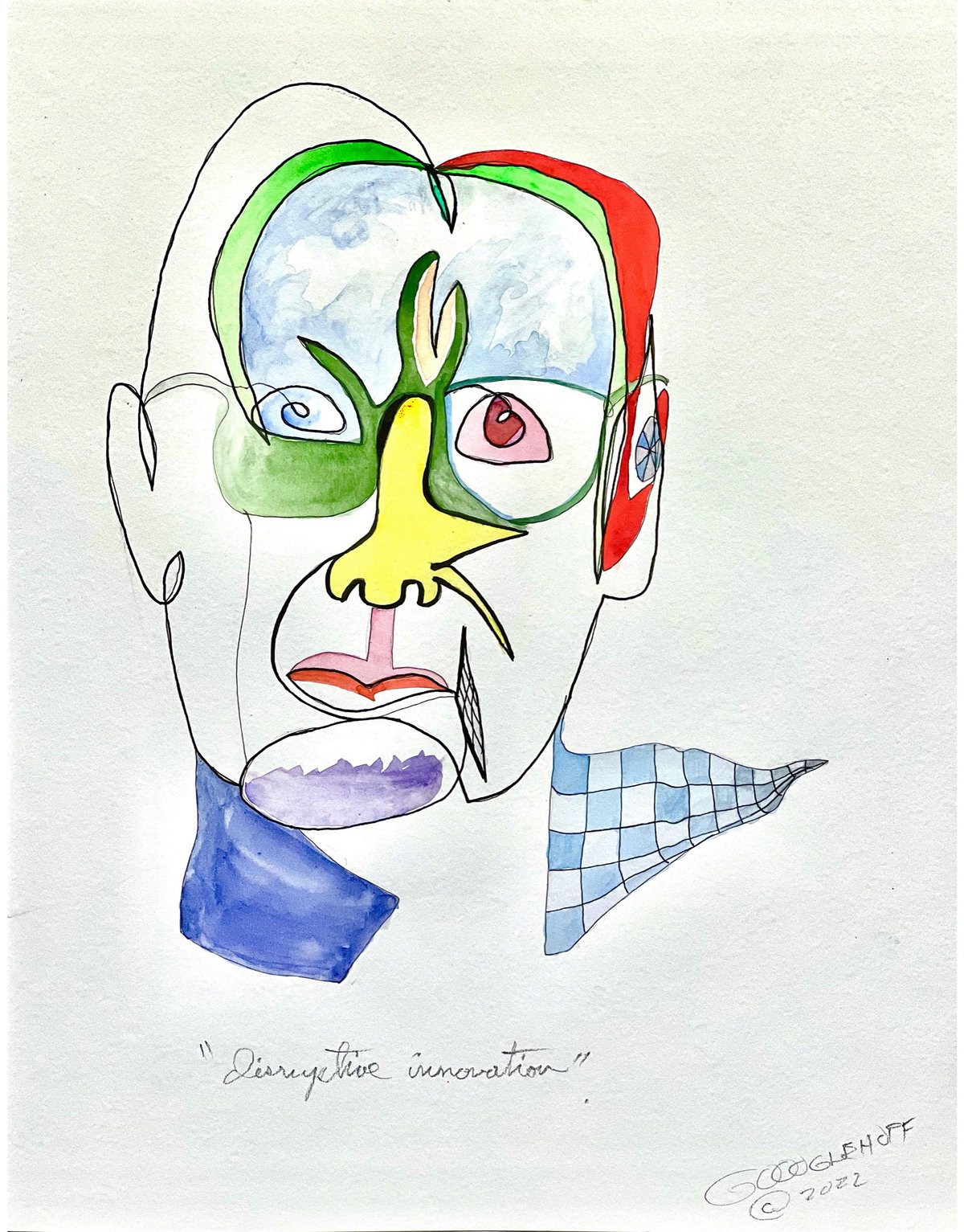
His poems are signed j.b.hermannsson, his portraits Jón Steingrímsson, and his political cartoons GOOOGLEHOPF. He posts new work on Instagram at instagram.com/goooglehopf; the cartoons live at pacbrewlab.com/cartoons.
❦
Paintings, poems and notes © John Hermannsson. Collected from his emails by his son, Bryan Hermannsson, 2026.
The independence tapestry is the work of Vigís Steingrímsdóttir.
Set in Cormorant Garamond and DM Sans. Online at pacbrewlab.com/watercolors.