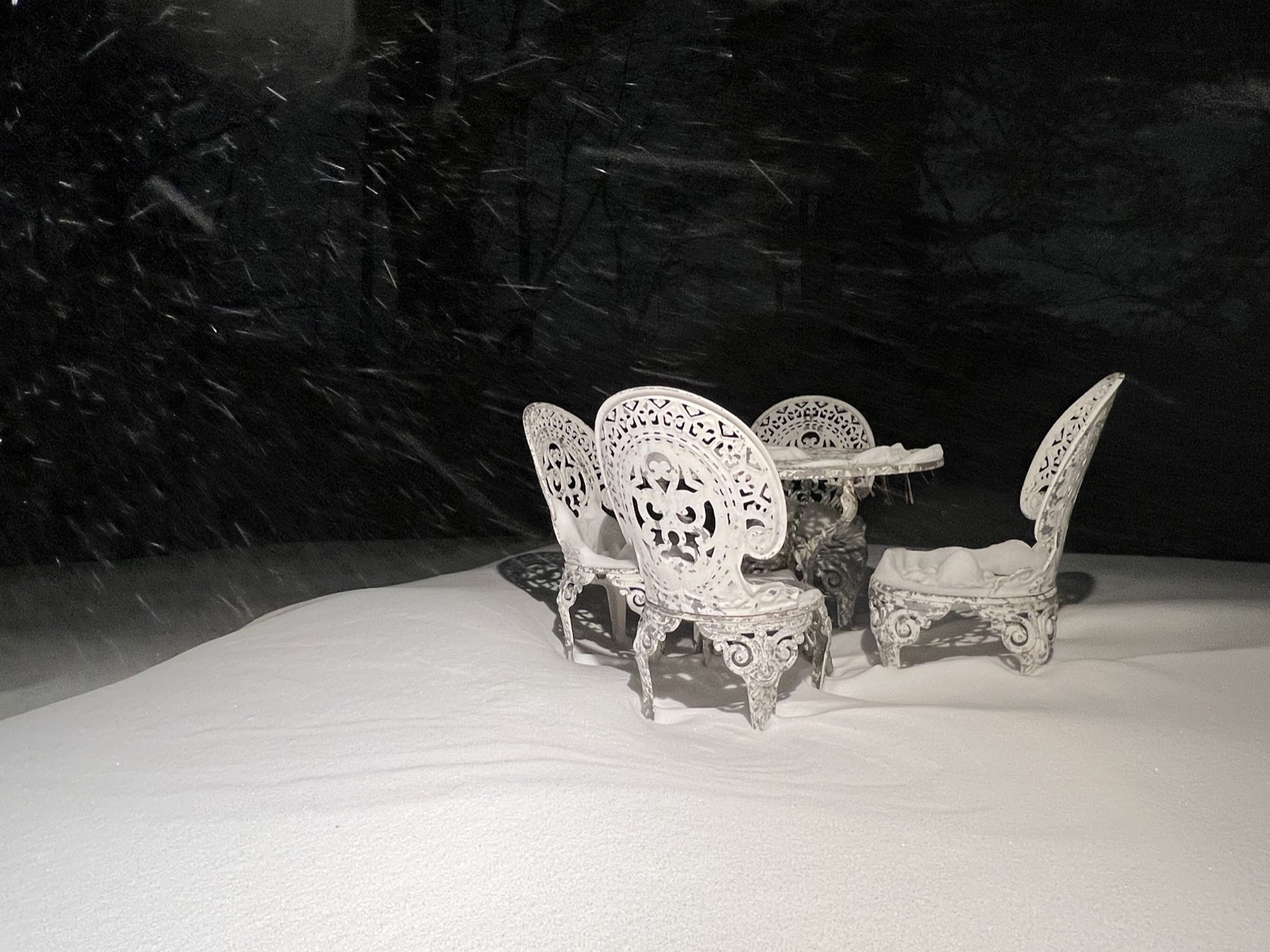
we can get used to anything
but we probably shouldn’t
I’ve always loved a good snowstorm. Bits of frozen water transform a landscape–magic! Humans are forced to slow down and acknowledge we don’t rule the world–finally! There’s a visible record of all the creatures who have walked across the land–fun! And it’s just so damn beautiful.
On Monday morning, the neighborhood moms and I found each other at the local park for astonished post-blizzard chatter, the re-applying of toddlers’ hats and mittens, and wondering whether or not schools would be closed again on Tuesday. On Tuesday, I had a video call with a friend in California who congratulated me about ten minutes into the conversation for not mentioning the snow: “it’s all anyone can talk about!”
I’ve taken the girls outside every day this week to revel in the “tunnels” (sidewalks) and “mountains” (snowbanks). It’s been a joy to share the snowy magic with them.
Now it’s Friday. My little Nissan hatchback, useless in any kind of weather, is still a round white hill with some glimmers of silver poking out. Luckily the girls and I have been able to walk everywhere we need to go, and Matt’s been able to get to work with the Subaru. The snow is still knee deep everywhere, the snowbanks are still as tall as me or higher. The place is still a brilliant winter playground. But it’s not stopping me in my tracks anymore; I’m not taking my phone out to try and capture the volume of snow that’s fallen; I’m not writing wintry poems in my head or in my journal. I’ve gotten used to it.
I don’t remember who shared the phrase “you can get used to anything” with me when I was a kid. It might have been a parent or grandparent or mentor or friend. But it’s one of those mantras that rings profoundly true for me, like “the early bird gets the worm” or “you could never pull off a pixie cut.”
We can get used to anything, but we probably shouldn’t. Something marvelous should continue to stop us in our tracks and bring us joy. We should continue to let our souls feel delighted by wondrous natural beauty. But the wonder doesn’t persist; what is at first marvelous fades to being normal. (Though, who’s to say how much the beauty quietly fills our cups.)
My husband and I always joke about his inclination to fix something broken, and my tendency to adapt to it. Before dating Matt, I effortlessly acclimated to kitchenless-apartments, fridgeless-kitchens, broken toaster ovens, broken cars, living with dysfunctional toilets, living in dysfunctional relationships. I’ve attributed my extraordinary ability to adapt to growing up in a big family–when you live with five other opinionated people and 1-4 pets, you just can’t have things the way you want most of the time. So, without even thinking about it, and certainly without complaining, you accept a suboptimal situation and adapt.
We can get used to anything, but we probably shouldn’t. Something problematic should inspire us to fix what’s broken or change course. We shouldn’t contort ourselves to accommodate unhealthy situations. But the annoyance doesn’t persist; what is at first inconvenient fades to being normal. (Though, who’s to say how much the problem quietly wears us out.)
The war in Ukraine against a backdrop of deadly cold, the continued humanitarian crisis in Gaza bringing the death toll to over 70,000, the American government’s lethal invasion of our cities, the small number of mostly-bad-people wielding an inconceivable amount of power to wreak death and destruction in the name of greed and dominance–this is all happening while we’re chatting about the snowfall. While we’re fixing our home appliances. While we’re raising our children. We can open ourselves up to read and witness the violence and death taking place, or we can choose ignorance. There isn’t a good option.
We can get used to anything, but we probably shouldn’t. Something horrific should incite heartbreak and mercy, if not rage against the machine. We shouldn’t stand by and ignore the atrocities being committed here and abroad. But the disgust doesn’t persist; what is at first infuriating fades to being normal. (Though, who’s to say how much the violence quietly breaks our hearts.)
Part of what I love about children is the freshness of their outlook. I always appreciated working with teenagers because their bullshit detectors are cranked all the way up all the time. Children and teens haven’t gotten used to the breathtaking cuteness of a chickadee, or the broken human world that grownups have made. They call out the magic or horror that they see, and they sit in it and yell it and write songs about it. This bothers some adults, but I think it’s wonderful.
I’ve been thinking a lot lately of the two little figures on my shoulders. I don’t have an angel and a devil; instead I’ve invited the 5-year-old version of myself to one ear, and the 85-year-old version of myself to the other. There’s a lot of wonder and wisdom between the two of them, and a very low tolerance for anything that smells like middle-aged-American-nonsense, and a fresh and grounded lens. And they seem to agree: while I can get used to anything, I probably shouldn’t.
So, today feels like a good day to bask in the ecstatic shared giggles of our girls, to soak up the marine-green of my true-love’s eyes, to marvel at the magic of a snowy landscape on a blue-sky day, to join the chickadee on her mulberry branch, to aggressively knock some more tasks off my adulting-to-do-list, and to join the National Shutdown against ICE. Every dystopian novel ever has warned us not to get used to this shit.
For your listening & viewing pleasure:
SNL’s Weekend Update - Tommy Brennan on Trump’s ICE Deployments in Minnesota